Choose an RFID system by the task it must support, then verify identities, radio performance and the resulting workflow. These guides connect technology choices with practical tests, records and application-specific decisions.
Start with the applications
 RFID Technologies: 10 Practical Uses
Explore applications from inventory and contactless access to transportation and agriculture.
Technology, identities and labels
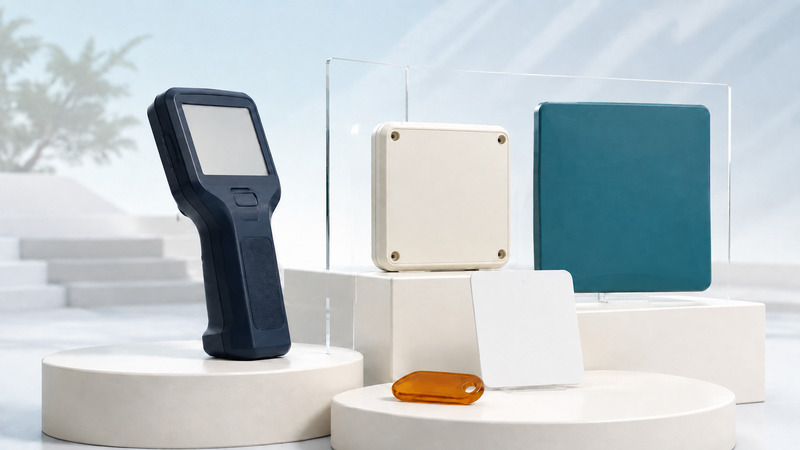
Choosing an RFID Reader: Compatibility Before Range
Match RFID readers to tags, protocols, antennas, software and the actual workflow, then verify performance with a practical acceptance checklist.

NFC Explained: Tags, Payments, Pairing, and Failed Taps
Understand NFC tags, credentials and connection setup, test a URL tag, and troubleshoot failed taps without confusing NFC with every kind of RFID.

EPC Gen2 and RAIN RFID: Understand the Standards and Compatibility
Separate EPC Gen2 radio communication, tag encoding, reader interfaces and EPCIS events, and verify revisions, optional features and regional compatibility.

Electronic Product Codes: GTIN, Serial Numbers, and RFID Encoding
Understand GTINs, serialized EPC identities and tag encodings, with a checked SGTIN-96 example and a workflow for diagnosing data mismatches.

Thin RFID Tags and Inlays: Choosing a Label That Survives the Job
Compare thin RFID inlays and finished labels by construction, dimensions, surface, memory and durability, then test the applied label in its real workflow.

Improve RFID Read Reliability with a Measured Test Plan
Test RFID tag placement, read zones and settings with known item sets, distinguish misses from stray reads, and use downloadable example and test-log CSVs.

RFID Privacy: What Can Be Read, Linked, and Retained?
Understand tag identifiers, reader observations and linked records, compare realistic RFID privacy risks, and review collection, access, retention and deactivation.

Global RFID Readers: Check Country, Configuration, and Tag Compatibility
Check country-specific operating rules, reader configuration, antenna combinations and tag performance before deploying UHF RFID across borders.

RFID Smart Cards: Interfaces, Applications, and Compatibility
Compare smart-card interfaces, application support, authentication and provisioning before choosing cards and readers for a working system.
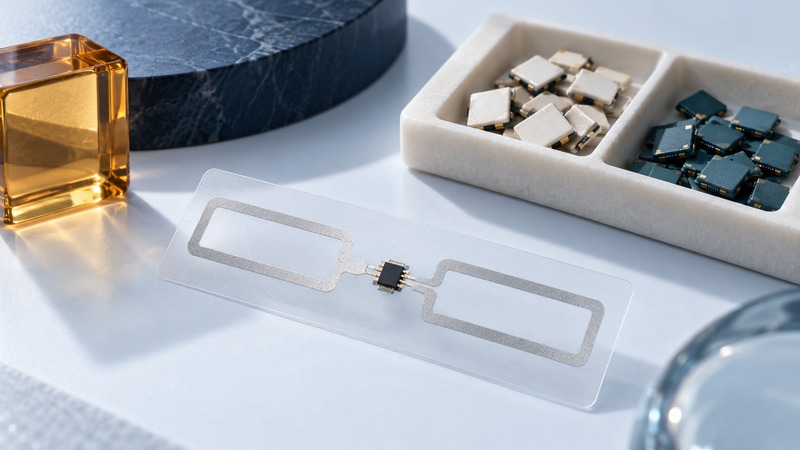
RFID Tag Chips: Memory, Sensitivity, and Security Features
Read passive UHF tag-chip specifications with a clear view of memory, read and write sensitivity, authentication and finished-tag performance.

Secure Smart Cards: Check the Evidence Behind Security Claims
Check smart-card security claims against exact module certificates, versions, operating conditions and the controls of the complete credential system.
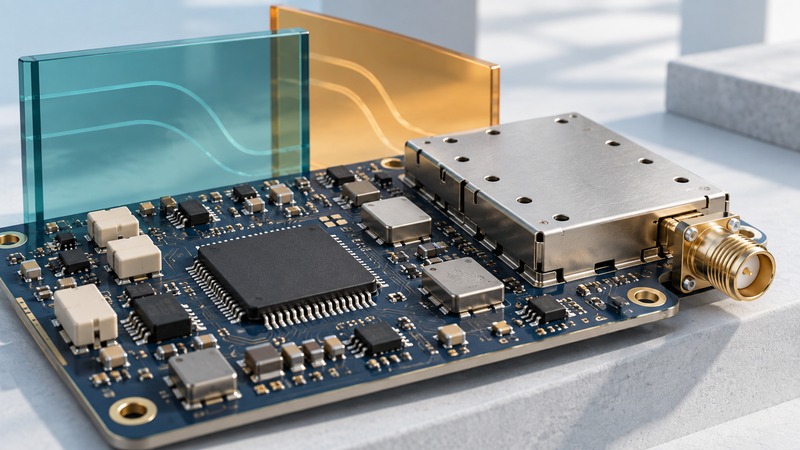
RF ICs in RFID Readers: Follow the Transmit and Receive Signal Paths
Understand an RFID reader RF front end through its transmit and receive paths, leakage, filtering and a clearly bounded signal-level example.

SAW RFID: How Surface Acoustic Waves Encode a Tag Response
Understand how a reflective SAW tag encodes a response, how sensing changes that response, and what evidence a reader demonstration should provide.
Deployment, testing and project planning

RFID Supplier Compliance: From Customer Requirements to Accepted Labels
Translate a customer RFID requirement into a controlled label specification, sample submission, production check and change record.
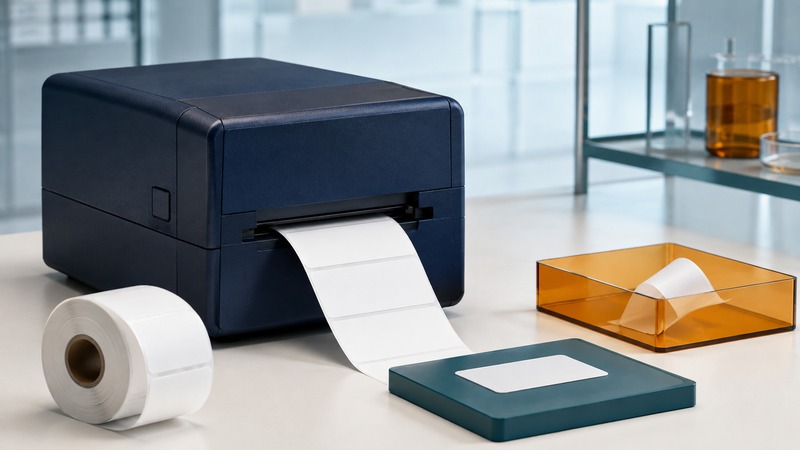
RFID Label Printing: Encode, Verify, and Troubleshoot
Prepare compatible RFID media, encode controlled identities, verify printed and electronic data, troubleshoot failures, and manage rejected labels and reprints.
Integrate RFID Reads into Warehouse Events Reliably
Turn reader observations into reliable warehouse events with identity mapping, exception handling, stable event IDs, retries, and a validated fictional EPCIS example.

RFID Gate Readers: Detecting Passage and Controlling Stray Reads
Specify RFID portals that distinguish intended crossings from nearby stock, reverse travel and incomplete reads, using a practical acceptance test set.

Locating RFID-Tagged Objects: Last Seen, Zones, and Coordinates
Choose between last-seen records, zone detection and coordinate tracking, then test freshness, coverage, accuracy and the time needed to find an asset.

RFID in the Supply Chain: Choose a Pilot and Measure the Result
Choose an RFID workflow, measure comparable baselines and exceptions, and test a transparent pilot cost calculation that separates released time from realized savings.

RFID Project Risk: Evaluating Vendors, Evidence, and Exit Plans
Compare RFID vendors using workflow evidence, acceptance criteria, support responsibilities, data portability and an achievable exit plan.
RFID Mobile Computers: Reliable Counts Through Disconnects
Specify mobile RFID count sessions, disconnected operation, barcode fallback and synchronization that preserves the intended inventory result.

End-to-End RFID: Map the System and Its Operating Responsibilities
Map RFID components, data handoffs, monitoring and recovery ownership from label issuance to the records people act on.

RFID Read Maps: Visualize Misses, Stray Reads, and Test Coverage
Build RFID read-coverage maps that preserve trial counts, distinguish missed tags from missing tests and show unwanted reads separately.

RFID Patent Research: Search, Group, and Document Findings
Run a documented preliminary RFID patent search using technical terms, classifications, citations and patent families, with clear limits on the findings.

UWB Location Systems: Anchors, Accuracy, Latency, and Site Testing
Specify UWB location requirements and test position error, missing fixes, latency and moving-object behavior with a worked acceptance example.
RFID-Ready Printers: Upgrade, Replace, or Buy Preconfigured?
Compare a documented RFID printer upgrade with replacement, including compatibility, media trials, downtime, support and total quoted cost.

RFID Test Labs: Choose the Right Test and Interpret the Report
Commission the right RFID lab work, control samples and configurations, and read a report against its actual test scope.

Buying RFID Equipment: Build a Compatible Parts List
Build an RFID equipment order that covers compatible tags, readers, antennas, cables, power, software and a repeatable acceptance test.

RFID Consulting: Scope the Work and Define the Deliverables
Prepare an RFID consulting brief with concrete deliverables, acceptance evidence, responsibilities, handover and controlled changes.

RFID in China: Check Standards, Radio Rules, and Equipment Approval
Check mainland China RFID equipment against current radio rules, the exact type-approval record, applicable standards and the intended installation.

RFID Market Reports: Compare Shipments, Revenue, and Forecasts
Compare RFID market reports by measurement, coverage and publication date, keeping shipment observations, revenue and forecasts distinct.
Applications and operating environments

RFID Access Control: Credentials, Readers, and Revocation
Evaluate RFID badge and vehicle-tag access across credential authentication, reader connections, permissions, revocation and outages.

Hospital RFID: Patient Flow, Equipment Location, and Validation
Evaluate hospital RFID for patient flow and equipment location, with identity checks, location freshness, privacy, compatibility review and recovery planning.

RFID Clothing Labels: Inventory, Checkout, and After Purchase
Understand apparel RFID labels, item-level inventory, checkout and returns, plus useful questions about phone reading, tag removal and care after purchase.

Library RFID: Self-Checkout, Inventory, and Patron Privacy
Evaluate library RFID across circulation, tag interoperability, migration, accessibility, privacy, and failure recovery, with a practical procurement and rollout worksheet.

RFID Cattle Tags: Identification, Readers, and Movement Records
Understand U.S. cattle and bison identification requirements, verify official tags and reader compatibility, and keep reliable animal and movement records.

Wafer Tracking: Connecting Carriers, Lots, and Process History
Connect wafer carrier identity with lots, slots and process records, and test load-port verification, carrier reuse, delayed events and exceptions.

RFID Checkout: Build the Right Basket and Resolve Exceptions
Build and test an RFID checkout that identifies the right basket, resolves exceptions and keeps payment, inventory and returns consistent.

Self-Service Toll Tags: Issuing, Activating, and Managing Accounts
Follow a toll transponder from pickup through activation, vehicle association, account maintenance and replacement, using provider-specific instructions.
RFID Field Markers: Connect Physical Assets to Reliable Records
Connect RFID field markers to traceable asset records, coordinate evidence and maintenance history while keeping utility-location responsibilities clear.
More RFID topics
Earlier reporting, grouped by subject. Check publication dates when using historical product announcements and forecasts.