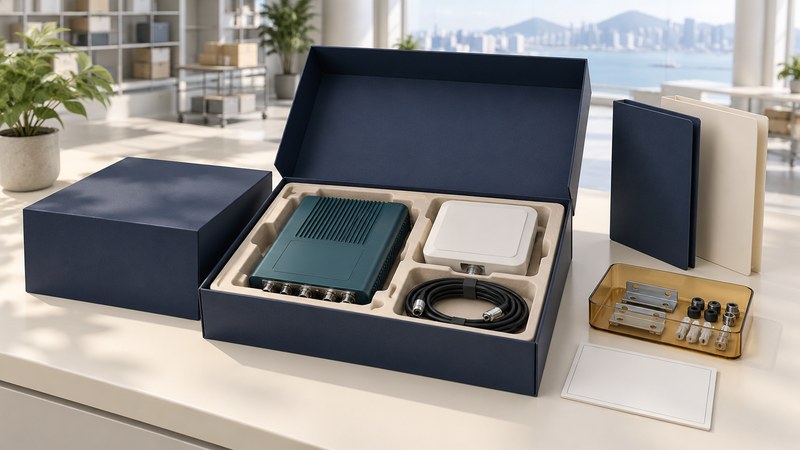
An RFID distributor should supply the specified equipment and help maintain a usable route for support, replacement and product changes. Compare that service alongside the quoted items. A low equipment price can conceal an unsupported regional version, an unapproved substitute or a repair process that leaves the operation waiting.
Begin with a controlled parts list and a short description of the workflow. Then ask each distributor to document which products, responsibilities and service terms its proposal includes.
Verify the supply channel with the manufacturer
Check the distributor’s status through the manufacturer’s current partner directory or direct confirmation. For example, Zebra provides a partner locator and explains supplier roles in its partner-selection guidance. Confirm the relevant territory and product capability, then assess the team that will actually support your order.
At component level, Texas Instruments recommends its authorized sources to reduce counterfeit and reliability risk. Retain manufacturer part numbers, purchase records, serial or lot information and the supply-chain evidence appropriate to the equipment. A seller’s own “authorized” claim should have a checkable manufacturer reference.
Directory presence addresses a particular relationship. It leaves project-specific questions about configuration, software integration and response commitments for the proposal and acceptance process.
Ask for support boundaries in writing
On a small screen, scroll sideways to read all columns.
| Question | Evidence to request | Decision it supports |
|---|---|---|
| What exact equipment arrives? | Manufacturer part number, regional SKU and included accessories | Match the accepted bill of materials. |
| Who configures and tests it? | Named scope and documented acceptance task | Assign commissioning work. |
| Who owns a software issue? | SDK/application responsibilities and escalation path | Avoid an unassigned integration gap. |
| What happens on failure? | Return authorization, shipping, repair and replacement terms | Plan downtime and spare stock. |
| How are changes handled? | Substitution approval and lifecycle notification process | Preserve the tested configuration. |
Read the actual warranty and any separate service contract. Zebra’s published warranty terms illustrate why coverage depends on product and conditions. Treat warranty repair, distributor technical assistance and a contracted replacement service as separate commitments; verify terms for the purchased configuration.
Compare a complete proposal with a cheaper incomplete one
Record unresolved terms as unresolved. Convert a promise such as “full support” into a concrete answer: supported hours, contact route, covered products, escalation owner and what starts the response clock. Distinguish a response target from a repair or replacement commitment.
Include software licenses, subscriptions, configuration effort, shipping, spares and training where needed. Use dated written quotes for commercial comparisons, and keep assumptions visible.
Require approval before substitutions
A substitute antenna, cable, power supply, tag construction or regional reader model can change the accepted system. Ask the distributor to identify every deviation before shipment and provide the documents needed for a compatibility review. Approve the revised parts list only after the responsible owner resolves its impact.
For lifecycle changes, request notification of product changes and discontinuations, the proposed replacement and the deadline for decisions. Maintain configuration backups and a tested spare where the operating need justifies it. A new product in the same family still needs the affected acceptance checks.
Assign responsibility for tag and label supply changes as well as reader hardware. Keeping the reader constant while silently changing the inlay can alter the workflow’s performance.
Accept the delivery and rehearse support
- Match delivered models, regional variants, accessories and traceability records to the accepted proposal.
- Inspect condition and retain the documented configuration and software entitlement information.
- Run the agreed acceptance task with representative tags and application connectivity.
- Confirm the support contact and escalation route using a planned handover discussion.
- Record discrepancies and resolve them before declaring the complete setup accepted.
Maintain the supplier comparison as an operational record. Update it when support contacts, territories, service terms or products change. This makes the purchasing decision useful after the cartons have been opened and the system is in service.
Keep a working record
Download the editable rfid distributor working record (plain text). Save a copy for each evaluation. It includes instructions, evidence fields and source links; record unresolved questions with their owner before signing off.
Related reading
- Build a compatible equipment order
- Evaluate project and vendor risk
- Define external-service deliverables
- All RFID guides
Researched and updated October 3, 2026. Recheck the relevant source documents when equipment, software or requirements change.