Choose compatible media, make a reliable transfer, preserve photographs, or understand the technology inside a device. Start with the task and the exact equipment, then use the guides below to make and verify the next decision.
This library brings together 20 practical guides and nine historical references. Use the guides for compatibility and preservation tasks; explore the historical section for the designs and documented capabilities of earlier products.
Choose memory cards
Choose a supported family and capacity, understand speed requirements, and identify specialized recording media.
SD Cards: Capacity, Compatibility, and Formatting
Choose an SD card by capacity family, device support and recording needs, then prepare and test it without losing existing files.
SD Card Speed: Read the Labels and Match Your Workload
Separate SD speed classes, bus modes and advertised read rates, and match a card to recording, application or offload requirements.
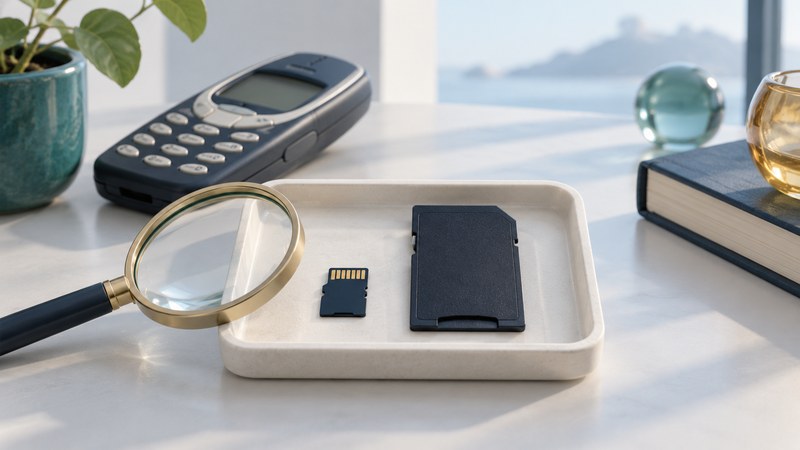
TransFlash and microSD: Identify Cards and Check Compatibility
Understand TF and microSD naming, distinguish physical adapters from capacity support, and plan a careful transfer from an older device.
miniSD Cards: Identify Legacy Media and Retrieve Files
Distinguish miniSD from microSD, confirm a supported adapter and reader, and preserve the complete contents of an older phone card.
SxS Memory Cards: Camera Compatibility and Video Offload
Check the SxS card, camera, reader and software together, then copy complete video volumes and verify them before releasing media.
Buying CompactFlash for Older Cameras and Equipment
Build an exact-device CompactFlash requirement, compare listings by part and capacity, and use a test-and-return plan before relying on a replacement.
MMC and RS-MMC: Identify Legacy Cards and Confirm Support
Identify MMC-family media, check exact voltage and capacity documentation, and choose a supported reader or original-device transfer path.
SanDisk Extreme Cards: Identify the Model and Interpret Field Claims
Match a SanDisk Extreme card to its exact specifications, distinguish read and write claims, and assess environmental limits for a camera workflow.
Lexar CompactFlash Speed Ratings: Labels, Cameras, and Readers
Decode Lexar CompactFlash x-ratings, separate peak reading from sustained writing, and estimate or measure a real offload workflow.
Read cards and preserve photos
Choose a reader, diagnose detection and mounting problems, verify transfers, and preserve photographs.
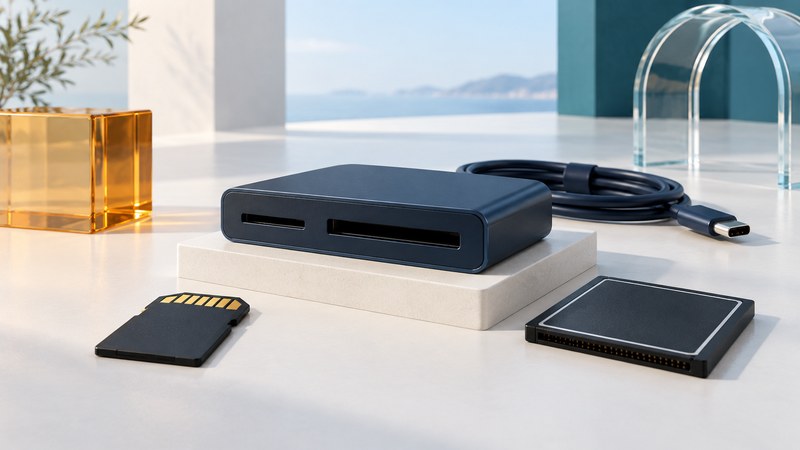
Memory Card Readers: Match Slots, Cards, and USB Connections
Choose a reader for modern or legacy cards, check the complete connection, and isolate transfer problems while preserving source files.
Storing Photos from Memory Cards: Build a Verifiable Archive
Move photographs from cards into an organized collection, verify independent copies, preserve context and practice retrieving the files.
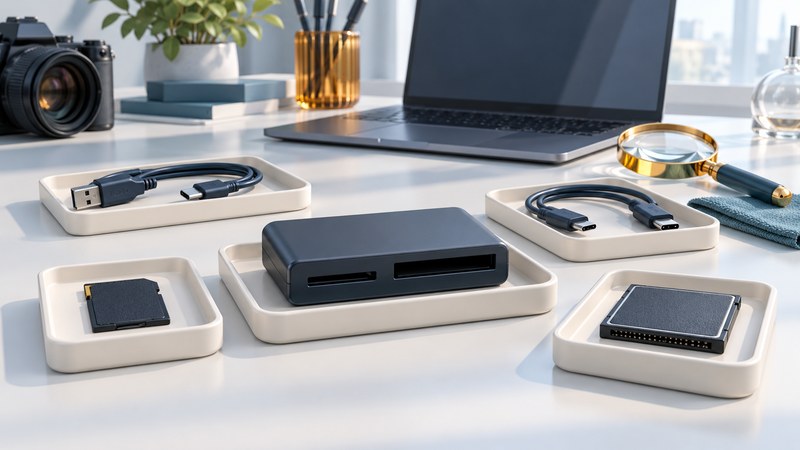
Card Reader Troubleshooting: Detection, Mounting, and Read Errors
Locate the failing stage in a memory-card connection, record useful evidence, and choose a next step that preserves needed files.
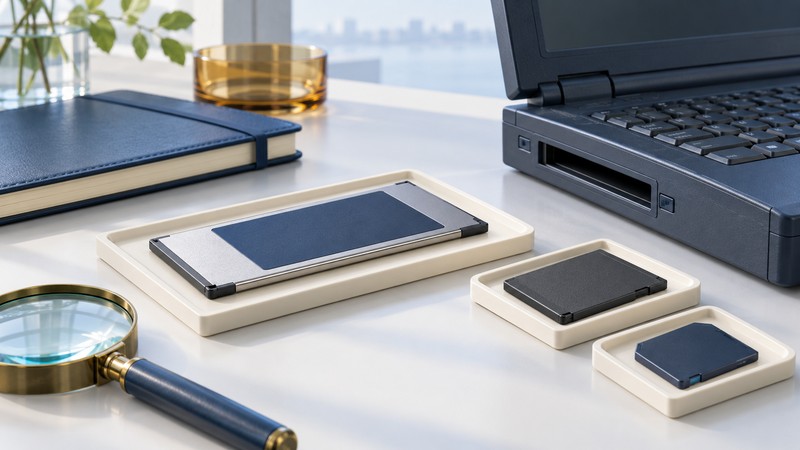
Legacy PC Card Readers: Identify the Adapter and Retrieve Media
Identify a legacy SanDisk 6-in-1 PC Card adapter, match its card formats and notebook slot, and choose a documented route to retrieve files.
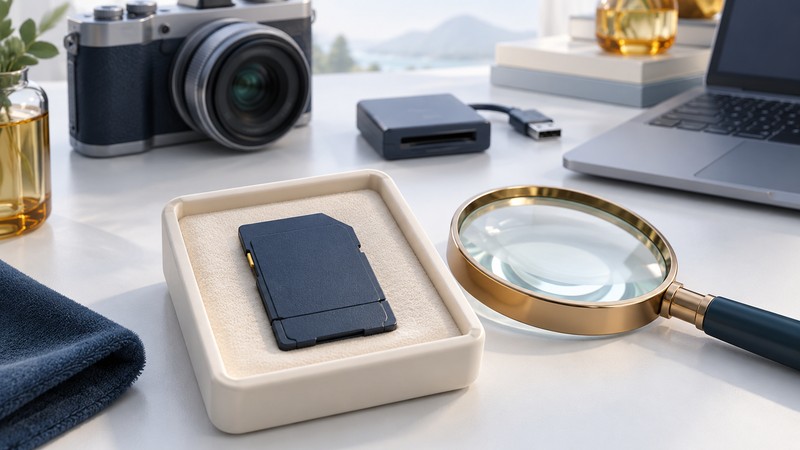
SD Cards with Built-In USB: Identify the Design and Transfer Files
Recognize the hinged SanDisk Ultra II SD Plus design, choose SD-reader or direct-USB access, and preserve files before reusing legacy media.
USB drives and portable software
Choose ordinary or rugged USB storage, plan a bootable workspace, and explore earlier portable-software designs.

USB Flash Drives: Choose, Format, and Transfer Files Reliably
Match a thumb drive to the destination computer, choose a suitable filesystem, estimate transfer time and verify files before deleting originals.
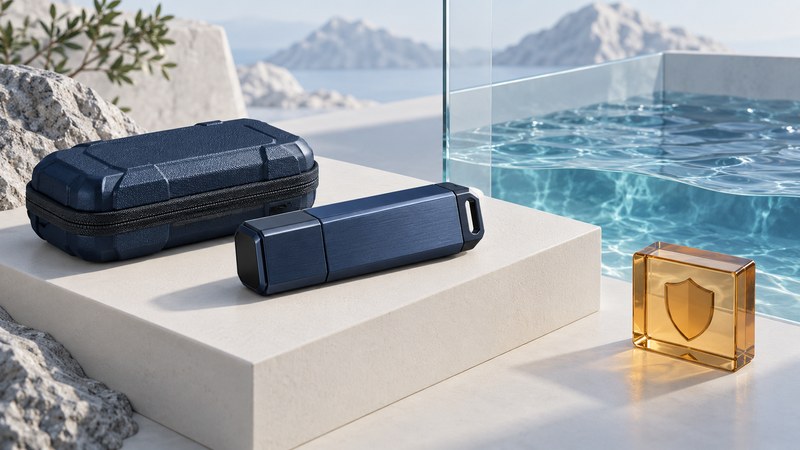
Rugged USB Drives: Read Water-Resistance and Security Specifications
Evaluate environmental limits, cap requirements, host support and access protection for a rugged USB drive, then plan an independent backup.
Bootable USB Workspaces: Live Sessions, Persistence, and Host Requirements
Choose a USB workspace model, verify the operating-system image, identify the target drive and test a supported live session on your own computer.

U3 Smart Drives: Understand the Platform and Preserve Your Files
Identify a legacy U3 drive, preserve ordinary files and application data, and move to a supported workflow before removing old software.
Understand embedded flash
Understand storage cells, controller work and the interfaces used by managed embedded devices.

NAND Flash Explained: Density, Endurance, and Controllers
Understand bits per cell, 3D layers, write amplification and controller work, then read storage specifications in the context of a real workload.
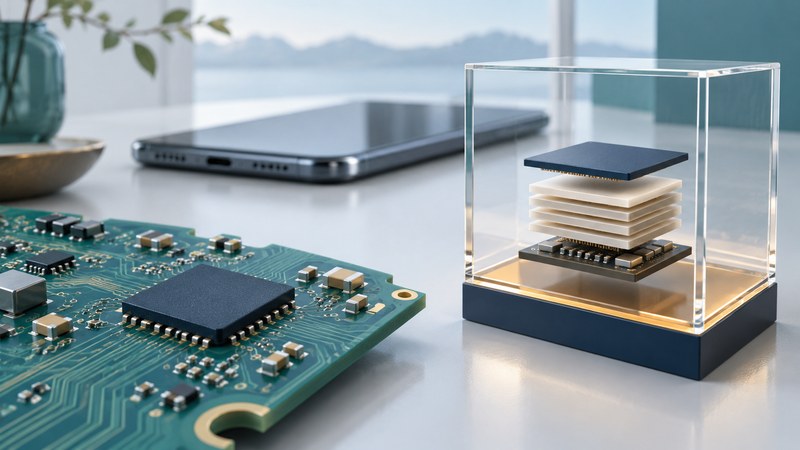
iNAND and Managed Flash: What Embedded Storage Contains
Read iNAND specifications by separating NAND, controller, package and host interface, then define the workload and validation evidence for an embedded design.
Historical devices and flash-memory ideas
Explore nine sourced references to early phone photography, handheld networking and unusual flash products. Each explains the period design and how to interpret surviving equipment or documentation.
Camera phones and legacy cards
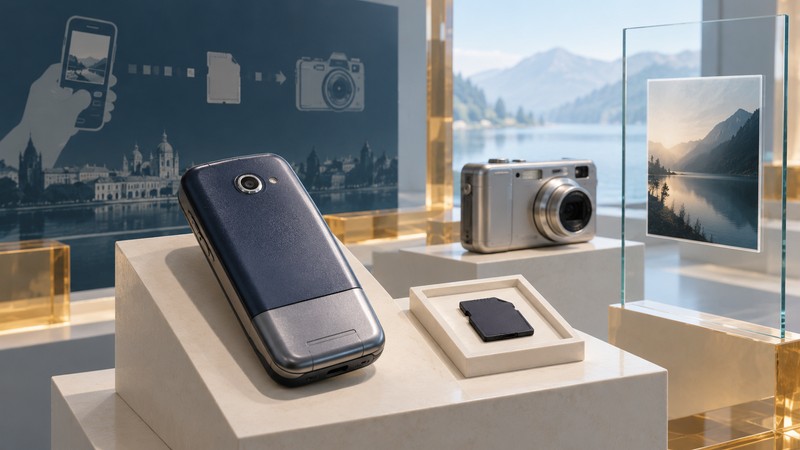
Early Camera Phones and miniSD: The Samsung SPH-S2300
Explore how the Samsung SPH-S2300 combined camera optics and miniSD storage, and how to identify its photographs and media today.
PNY CompactFlash: A Legacy Product Reference
Use an exact PNY part number and a host manufacturer’s compatibility list to identify an early CompactFlash card.
SanDisk 128 MB CompactFlash: A Legacy Product Reference
Place SanDisk’s 128 MB CompactFlash cards in their camera-era context and interpret a documented SDCFB compatibility example.
Pocket PC networking
CompactFlash Wi-Fi Adapters and the Connected Pocket PC
Understand how Symbol’s Spectrum24 LA-4137 used CompactFlash for handheld networking, with distinct hardware, driver and network requirements.
Linksys WCF12: A Pocket PC Networking Reference
Identify the Linksys WCF12 and read its original Pocket PC, driver and wireless requirements in their historical context.
Unusual storage and music products
gruvi and TrustedFlash: Music Distribution on Memory Cards
Understand SanDisk gruvi’s preloaded music model, its TrustedFlash context and the evidence needed to describe a surviving card.
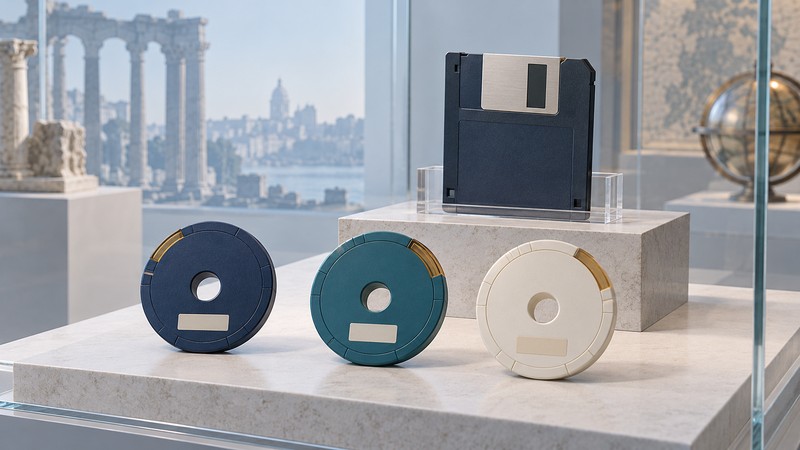
FlashDisc: The Attempt to Replace the Shareable Floppy
Examine M-Systems and Memorex’s 2006 FlashDisc proposal: small reusable USB media designed to be labeled and handed to someone else.
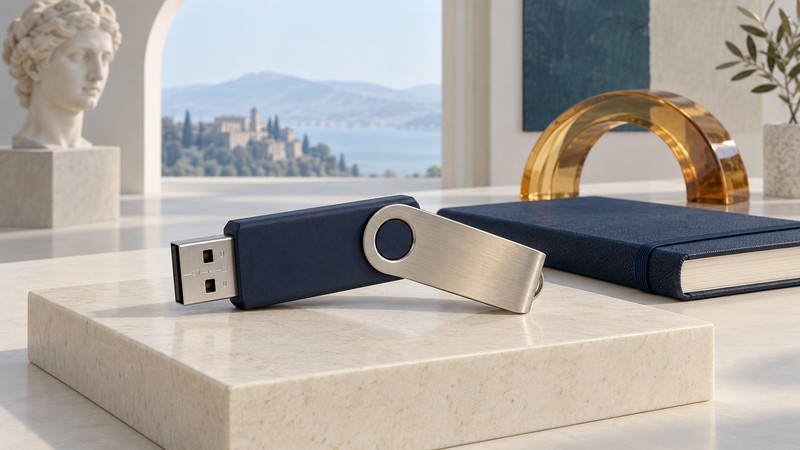
Swivel USB Drives: The Imation Design and Connector Protection
Explore Imation’s attached swivel-cover design and separate connector protection from storage, software and data-preservation requirements.
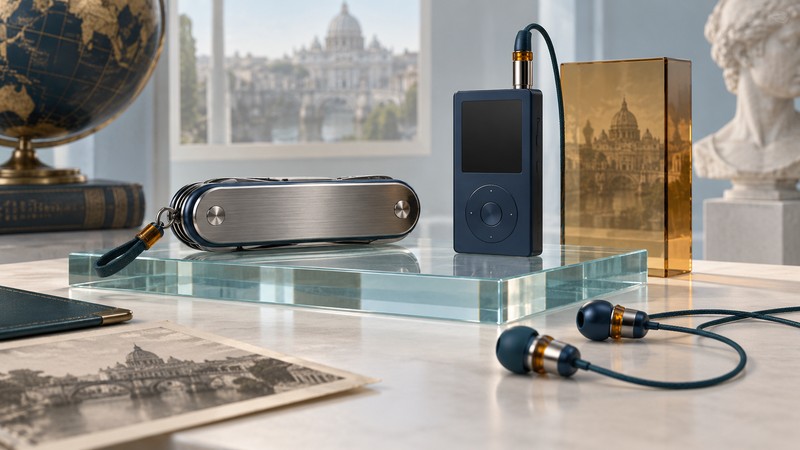
SwissMemory s.beat: Flash Storage Meets the Multi-tool
Identify the SwissMemory s.beat’s detachable audio module and interpret its documented folder structure as a guide to surviving files.
CompactFlash, CFast and CFexpress: identify, match and protect
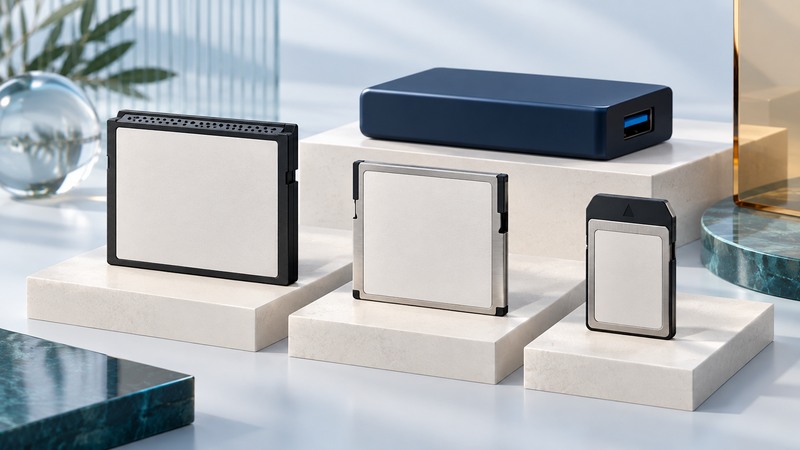
Choose a memory card by its exact family, the device that will use it, and the recording task. CompactFlash, CFast and CFexpress have similar names but different interfaces. For existing cards, protecting the files comes before formatting, speed testing or shopping for a replacement.
Identify the card before choosing a reader
Read the full label on the card and the slot or device manual. Photograph both before buying accessories. The CompactFlash Association’s card-family descriptions distinguish the interfaces below; a shared brand name or a similar outline is insufficient to establish compatibility.
On narrow screens, focus the table and use the arrow keys or swipe to see every column.
| Label on the card | Interface | What to verify |
|---|---|---|
| CompactFlash / CF | Parallel ATA | Device support for the card’s capacity and physical type; a reader explicitly supporting CF. |
| CFast | Serial ATA | A CFast slot or reader. A CompactFlash reader is a different product. |
| CFexpress Type A | PCIe and NVMe | Type A support in both the host and reader. |
| CFexpress Type B | PCIe and NVMe | Type B support. An XQD-shaped slot needs explicit CFexpress support. |
CFexpress Type B shares dimensions and a connector with XQD, and some XQD cameras gain support through firmware. Check the camera manufacturer’s exact model guidance. A Microdrive is a miniature rotating hard drive that can resemble a CF card; identify it before applying flash-card assumptions.
Match the device, capacity and recording mode
- Write down the camera or instrument model, firmware version, card family and required capacity. Include the video codec, resolution and frame rate if recording video.
- Use the device manufacturer’s supported-media list. Check the precise card series and capacity; two capacities sold under one family name may have different performance.
- Check reader specifications independently. A reader must support the card family, and its connection to the computer must suit the intended transfer rate.
- Test a new supported card with expendable material in the actual device and intended mode. Review the recording for errors before relying on it for irreplaceable work.
Lexar’s 2026 compatibility guide illustrates why the details matter: it separates camera recommendations from Lexar testing and lists firmware and recording-format conditions. Use it for the listed Lexar products, alongside the camera maker’s instructions.
Read speed claims in the right units
Recording depends on sustained writing; a large advertised read number mainly concerns offloading. CFA’s Video Performance Guarantee guidance explains the minimum sustained write classes and their profile requirements. VPG800 or VPG1600 alone does not establish support for a mode requiring the older VPG200/400 profile. Look for the required profile, including dual certification when applicable, and consult the certified-card list.
Illustrative bitrate calculation: a 400 Mb/s stream is 400 ÷ 8 = 50 MB/s. Over 20 minutes, that payload is 50 × 1,200 = 60,000 MB, or 60 GB in decimal units. Allow room for the camera’s overhead, variable bitrate and operational margin. This calculation estimates space and payload rate; the camera’s supported-media requirements still determine the card.
Copy, verify and then release the card
- Assign the card an identifier and create a destination folder named for the job and card. Copy the full directory structure so sidecar files and clip relationships travel together.
- Use a copy tool that verifies file contents, or compare a per-file cryptographic checksum such as SHA-256 between source and destination. Record relative paths, file counts, bytes and any errors. A matching checksum establishes byte equality for that comparison.
- Open representative photographs and play complete sample clips with the software that will use them. A correct copy can still contain a damaged original or an unsupported format.
- Make and verify a second copy on independent storage. Keep the source card unchanged until the responsible person accepts both copies and any outstanding errors.
- Only then reuse the card according to the device manual. If the computer offers to initialize an unreadable card containing needed files, cancel and preserve it for diagnosis.
A normal offload assumes a stable, readable card. Repeated disconnects or read errors call for a recovery decision, not repeated whole-card stress tests. Use the card offload record (plain text) to track verification and the release decision. See portable storage planning for the destination drives.
For broader equipment decisions, browse the computer hardware library.