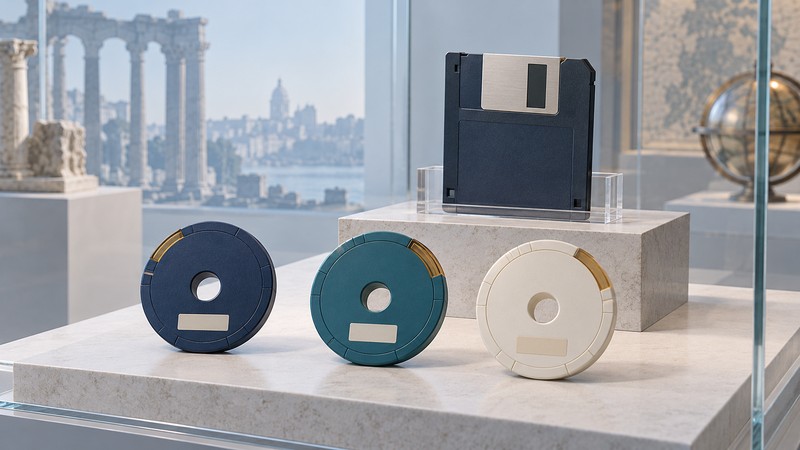
FlashDisc was a 2006 proposal for small, reusable USB storage that people could give away with their files. Its circular case, write-on label and multi-pack presentation addressed a social task: handing someone a document or a few photographs without lending a personal drive that had to come back.
The platform and the retail product
The M-Systems announcement of March 15, 2006 described a 16–32 MB FlashDisc concept for sharing files. The Memorex announcement on the same date specified a retail package of three 16 MB FlashDiscs with a suggested US price of $19.99. Those were launch-era specifications and pricing, not a present-day offer.
Memorex described circular devices with removable USB-connector caps and write-on labels. The physical design made each copy identifiable: a recipient could receive an object carrying a small set of files, with a note written on it. The connector used USB, so the “disc” name described the product’s shape and sharing idea rather than an optical-disc mechanism.
Count handoffs as well as megabytes
A personal drive is normally bought to keep and reuse. A sharing medium also has to make sense per recipient. FlashDisc’s proposition therefore asks a different question: how much does each independently deliverable copy cost, and is its capacity sufficient for the intended files?
That example explains the concept’s appeal and its constraint. Small files could fit the handoff, while a single larger folder could exceed each carrier even when the pack’s combined nominal capacity looked sufficient.
What the design tells us
The useful historical lesson is the unit of exchange. A labelable, reusable object can make an individual delivery tangible. Capacity per device, the number of recipients, the need to return the carrier and the recipient’s ability to read it all affect that task.
The launch releases document the companies’ proposal and intended retail product. They provide no basis here for a sales total or a verdict about commercial success. Keep those outcomes separate from analysis of the design.
For an ordinary USB transfer today, use the USB flash-drive guide to choose a supported format and verify the copied files. A surviving FlashDisc deserves the same first step as other old media: preserve wanted contents before repurposing it.