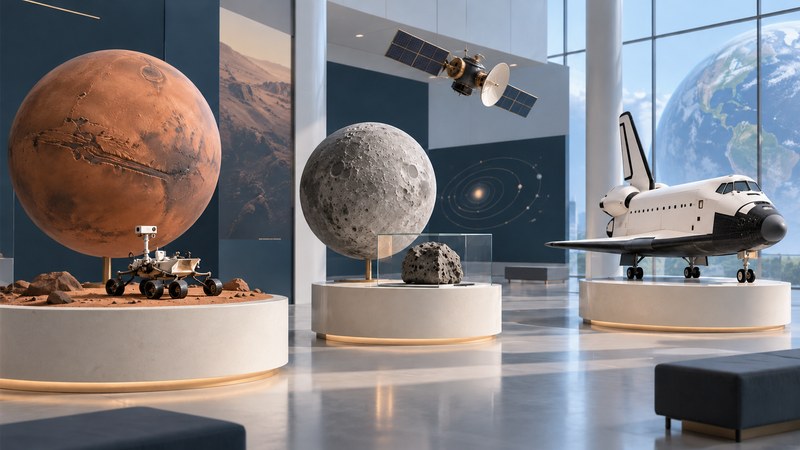
Explore how spacecraft reach other worlds, how scientists read the evidence they send home, and what human missions have taught us about working in space.
Start with a broad explanation, examine an image or water discovery, then follow the mission and engineering details that interest you. This library brings planetary science, robotic exploration and Shuttle history together.
Start with the big picture
Reader guide
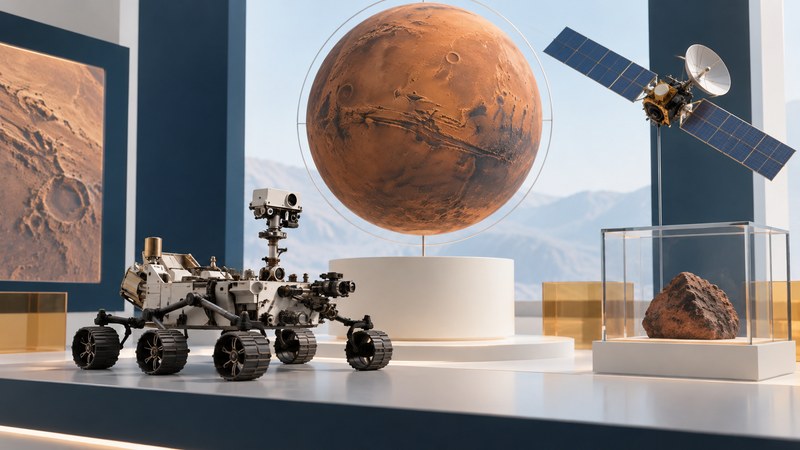
Mars Exploration: How We Study the Red Planet
Understand the roles of orbiters, landers and rovers, then follow a discovery from measurement to interpretation.
Reader guide
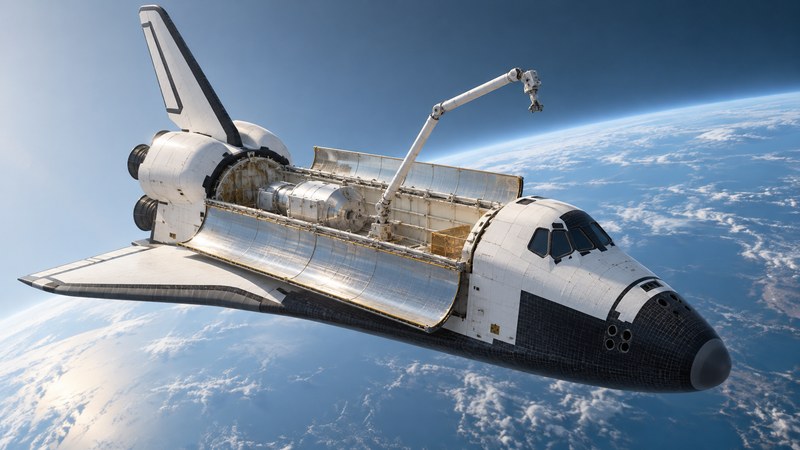
The Space Shuttle: How It Worked and What It Made Possible
Follow launch, orbital work and landing; explore the program through mission records and its engineering legacy.
Reader guide
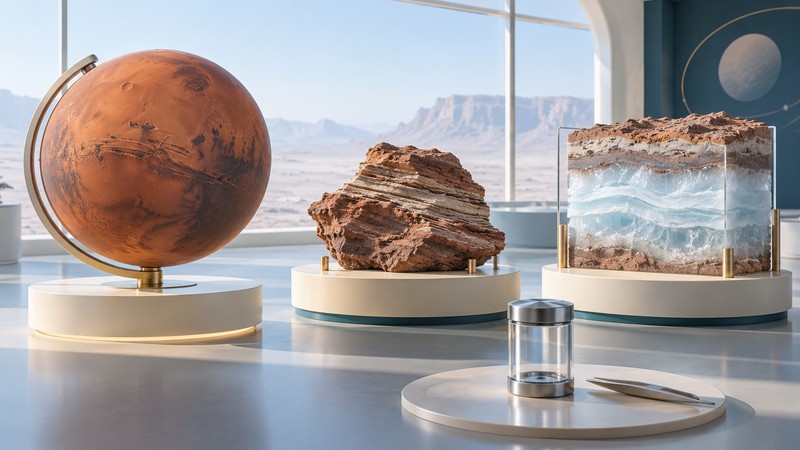
Why Explore Mars? The Questions Behind the Missions
Connect Mars science questions to the measurements that address them, and practice separating evidence, interpretation and uncertainty.
Read the evidence from other worlds
Reader guide
Mars Pictures: How to Find and Read Mission Images
Find official images, interpret scale and color, and try a worked example with a downloadable observation sheet.
Reader guide
Water on Mars: Ice, Ancient Rivers and the Evidence
Separate ice, mineral evidence, ancient river deposits and interpretations of present-day surface change.
Reader guide
Water on the Moon: Where It Is and How We Know
Compare polar ice, surface molecules and volcanic material; work through the gap between detection and extraction.
Historical report · 2004
Mini-TES on the Mars Exploration Rovers
A 2004 report about calibration algorithms for the rovers' infrared spectrometer.
Explore the missions
Reader guide
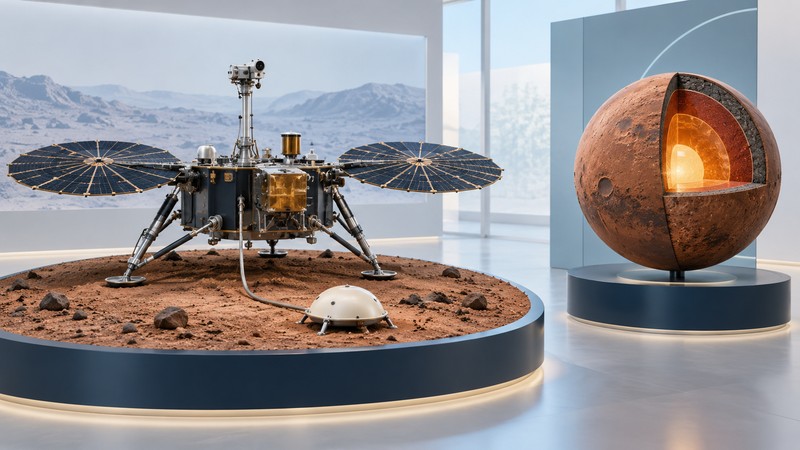
Spirit and Opportunity: How Two Rovers Read Mars
Compare the twin rovers, their field tools, water-related discoveries and mission outcomes, then follow an observation through its geological interpretation.
Reader guide
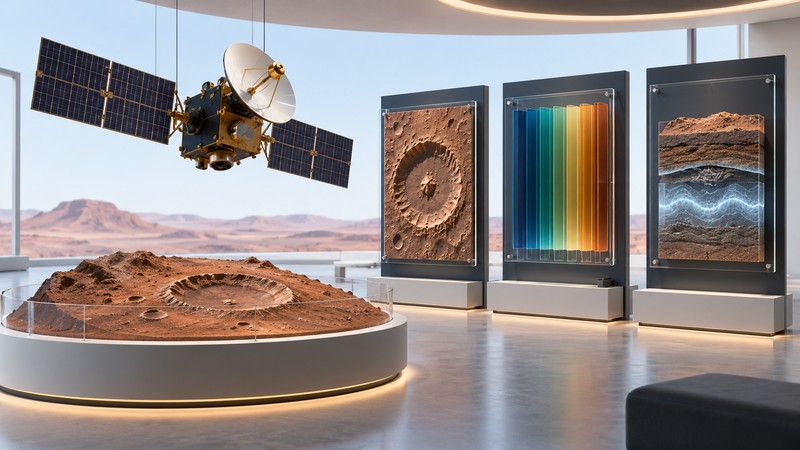
InSight: What Marsquakes Revealed About Mars
Connect InSight instruments and seismic signals to discoveries about the Martian interior, and understand the mission outcomes and uncertainties.
Reader guide
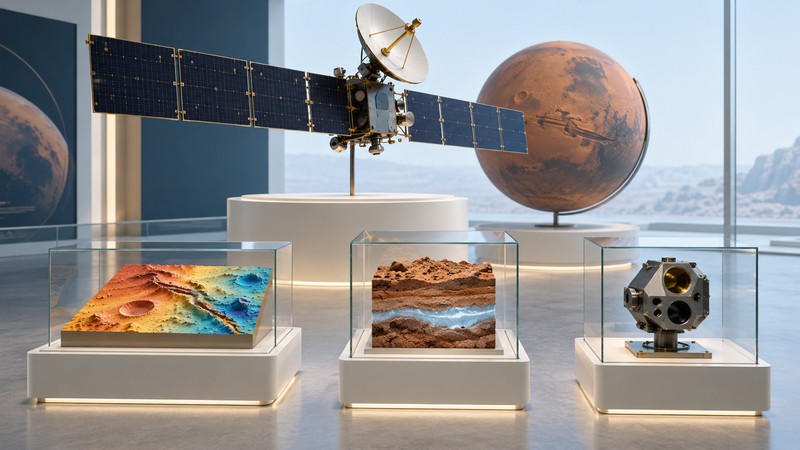
Mars Reconnaissance Orbiter: Reading Mars from Above
Match MRO instruments to scientific questions, combine imaging with other evidence, and find observations in mission archives.
Reader guide
Mars Odyssey: Mapping Minerals, Ice and Radiation
Explore Odyssey instruments and results, interpret hydrogen and thermal maps, and follow the mission through its scientific record.
Understand spacecraft engineering
Reader guide
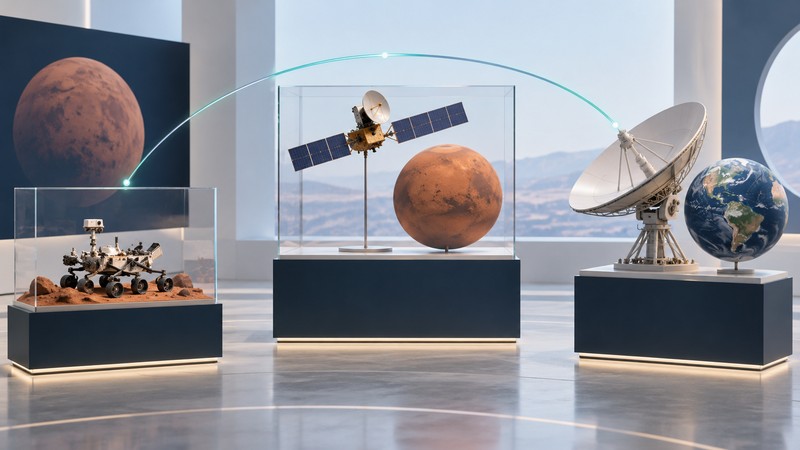
How Mars Missions Send Data Home
Trace the rover-to-orbiter-to-Earth data route, distinguish delay from data rate, and calculate a simple Mars communication example.
Reader guide
How Spacecraft Enter Mars Orbit
Follow approach, capture and aerobraking using Mars Odyssey, and learn how to read the maneuvers and timing in an arrival report.
Reader guide
Why InSight Missed Its Launch Window: A Seismometer Engineering Case Study
Follow the 2015 seismometer test problem, the missed 2016 launch window and the redesign that enabled InSight to reach Mars in 2018.
Reader guide
CubeSat Water Propulsion: How It Works and What It Can Do
Compare water-vapor and electrolysis propulsion, calculate a simple impulse example, and distinguish laboratory, suborbital and orbital demonstrations.
Reader guide
10 Ways AI is Advancing Space Exploration
Explore autonomy, mission planning, data analysis, spacecraft monitoring and human oversight.
People, models and learning
Reader guide
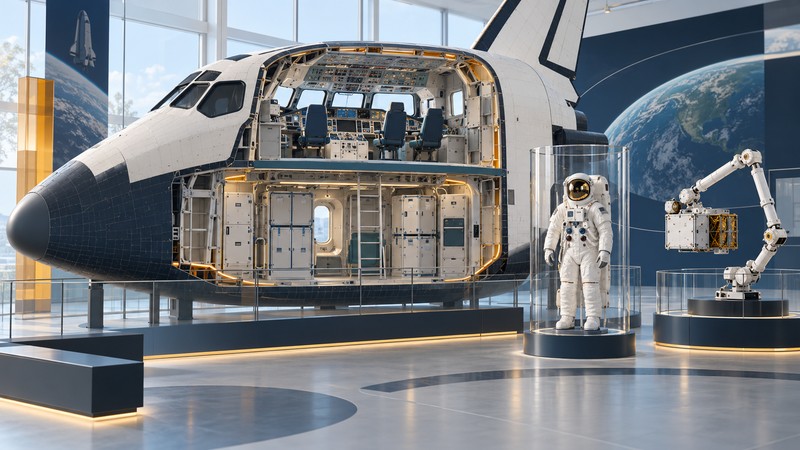
Working Aboard the Space Shuttle: Crew Roles and Daily Life
Understand Shuttle crew responsibilities, training, robotics, spacewalks and daily routines through a Hubble servicing example and mission records.
Historical product description
Space Shuttle Construction Model
An older description of a detailed building-block model; product availability requires a separate check.
Historical product description
Space Shuttle Toy Set
An older toy description combining a Shuttle with imaginative mission accessories.
Follow primary sources
Use NASA's Mars Exploration Program for mission context, NASA's lunar water overview for forms of evidence, and the Shuttle history collection for mission records and oral histories. NASA's InSight record supplies the completed mission's chronology.
When a report announces a discovery, check the instrument, observation date and supporting study. Separate a measurement from its interpretation and a planned capability from a demonstrated result.
For telescopes, observing and the wider universe, visit Astronomy.