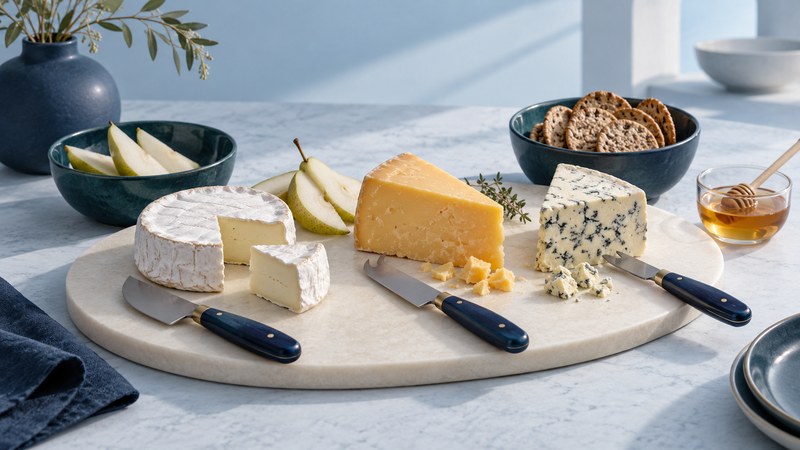
A useful cheese board starts with the occasion and the people eating it. Choose three contrasting cheeses, decide how much cheese belongs in the meal, then buy accompaniments that let those cheeses stand out. A plate you can replenish is easier to manage than a crowded display.
Choose the occasion, then the quantity
The following are illustrative shopping plans, not nutrition targets. The tasting plan allows 15 g of each of three cheeses per person, alongside other food. The appetizer plan allows 60 g total per person. The light-meal plan allows 100 g, with bread, fruit and substantial sides. Adjust for appetites, other dishes and the amount you expect to use afterward.
On a narrow screen, focus the table and use the arrow keys to scroll.
| Guests | Small tasting: 45 g each | Appetizer: 60 g each | Light meal: 100 g each |
|---|---|---|---|
| 2 | 90 g | 120 g | 200 g |
| 4 | 180 g | 240 g | 400 g |
| 8 | 360 g | 480 g | 800 g |
Multiply guests by the chosen grams per person. Divide the total among your cheeses, allowing a larger share for the likely favorite. Rind and wax can reduce the edible amount, so ask the counter to weigh a practical piece. Buying a whole wheel may leave a useful remainder; include that remainder in another meal.
Give each cheese a job
- A familiar firm cheese: cheddar or Edam, easy to slice and share.
- A soft contrast: Camembert, served in small wedges with a separate knife.
- A stronger accent: a small piece of blue cheese. For guests who prefer another firm cheese, choose Manchego instead.
Before shopping, ask about milk allergies, other allergens and dietary requirements. Read the exact cheese and cracker labels. Separate utensils help keep flavors distinct, but an allergen-containing board requires a separate plan for anyone avoiding that allergen. For guests at increased risk of Listeria, including pregnant people, adults 65 or older and people with weakened immunity, use CDC safer food choices to choose suitable foods.
A four-person appetizer board
Worked example: 4 × 60 g = 240 g of cheese. Allocate 100 g cheddar, 100 g Camembert and 40 g blue. Add one sliced pear, a small bowl of crackers and bread as needed. These accompaniments are a suggested arrangement; scale them to what else is being served. Put any nuts in their own clearly identified bowl.
Set the cheeses apart with their appropriate knives. Cut a few starter pieces so guests can see the intended portion. Put moist fruit and preserves in dishes to keep crackers crisp. Leave the cheese itself visible and a clear space where a guest can cut a piece.
Prepare, replenish and put away
- Before guests arrive: portion the cheeses, wash the fruit, gather utensils and keep perishable ingredients refrigerated.
- At serving: put out a small portion and note the time. Keep the reserve cold.
- During the gathering: replace a nearly empty serving plate with a fresh one; avoid topping new food onto old portions.
- Afterward: distinguish untouched refrigerated reserve from food that has sat on the board. Keep track of total time out.
FDA: serving safe buffets advises keeping cold perishable foods at 40°F or below and discarding them after more than two hours without temperature control, or one hour above 90°F. Follow the cheese’s package directions and use the shorter time limit when conditions require it.
Open the printable cheese-board shopping planner for the quantity table, a blank shopping list and serving reminders. Download the one-page PDF planner for printing.