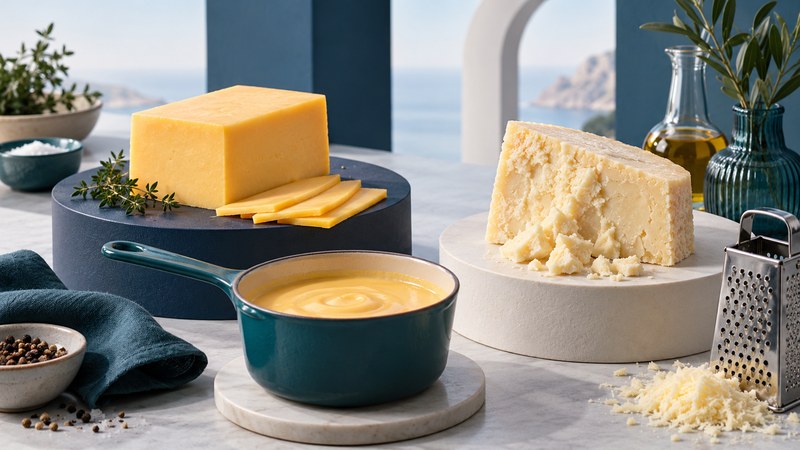
For a first cheddar sauce, start with a mild or sharp block and a measured sauce recipe. For a tasting plate, compare the cheeses you enjoy eating on their own. Age influences both flavor and texture, so the strongest-tasting block is not automatically the easiest choice for every dish.
Start with the job
On a narrow screen, focus the table and use the arrow keys to scroll.
| Your plan | Useful starting choice | What to check |
|---|---|---|
| Smooth sauce | Mild or sharp cheddar, freshly grated | Recipe quantity by weight; add cheese gently |
| Sandwiches | Slices cut to an even thickness | Flavor beside the bread and filling |
| A tasting plate | Two cheddars with different stated ages | Compare texture as well as sharpness |
| A finishing accent | A cheddar you enjoy in a small bite | Taste the dish before adding more salt |
Cabot’s guide to melting cheese explains that its mild and sharp cheddars have more moisture and melt more easily than its more heavily aged varieties. Treat that as a useful starting point and compare the actual product. Age terms differ among producers; an explicit month count is more useful for a side-by-side tasting than assuming every “extra sharp” cheese is identical.
Choose the size for your next few meals. A block gives you control over slices and shreds; packaged shreds save work and may include anti-caking ingredients. Read their ingredients and use the form called for by your recipe. Compare price per weight, then consider whether you will use the whole package.
A measured route to cheddar sauce
Use Cabot’s measured cheddar sauce recipe as a complete starting recipe. Its base combines 1¾ cups milk, 3 tablespoons butter, 3 tablespoons flour and 6 ounces grated cheddar, with mustard and optional seasonings. The recipe specifies making and thickening the milk sauce before switching off the heat and incorporating the cheese a handful at a time.
Have the grated cheese ready before you begin. Whisk the milk into the roux in small additions at first so lumps are easier to work out. Once the sauce base is smooth and thickened, take it off the heat and stir in the cheese gradually. Look for an even texture before adding another handful. Taste at the end, when the cheese’s salt and flavor are present.
The source recipe is the measured formula; changing the cheese, fat level or amount of liquid changes the result. For pasta, also consider how much sauce the cooked pasta will absorb. The macaroni-and-cheese collection offers flavor ideas; choose one complete method for the dish you are making.
Read what the sauce is doing
- Visible cheese shreds: stir patiently with gentle residual warmth. If needed, return briefly to very low heat.
- Oil beads or graininess: remove the pan from heat. Overheating can separate the mixture; extra boiling usually makes it harder to recover. A small splash of warm milk may loosen it, but severely separated sauce may remain uneven.
- Too thick after standing: stir in warm milk a little at a time until it coats the food as intended.
- Flavor too dominant: use a smaller amount as a topping. For the next batch, choose a milder cheese while retaining the recipe’s proportions.
Compare two blocks before buying a large one
For a small personal trial, cut equal bites from two labeled cheddars. Taste each plain, then on the same bread. Record sharpness, crumbliness and the flavor you prefer. Make two small toasts with equal cheese weights and the same heat; compare softening and oil release. This kitchen comparison helps choose a sandwich cheese; it does not establish how either will behave in every sauce.
Keep the next portion useful
Rewrap the cut face, retain the package directions and mark the opening date. Store refrigerated cheese at 40°F (4°C) or below; see FDA refrigerator guidance. Grate only the amount you need. For a serving plan that uses the rest of a block, build a small cheese board or portion it for another cooked dish.