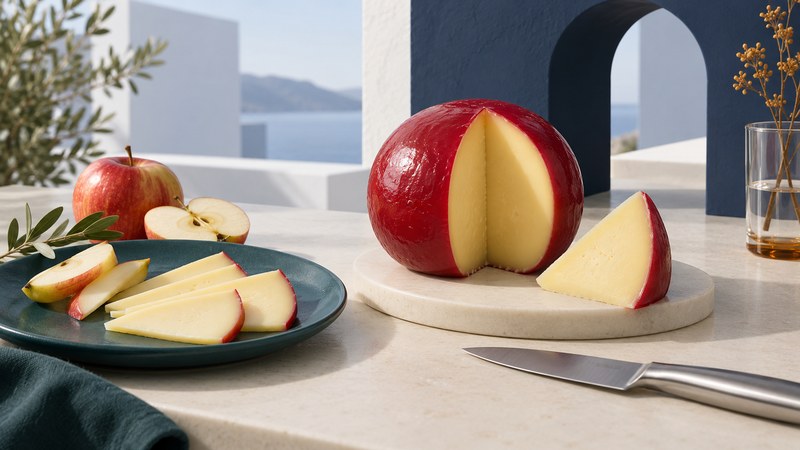
Edam is a useful starting point when you want a mild slicing cheese, but age and packaging still matter. Choose the portion for your next meals, remove wax from the piece you will eat and follow the package’s refrigeration directions.
Ask whether it is young or mature
Castello’s Edam guide describes young Edam as springy and mild, becoming drier, more crumbly and more intense with age. It also notes that Edam is made beyond the Netherlands and that export cheeses may receive a wax coating. Read the actual country, milk, age and producer information instead of relying on the shape or red coating.
Buy young Edam when your aim is an easy slice for bread or a mild snack. For a tasting with more pronounced flavor, ask about a mature version and sample it if possible. Those choices concern eating character; a cheese’s maturation age is different from how long an opened piece should be kept at home.
On a narrow screen, focus the table and use the arrow keys to scroll.
| Your question | What to compare | A useful decision |
|---|---|---|
| Which is milder? | Taste similarly aged pieces | Choose the flavor that suits the filling or snack |
| Which slices more neatly? | Firmness and elasticity of the cut piece | Choose the texture for your sandwich |
| Which is better for cooking? | The form and age required by the recipe | Try a small portion before a full dish |
| Which is better value? | Price per weight and usable amount | Buy the quantity you will finish |
Castello presents Gouda as a similarly mild option with sweet, creamy notes. A young Edam and a very old Gouda make a less controlled comparison than two similarly aged cheeses. The broader lesson is to compare the products in front of you, not just the names.
Treat wax as packaging
- Check for wrapping outside the wax and remove it before cutting.
- Place the cheese securely on a clean cutting board. Cut a manageable portion using an appropriate knife.
- Peel or trim the wax from that portion, keeping fragments out of the food. Follow any further rind or coating instructions on the package.
- Cover the exposed cut face of the remaining cheese and return it to the refrigerator.
Wax on the outside does not replace storage instructions, especially once a cheese is cut. Keep the label and its date with the remaining portion. If the cheese is sold already sliced, follow that package’s directions rather than borrowing a whole-wheel storage assumption.
Give one purchase several planned uses
Illustrative plan for a 200 g piece: reserve 80 g for four modest sandwiches at 20 g each, 60 g for two snack plates at 30 g each, and 60 g for a cooked dish. The allocations total 200 g and can be changed to suit your household. They are a shopping exercise, not a tested recipe or nutrition prescription.
For sandwiches, cut even slices and pair them with ingredients you already enjoy. For a snack, try apple or pear with plain bread. For cooking, use the allocated cheese in a recipe written for a comparable young semi-hard cheese, or test a small toast to see how it softens. Aged, drier Edam may make a different result from a young block.
Use the package and the next meal as your guide
Keep refrigerated cheese at 40°F (4°C) or below; see FDA refrigerator guidance. Wrap the exposed surface, note when it was opened and follow the maker’s directions. A manufacture date, an age statement and an opened-storage instruction answer different questions. There is no single “eat within weeks of manufacture” rule that describes every Edam product.
For a reserve intended for cooking, U.S. Dairy’s cheese-freezing guidance explains that freezing can change cheese texture and make it crumbly. Portion first and thaw in the refrigerator. Choose a small package when you want neat fresh slices. For serving quantities, continue to the cheese-board planner; for slicing technique, see the cheese-knife guide.