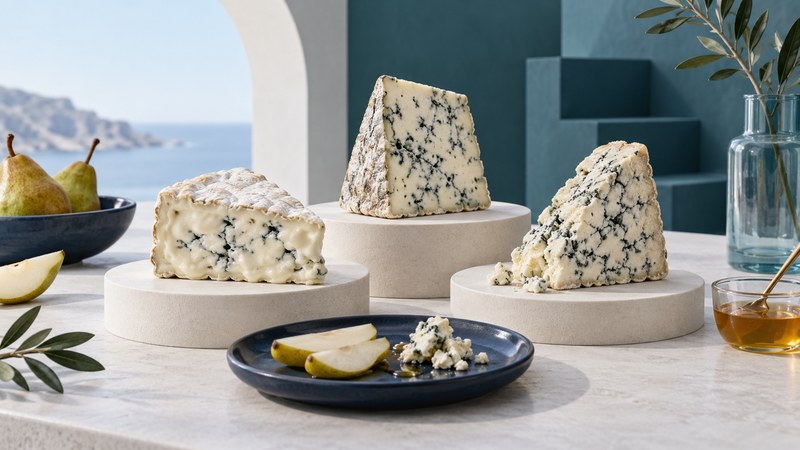
Start with a small piece of blue cheese and a clear use for it. A creamy wedge for spreading, a firmer cheese for crumbling and a strong finishing accent can provide very different experiences. Ask for a sample when available and describe the texture you want.
Texture is a useful first question
Blue cheeses develop their characteristic veins through deliberately introduced cheesemaking molds. They can be creamy, firm or crumbly, with considerable differences in intensity. Castello’s blue cheese overview provides an overview of this family; the producer’s description of an individual cheese is a better guide than vein color alone.
On a narrow screen, focus the table and use the arrow keys to scroll.
| You want to… | Ask for… | Try it with… |
|---|---|---|
| Ease into blue cheese | A mild, creamy blue | Plain bread first, then a pear slice |
| Finish a salad | A blue that crumbles cleanly | A small amount over greens; taste before seasoning |
| Make a sauce | A creamy blue suited to the chosen recipe | A mild sauce base that leaves room for the cheese |
| Explore stronger flavors | A more intense, firmer example | Small bites, water and plain crackers |
For a concrete comparison, Castello Extra Creamy Danish Blue product description describes a softer flavor than that producer’s traditional Danish Blue. Gorgonzola dolce and piccante offer another useful style comparison. These are starting points, not a universal mild-to-strong ranking: age, producer and personal perception affect the experience.
Try a three-cheese tasting
Illustrative plan: two people tasting three blues at 10 g each need 2 × 3 × 10 = 60 g total. Small retail packs may exceed this; decide how to use the reserve before opening all of them. Choose one creamy mild example, one crumbly cheese and one that the seller describes as more intense.
- Write down the producer, style, milk type and any stated age. Keep those labels beside your notes.
- Taste a small bite plain. Record texture, saltiness and intensity separately on a simple 1–5 scale.
- Try the same cheese on plain bread, then with a little pear. Note which combination you prefer.
- Return to the mildest-tasting cheese after a sip of water. Decide which you would buy for eating and which for cooking.
The scores are your own comparison, not a quality grade. A cheese you find too strong plain may be useful in a small amount in a larger dish. Conversely, a favorite creamy wedge may disappear into a heavily seasoned meal.
Give a small amount a clear role
For a salad, crumble a little over a single serving first and taste it with the dressing before seasoning the whole bowl. For a sandwich, try a thin layer alongside a mild filling. For a dressing or sauce, follow a measured recipe and add the blue gradually; both salt and intensity can build quickly.
Keep sweet accompaniments optional. A pear slice, a little fruit preserve or a plain cracker lets each diner choose the balance. On a mixed cheese board, give blue cheese its own knife and a little room so it does not spread through the other cheeses.
Recognize the intended mold and keep the label
Normal veins belong to the cheese’s production. An unfamiliar new surface growth needs a separate judgment. USDA guidance on mold and cheese distinguishes mold used in cheesemaking from spoilage and gives different advice for soft, hard and crumbled cheese. If you cannot identify a change, seek producer guidance or discard the affected product; taste is not a safety test.
Keep cheese covered and refrigerated according to its label, and return the reserve promptly after cutting the tasting portions. CDC guidance on soft cheeses and raw milk explains why pasteurized dairy is the safer choice and why refrigeration still matters. For a household with someone at increased risk, check the current CDC food-choice guidance before planning a soft-cheese tasting.