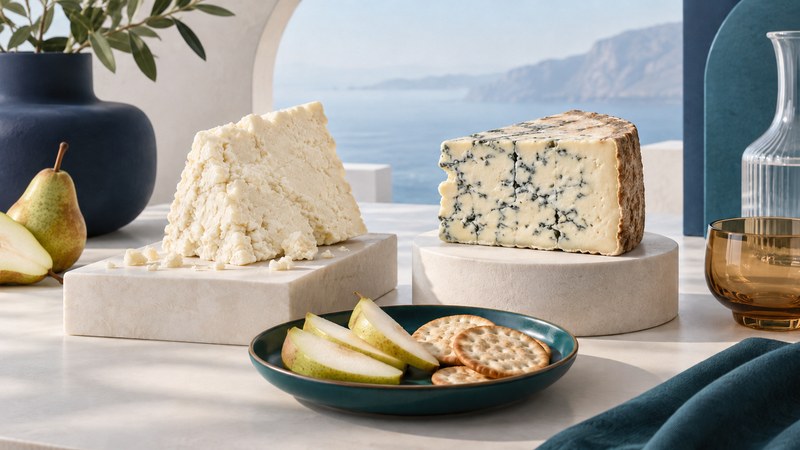
Start a Stilton purchase with the full name: Blue Stilton, White Stilton or a product containing Stilton. That choice tells you more about the eating experience than a decorative package or the word “vintage.” Then decide whether you want a tasting wedge, a crumbly ingredient or a ready-to-serve blend.
Read the name and origin
The Stilton Cheese Makers’ Association explains that Blue and White Stilton have protected-origin status and are made in Derbyshire, Nottinghamshire or Leicestershire under the relevant specifications. Look for the product name, producer and origin information on the actual pack. Keep the label with a counter-cut piece so you can identify it again.
Read ingredients when fruit or other additions appear in the name. A White Stilton-and-fruit blend brings a different sweetness and texture from plain White Stilton. Potted Blue Stilton is another distinct format: the association describes cheese packed into a pot, with a different consistency from a wedge. Choose the format that serves your intended meal.
Compare the styles you can buy
On a narrow screen, focus the table and use the arrow keys to scroll.
| Product | What to expect | A useful first use |
|---|---|---|
| Blue Stilton | Blue veining and a creamy, tangy character | Small crumbles on a salad or a tasting with plain bread |
| White Stilton | Young, crumbly white cheese with a creamy finish | A plain tasting to learn its texture |
| White Stilton with additions | The cheese plus the named fruit or flavorings | Taste before choosing sweet accompaniments |
| Potted Blue Stilton | A packed preparation rather than a loose wedge | Follow its own serving and storage instructions |
These distinctions follow the association’s Stilton style descriptions; individual products still vary. For a stronger flavor, ask about the actual mature or vintage cheese and request a sample where available. A style name helps organize a choice, while the piece in front of you determines whether you enjoy it.
Build a small tasting
Illustrative tasting for four: offer 15 g Blue and 15 g plain White Stilton per person, or 120 g total. Divide into eight small portions. Taste both with plain crackers first, then try pear or apple. Record whether you prefer the blue flavor, the white cheese’s crumbliness, or either with fruit.
Keep chutney and other strong accompaniments separate so everyone can vary a bite. This is a tasting alongside other food; adjust quantities for appetites and the meal. Use the board planner if Stilton is joining a larger selection.
Give the remainder a job
the association’s serving suggestions recommends crumbling Blue Stilton into salads, soups and dips, and notes that chilled cheese slices more easily for sandwiches. Choose one of those routes before buying a large wedge. Add a small amount to a serving of an already-prepared soup and taste before changing the whole pot.
For a sauce or baked dish, follow a complete recipe written for the cheese. Replacing every gram of a mild melting cheese with Blue Stilton also changes salt and intensity. The Gorgonzola comparison explains another blue-cheese choice; use it to compare textures and culinary roles rather than assuming identical results.
Serve a portion and keep the reserve cold
Follow the package’s refrigeration and opened-storage directions. Wrap the remaining wedge and keep it in a clean container. FDA serving and time limits sets the limit for perishables without temperature control at two hours, reduced to one hour above 90°F; include any pre-serving time. Take out the portion you plan to eat and leave the rest cold.
For an unexpected change in a stored piece, consult the guide to manufacturing molds and unwanted growth, paying attention to whether you have a hard block, a soft product or prepared crumbles.