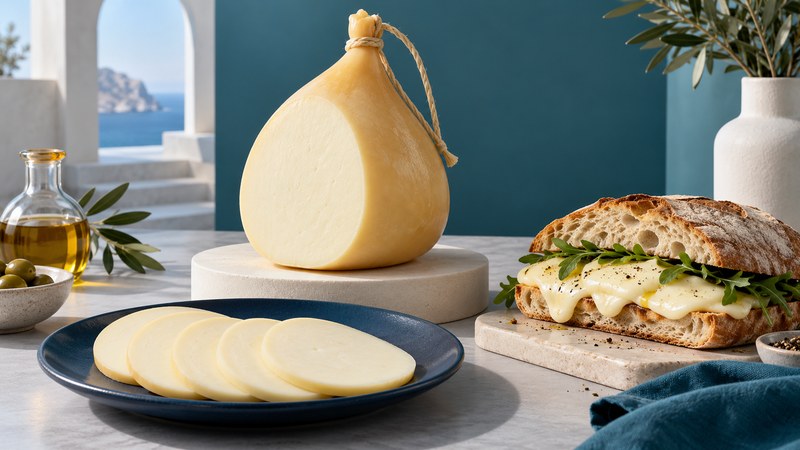
For an everyday sandwich, start with a mild provolone sliced evenly to fit the bread. For a bolder board or finishing accent, sample an aged style. Read the full name and producer information because a deli slice and a protected-origin Italian wedge may have different characteristics.
Separate style from format
Provolone Valpadana DOP is a cow’s-milk pasta-filata cheese: the curd is stretched during production. The Provolone Valpadana Consortium’s dolce guide (Italian) describes dolce as the shorter-aged style. Its Provolone Valpadana styles (Italian) describes piccante as more intense, with different rennet and maturation from at least three months to more than a year. These details refer to Provolone Valpadana DOP; check the actual producer for other provolones.
“Sliced” describes a convenient format. “Smoked” describes an additional flavor characteristic. Neither word tells you the complete age, origin or expected melting behavior. If the deli label is sparse, ask to see the original product label and request a small sample.
On a narrow screen, focus the table and use the arrow keys to scroll.
| Task | Useful purchase | Check before buying |
|---|---|---|
| Cold sandwiches | Even deli slices | Thickness, flavor and quantity needed |
| Warm sandwiches | A mild product you can test | How it softens on your bread with your heat source |
| Cheese board | A small wedge or cut piece | Style, age and whether rind or coating should be removed |
| Strong finishing flavor | A firmer aged example | Taste before combining with salty fillings |
Build a sandwich around an even layer
Cut or fold slices so they cover the bread without a thick pile in the center. Drain wet vegetables and spread condiments thinly. This makes it easier to distinguish a cheese problem from a sandwich that has become soggy from the filling.
Illustrative quantity: four sandwiches using 30 g cheese each require 120 g. Slice counts vary, so weigh a few slices or check the package’s stated weight per serving. Adjust the amount for the rest of the meal rather than treating this example as a fixed serving recommendation.
Try one small toast first
- Use a small piece of the bread planned for the meal and a thin, even layer of cheese.
- Cook with moderate, controlled heat using your normal sandwich method. Watch both bread browning and cheese softening.
- Stop when the cheese is softened to your liking and the bread is appropriately browned.
- Record whether the cheese stayed in a sheet, stretched, released oil or became tough as it cooled.
If the bread darkens before the cheese softens, reduce the heat and use thinner slices for the next attempt. If the flavor overwhelms the filling, reduce the amount or choose a milder product. The trial tells you about this sandwich setup; it does not establish a universal melting rank for every provolone.
Choose the property you need to preserve
When substituting, decide whether the recipe depends on a mild flavor, a slice that holds together or a specific melted texture. A similar-looking cheese may change moisture or saltiness. Keep the original recipe’s amount for an initial small trial, then adjust deliberately instead of changing cheese, bread and cooking method together.
For a milk-based cheese sauce, begin with a formula designed for the cheese you intend to use; the cheddar guide explains why controlling the sauce base and heat matters. For cold service, taste provolone alongside Edam or another mild slicing cheese and choose the one that works with your accompaniments.
Portion the next use
Keep counter packaging or transfer the product name and date to your container. Follow the label’s storage and opening guidance. Refrigerate at 40°F (4°C) or below using FDA refrigerator guidance. Separate the amount for today before assembling sandwiches, so the reserve stays cold and is handled less.
For a cheese board, cut a few starter slices and provide a separate knife. Remove wax, casing or other inedible covering according to the producer’s directions. Let the cheese’s actual texture guide the cut, rather than its decorative shape.