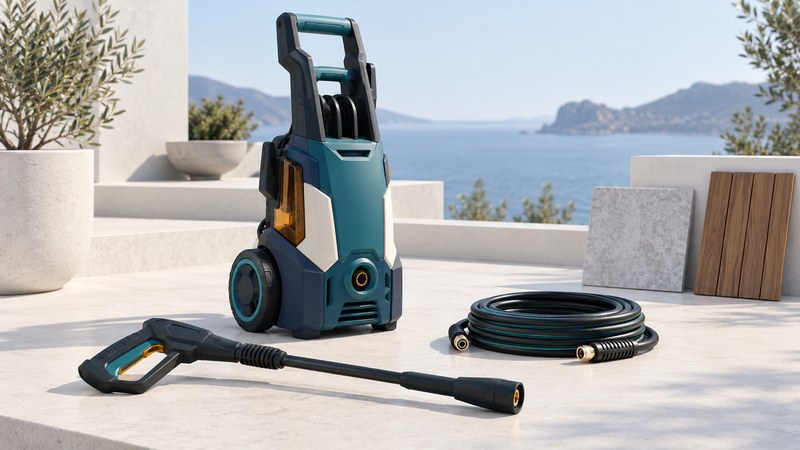
Start with the surface and the site
A pressure washer is useful when its spray can remove the dirt without damaging the material beneath it. Begin with the surface maker’s cleaning instructions, the size of the area and a route for runoff. Record the finish as well as the material: sealed concrete, painted wood and bare wood can need different treatment.
| Job detail | What to establish | Why it matters |
|---|---|---|
| Surface and finish | Permitted cleaning method, detergent and pressure limits | A powerful machine still needs a suitable setting and attachment. |
| Water supply | Available flow, hose specification and inlet requirements | The washer needs the supply stated in its manual. |
| Work area | Reach from water and electrical supplies; room for safe footing | Hose routing and access affect practical usability. |
| Cleaning frequency | Occasional small jobs or repeated large areas | Storage, setup time and service support belong in the comparison. |
For fragile, deteriorated or unidentified finishes, establish an approved method before trying pressure. If you cannot identify the surface or provide stable access, get advice from its supplier or a cleaning professional.
Read pressure and flow together
PSI describes pressure; GPM describes water flow. Compare operating figures under stated conditions, then check whether the accessories can deliver the result you need. A maximum PSI figure and a maximum GPM figure may describe different operating configurations.
For an electric machine, record supply voltage, current, cord rules and GFCI instructions. For a gasoline model, include fuel, engine maintenance, weight and an outdoor operating location in the plan. Compare the assembled machine and hose arrangement, including how you will move and store them.
Choose the spray system as a whole
Check the manual’s nozzle or lance guidance for your surface. Confirm connector type, pressure rating and required flow for every replacement hose, gun or surface-cleaner attachment. A fitting that connects physically can still be unsuitable for the machine.
Kärcher’s electric-washer guidance warns that its concentrated turbo spray can damage delicate surfaces or remove paint. Begin with the gentlest approved setup and a small inconspicuous test. Follow the specified distance and technique; nozzle color alone is insufficient guidance across different systems.
Use only detergents approved for the washer and the surface. Read the product label for application, rinsing, protective equipment and disposal. Plan runoff before cleaning, especially where it could reach a drain, planting bed or neighboring property. Local disposal requirements depend on what the water contains.
Prepare and check a small test area
- Inspect the hose, gun, connectors and power cord with the machine off. Resolve leaks or damage before use; never search for a high-pressure leak with your hand.
- Clear people, pets and loose objects from the area. Wear the protection required by the manual and choose stable footing. Keep the spray away from people and electrical equipment.
- Connect the water supply and purge or prime exactly as instructed before starting the pump. For electric equipment, test its GFCI and follow the manual’s electrical-connection requirements.
- Test the approved setup on an inconspicuous patch. Stop and inspect for lifted fibers, removed finish, etching or loosened joints before enlarging the area.
- Finish using the manual’s shutdown and pressure-release sequence. Disconnect accessories only after pressure is released.
The CDC pressure-washer safety guide calls for gasoline machines to remain outdoors at least 20 feet from doors, windows and vents. Never run one in a garage or other enclosed space. Keep electrical connections clear of runoff. High-pressure spray wounds need prompt medical attention even when the surface injury looks small.
Leave a record for the next cleaning
Write down the machine, surface, detergent, attachment and test result. A useful note says “approved wide spray, intact finish after drying” and identifies the tested patch. If the finish changes, reassess the method before reusing the settings.
Drain and store the machine using its model-specific procedure. Kärcher’s guidance includes draining, suitable pump protection and dry storage protected from freezing. Check your own manual before choosing a storage chemical or method. Leave enough room to store the hose without sharp bends and inspect it again before the next use.
Choose your next guide
- Electric Pressure Washers — Check electrical supply, hose setup and machine compatibility.
- Honda-Powered Pressure Washers — Identify both the engine and washer before planning maintenance.
- Kärcher Pressure Washers — Verify the exact machine, connectors and compatible accessories.
Browse cleaning equipment or explore all 47 tool guides.