Start with three identities
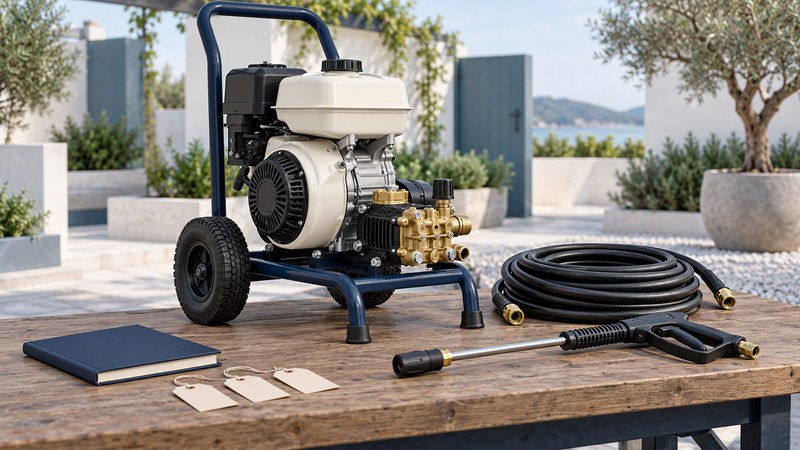
A Honda-powered pressure washer combines an engine with a pump, frame and spray system selected by the equipment manufacturer. To find the right parts or instructions, record the complete washer model first, then the engine identity and any pump identification. A Honda badge on the engine gives you one part of that record.
Honda’s U.S. service FAQ directs washer problems to the equipment manufacturer and engine problems to a Honda engine dealer. That distinction matters with a used machine: the pump or hose may have been replaced, while the engine still carries its original label. Photograph the whole unit and the individual identification plates before ordering anything.
Build a usable equipment record
| Component | Record from the equipment | Find in its documentation |
|---|---|---|
| Complete washer | Maker, model, serial number; purchase or service history | Water-supply requirements, hose/nozzle system, startup, shutdown and pump protection |
| Honda engine | Full model, serial prefix and number, type code where shown | Engine oil, fuel, maintenance schedule and storage instructions |
| Pump and spray equipment | Pump label, fitted hose/gun identifiers; note unknown or replaced parts | Approved replacements and any pump-specific service requirements |
Use Honda’s model and serial-number locator to distinguish the model name from the stamped serial number and type information. Copy characters exactly and retain a photograph; a partly legible label is a reason to ask for identification help. Do not fill a missing field from a visually similar machine online.
Save the manual links or files alongside the photos. In Honda’s owner-manual library, match the engine model and applicable serial range. Confirm the washer manual separately with the equipment maker. Some pumps have their own documentation; others are covered by the washer manual and service network.
Describe the symptom before choosing a service route
Record what happened, when it began and whether a component was recently changed. Useful observations include whether the engine starts, whether it continues running, whether water delivery changed and where a visible leak appeared. Make observations from a safe position; never feel for a high-pressure leak with your hand.
- Engine starting or running problem: consult the engine troubleshooting section and report the washer model too. The load and complete-machine setup can matter.
- Engine runs but cleaning output has changed: begin with the washer’s troubleshooting instructions for inlet supply, hose, gun and nozzle; give the service provider both machine and pump details.
- Damaged hose, leaking connection or uncertain replacement: stop using the equipment and identify the approved assembly before further operation.
These are ways to organize the enquiry, not diagnoses. Before inspection or disconnection, follow the complete machine’s shutdown, isolation and pressure-release instructions. Leave pressurized-system repair and adjustments outside the owner manual to a qualified service provider.
Separate engine care from pump care
Put the engine and washer maintenance schedules side by side. Record the specified interval, the applicable hours or calendar date, the work performed and the next due point. Engine oil requirements belong to the exact engine manual. Pump serviceability, lubricant requirements and freeze protection belong to the pump or washer instructions; avoid treating an accessible cap as permission to service it.
Plan storage before the last use of the season. The engine’s fuel/storage instructions and the washer’s water-side protection are separate tasks. A serviced engine can still be attached to a pump that needs cold-weather attention. Note which steps are complete and which require a dealer.
Check the site before the next use
A documented machine still needs a suitable working location. CDC pressure-washer guidance says to keep gasoline-powered washers outdoors and at least 20 feet from windows, doors and vents. Keep the jet away from people, plan stable footing and keep bystanders clear. A pressure-washer wound can look small while causing serious damage; seek prompt medical attention after a spray injury.
Before returning the machine to work, confirm the correct manual, intact approved spray components, suitable water supply and the manufacturer’s startup sequence. Use the surface-selection guide to plan the cleaning trial. Record any unresolved fault so another user does not mistake storage for readiness.
Choose your next guide
- Pressure Washers — Start with the cleaning task and compare complete washer systems.
- Electric Pressure Washers — Check electrical supply, hose setup and machine compatibility.
- Kärcher Pressure Washers — Verify the exact machine, connectors and compatible accessories.
Browse cleaning equipment or explore all 47 tool guides.