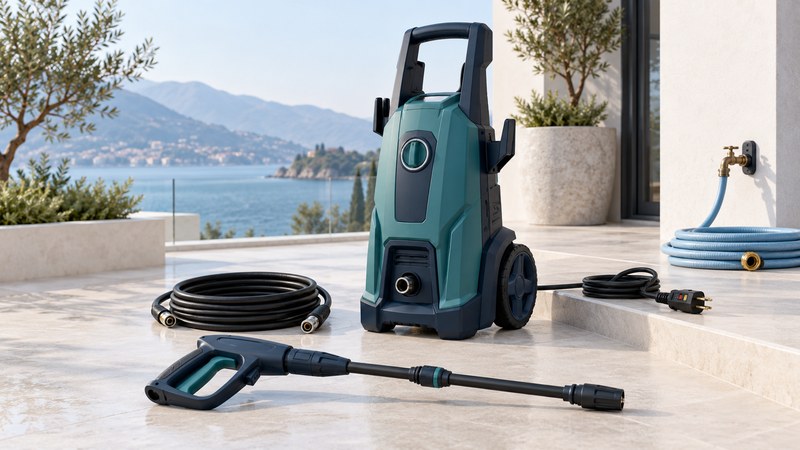
Identify the machine before planning the job
An electric pressure washer needs a suitable electrical supply, enough inlet water and a cleaning task that tolerates its spray. Start with the model plate and its manual. Record the voltage, current requirement, water-supply limits and approved hose and lance system. These details help determine where the machine can stand and what it can reach.
Find the exact model in the AR Blue Clean manual library or the corresponding manufacturer’s support site. Similar-looking machines can have different connectors, electrical instructions and winter-storage routines. This guide uses the U.S. AR383 manual as one specific example; follow the instructions supplied for your own machine and market.
Check the site before connecting anything
| Check | Record or inspect | Decision before use |
|---|---|---|
| Electrical supply | Nameplate requirements, outlet and circuit suitability | Resolve uncertainty with a qualified electrician |
| Protection and cord | Required GFCI check; cord and plug condition | Use only a sound, permitted connection |
| Water supply | Required flow, pressure and temperature; inlet filter | Confirm a suitable supply before powering the pump |
| Reach | Hose routes, approved lengths and trip hazards | Arrange a stable working position with protected connections |
| Cleaning target | Material, finish, nearby openings and runoff | Choose an approved method and a small trial area |
The AR383 manual (PDF) explicitly prohibits an extension cord. Treat that as a model requirement: a general outdoor-cord recommendation cannot override it. If the permitted setup cannot reach the work, change the plan or choose suitable equipment rather than improvising a power connection.
CDC pressure-washer guidance calls for testing GFCI protection, keeping electrical connections away from water and avoiding cord alterations. Grounded equipment needs the appropriate grounded receptacle. A tripped circuit calls for electrical investigation, not repeated resets.
Match the complete hose and spray system
Check connector type as well as pressure rating when selecting a replacement hose, gun or accessory. Keep the model and approved part number with the purchase record. A connector that screws together is only one part of compatibility; the complete assembly must be intended for the machine.
For the AR383 example, the manual requires the inlet screen to remain fitted and clear, a suitable water supply before starting the pump, and a startup sequence that purges trapped air. It also describes a Total Stop System that pauses the motor when the trigger is released. A stopped motor can still leave a pressurized hose and a machine ready to restart.
Locate the power switch, trigger lock and pressure-release procedure before beginning. Read the complete startup and shutdown sections together. The time to discover how to make the system safe is before a blocked nozzle or damaged hose interrupts the job.
Plan a small cleaning trial
Once the equipment and surface instructions agree, test a small inconspicuous area using their recommended approach. Inspect for lifted material, damaged joints or altered finish before expanding the area. Select detergent only when both the surface and machine permit it, and follow its label for application and runoff handling.
Maintain stable footing and keep people clear of the spray and flying debris. Wear the protection specified by the manual. Never direct the jet at a person or use a hand to check a leak. CDC warns that a high-pressure wound may look minor while causing serious damage; obtain prompt medical attention after a spray injury.
Finish with pressure released and storage planned
Use the exact shutdown sequence for your machine, including power isolation, water shutoff, pressure release and trigger locking before disconnection. Inspect hoses and fittings as you pack them away. Leave the machine ready for its next inspection, with the manual and approved accessory list available.
The AR383 requires indoor storage above freezing. Other models may specify additional pump-protection steps. Read those instructions before cold weather arrives; an apparently empty hose does not establish that the pump is protected. Record any fault and resolve it before the next use.
Choose your next guide
- Pressure Washers — Start with the cleaning task and compare complete washer systems.
- Kärcher Pressure Washers — Verify the exact machine, connectors and compatible accessories.
- Honda-Powered Pressure Washers — Identify both the engine and washer before planning maintenance.
Browse cleaning equipment or explore all 47 tool guides.