
Build a patio around the way people sit, eat, and move through it. Use the guides below to compare teak and cast aluminum frames, replace cushions, and choose protective covers. Start with the occupied layout, then match materials and maintenance to your space.
Choose your patio furniture guide
Choose a frame
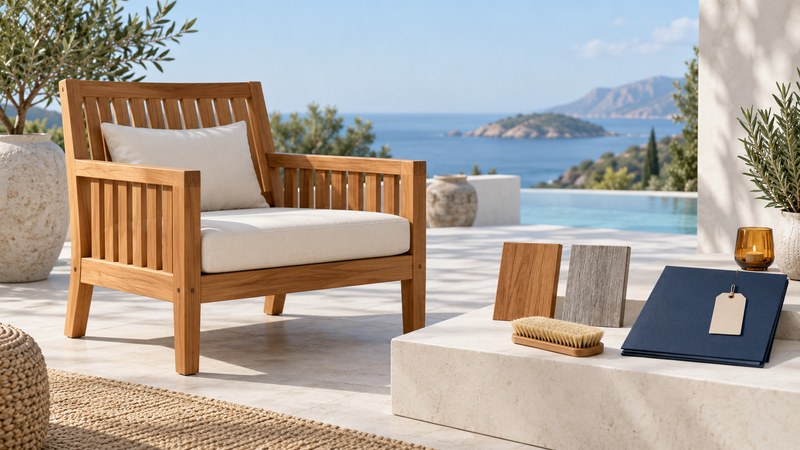
Teak Patio Furniture: Sourcing, Construction, and Care
Check sourcing evidence, inspect construction, and choose between natural weathering and a maintained finish.
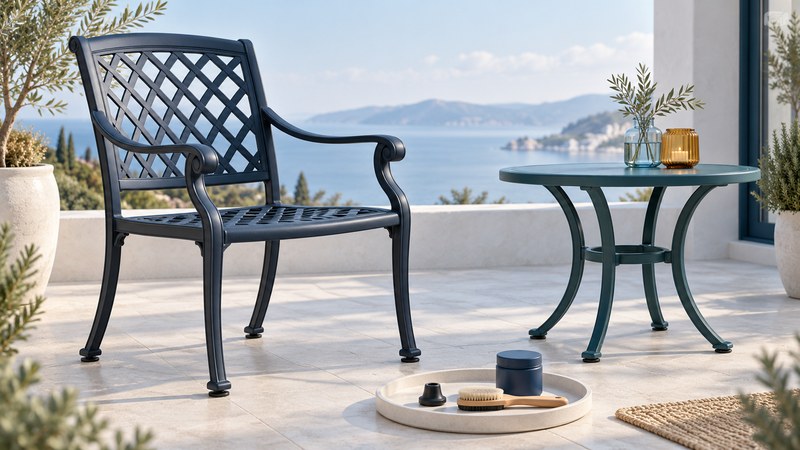
Cast Aluminum Patio Furniture: Construction, Finish, and Upkeep
Assess frame connections, finish condition, replaceable parts, and the practical work of ownership.
Fit and protect
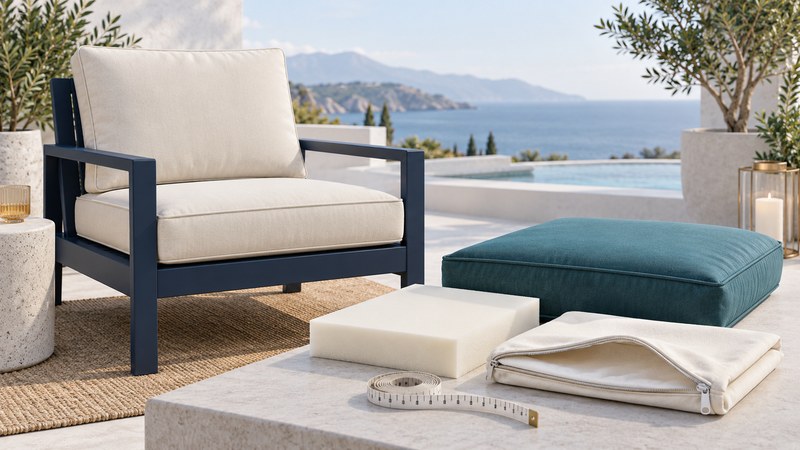
Patio Furniture Cushions: Measure, Replace, Clean, and Dry
Measure replacements, compare covers and inserts, and plan cleaning, drying, and storage.
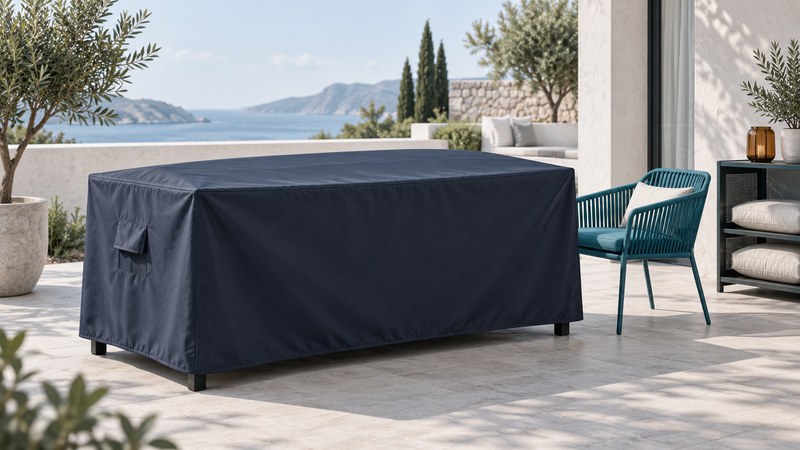
Patio Furniture Covers: Fit, Ventilation, and Seasonal Storage
Measure the stored arrangement and compare fit, ventilation, attachment, and seasonal care.
Measure the occupied layout
Draw the usable patio boundary, doors and their swings, steps, planters, fixed equipment, and the route people already take. Measure the full furniture dimensions, including armrests and extended recliners. For dining furniture, include chairs pulled out and occupied; the tabletop footprint alone understates the space required.
Mark candidate furniture on the ground with removable tape or other suitable temporary markers. Use existing chairs to test sitting, serving, and passing behind someone. Include the actual people and mobility equipment that will use the space. Check delivery gates and turns against the packaged dimensions before ordering.
Compare the whole construction
| Part | What to inspect | Question for the supplier |
|---|---|---|
| Metal frame | Joints, finish damage, feet, and exposed fasteners. See the cast aluminum inspection guide. | Which coating repairs and cleaning products are approved for this metal and finish? |
| Wood frame | Joinery, end grain, drainage, and the intended surface appearance. See teak sourcing and care. | Will the wood weather naturally, or does this finish need renewal? |
| Plastic or composite frame | Structural members, fasteners, and surface texture. | Which heat, cleaning, and loading limits apply to this exact product? |
| Woven seating | The supporting frame as well as the weave. | Can damaged panels, straps, or feet be replaced? |
| Cushions | Fabric, seams, fill, removable covers, and drainage. | How are both the cover and the inner cushion cleaned and dried? |
| Protective cover | Stored dimensions, vents, attachments, and surface compatibility. | Which cushion-storage and winter-care instructions apply to this combination? |
Exposure matters as much as the material name. Record direct sun, wind, salt exposure, pollen, overhead trees, and winter storage. Ask whether the warranty excludes any of those conditions. Weight can help explain handling effort, but it does not supply a wind-use rating. Umbrellas need their specified base and operating limits; follow the exact assembly’s instructions.
Plan cushion care before choosing a fabric
Identify both the cover fabric and the inner filling, and ask how the assembled cushion is cleaned and dried. Save the furniture model and fabric code. Use the replacement-cushion guide and measurement notes for fit, care-label questions, and storage planning.
POLYWOOD’s care guidance and Sunbrella’s cleaning resource provide product-specific starting points. Apply the instructions for the actual fabric, filling, and frame together.
Make upkeep and storage part of the purchase
Ask how to obtain feet, fasteners, cushion components, and finish-care instructions. Record the model, finish, fabric code, and replacement-parts contact in one place. Inspect the furniture before use and address structural damage with the manufacturer.
Plan a dry place for cushions and enough space to move or store the frames. Compare the actual stack dimensions and handling effort. The cover guide and planning notes help coordinate fit, ventilation, and seasonal checks.
After rain, observe where water collects and how the arrangement dries. Adjust the location or routine when needed, following the instructions for each material.