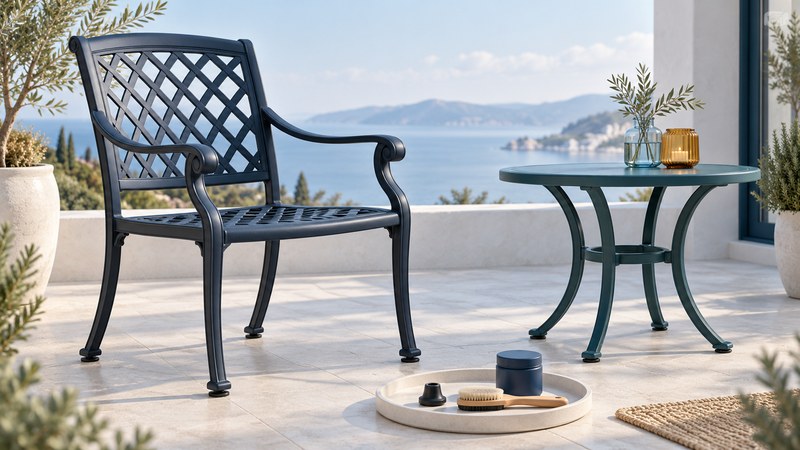
Cast aluminum can give outdoor furniture shaped arms, detailed backs, and substantial-looking forms. A useful purchase decision also considers the complete frame, its connections and finish, comfort, and parts support. Start with the model’s construction description, then inspect the piece itself.
Identify the complete frame construction
Casting forms a component in a mold; extrusion produces a continuous profile that can be cut and joined into a frame. A chair may combine the two. Tropitone’s frame descriptions, for example, include both solid cast aluminum and combinations of cast and extruded aluminum in its Cast Collection. Ask which parts of the model you are considering use each construction.
Cast iron and cast aluminum are different materials. Request the specification rather than inferring material from a dark finish, decorative pattern, or apparent weight. Also identify the fasteners and any other metals in the assembly so that replacement parts and cleaning directions can be matched correctly.
The word “cast” alone leaves the connections, coating, dimensions, and comfort unresolved. Sit in an undamaged display model with the intended cushion, check how the arms fit under your table, and consider how you will move it for cleaning or storage.
Inspect connections, finish, and contact points
| Area | Look for | Next step |
|---|---|---|
| Arms, legs, and joints | Cracks, distortion, loose connections, missing hardware, or an unexplained repair. | Have the maker or a qualified repairer assess structural concerns before use. |
| Coating | Chips, blistering, peeling, abrasion, and changes around fasteners. | Identify the finish and ask for the compatible repair system. |
| Feet and glides | Missing, worn, mismatched, or damaged contact pieces. | Check the part number and attachment method before replacing them. |
| Moving mechanisms | Damage or irregular operation in swivels, recliners, or adjustments. | Use the model’s inspection and maintenance directions. |
| Table and seat surfaces | Sharp damage, unsuitable cushion fit, or a mismatch with the intended tabletop care. | Resolve the exact component and surface instructions with the supplier. |
Inspect safely with the furniture unloaded and supported. If it rocks, first distinguish an uneven floor from a problem with the piece. Check the specified leveling or glide adjustment; a structural bend needs assessment. Avoid bending a leg or using body weight to test a suspect casting.
Photograph the model label and any defect close up and in context. Ask whether the remedy is a consumable part, a finish repair, or a structural replacement. These involve very different costs and decisions.
Protect the finish with compatible care
Use the cleaner and applicator approved for the actual coating, and protect nearby cushions and tabletop materials. Work on a small area as instructed, rinse where required, and let the furniture dry before covering. Keep the finish name or code so a future repair can be matched.
Tropitone’s painted-finish care guidance calls for gentle cleaning and warns that salt or pool-area chloride deposits can contribute to finish failure. Its recommendations vary by surface, including different treatment for gloss finishes. Read the section that matches the product; aluminum construction still calls for attention to the coating and other components.
For a chip, first establish whether damage is limited to the coating. Obtain the manufacturer’s preparation and touch-up directions, color, and product. Follow the coating label’s working conditions and cure time. A cosmetic paint layer cannot resolve a cracked or loosened structural component.
The manufacturer’s safety and maintenance booklet (PDF) also covers hardware, replacement glides, and storage. Use current model instructions if they differ, and remove furniture with missing or failed structural hardware from use until the correct remedy is complete.
Make a used-furniture decision in stages
Ask for a parts quote before committing to a set. Include missing feet, hardware, cushions, coating materials, and any professional work, along with collection or delivery. Repeated faults across several pieces deserve more investigation than a single replaceable wear part.
Plan handling and storage before buying
Measure gates, turns, and storage space as well as the patio. Check the actual weight and handling instructions for the model. Ask whether chairs are designed to stack and what limits and contact protection apply. Decorative shape can make a seemingly compact chair awkward to carry or nest.
Follow the model’s winter-storage orientation and drainage instructions, especially with mixed or hollow-frame construction. Keep intended drain paths clear as directed. Check feet and hardware when bringing the set back into use.
Choose a compatible cover and storage routine, and measure replacement cushions as a separate purchase. Furniture weight or cover straps do not establish a wind rating; follow the exact product’s weather-use directions. For a wood alternative, compare the sourcing and upkeep commitments in the teak furniture guide.
Continue planning your patio
Explore all patio furniture guides and plan the occupied layout.
Manufacturer guidance linked above applies to the products and materials it identifies. Keep the current instructions for your exact model with your care record.