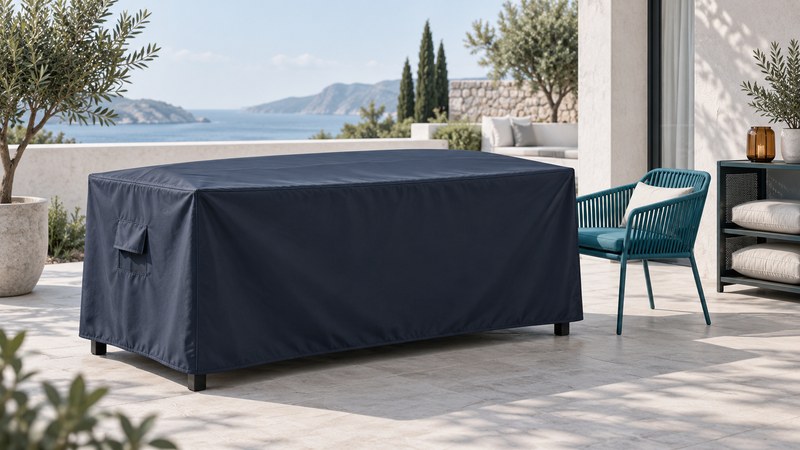
Choose a patio cover around the furniture as it will actually be stored. Measure the complete shape, check the cover’s fit instructions, and decide where cushions will go. Rain protection works best as part of a routine that includes cleaning, drying, ventilation, and inspection.
Measure the arrangement you will cover
Identify the furniture model first and look for a compatible cover specification. For a generic cover, arrange the furniture as it will sit between uses. Push chairs in only as far as their arms allow. Include handles, high backs, and other projections that determine the largest outline.
- Record the plan dimensions. Measure maximum width and depth, or the diameter for a round arrangement. Name the directions on a photograph so they cannot be confused.
- Record the height and shape. Include the highest point, low corners, protrusions, and any sloped back. A rectangular size alone may leave a poor fit around an unusual profile.
- Read the sizing convention. Establish whether a chart gives cover dimensions or the maximum furniture dimensions it fits. Follow that maker’s required allowance and ground clearance.
- Confirm how it attaches. Check the specified strap or buckle positions against the frame, and keep the intended ventilation openings clear.
For sets that are awkward to move, compare individual covers with one set cover. Individual covers let you uncover one seat; a set cover reduces the number of pieces but requires the same arrangement each time. Include the effort of lifting, folding, and storing the wet cover in the decision.
Compare construction and fit together
| Detail | What to establish | Why it matters |
|---|---|---|
| Fabric and seams | The stated water-resistance claim, seam treatment, and cleaning method. | The assembled cover has seams and openings as well as fabric. |
| Vents and hem | Vent locations and required clearance. | Furniture placement and a draped hem can obstruct the intended airflow. |
| Top shape | How the maker handles low areas that collect water. | A compatible support may be needed for some configurations. |
| Retention | Which attachment points and weather limits apply. | Straps hold the cover as designed; they do not establish a storm rating. |
| Surface compatibility | Whether the cover is approved for the table finish and material. | Heat, moisture, or contact can affect some surfaces. |
Look for an instruction sheet and warranty before buying. Resolve missing details with the supplier, especially for a custom shape or a coated tabletop. Choose supports supplied or approved for the cover instead of improvising a sharp object beneath it.
Plan for moisture beneath the cover
Classic Accessories’ cover guidance explains that even a waterproof cover cannot prevent condensation. It recommends clean, fully dry furniture and removing cushions when using its covers. Follow the instructions for your own furniture-and-cover combination; “waterproof” describes a rain barrier, not the condition of everything underneath.
Give cushions their own plan using the cushion cleaning and drying guide. If the matched cover system allows cushions to remain in place, follow its specific conditions and inspect after wet weather. A convenient fit is only one part of that decision.
When moisture persists, uncover in suitable weather and let the assembly dry. Check whether water is entering through damage, collecting on top, or remaining in cushions and furniture. Review vent obstruction and storage location with the supplier. Repeated dampness is a reason to change the routine or storage arrangement.
Use a repeatable storage routine
- Before covering: remove debris, inspect the furniture, clean it with the approved method, and let it dry fully. Deal with frame or fastener damage before the next use.
- Fit the cover: follow the orientation and attachment directions. Check vents, clearance, and any approved water-shedding support.
- After a weather event: inspect when conditions are safe. Check movement, pooled water, seam damage, and dampness beneath the cover. Use the maker’s method for removing accumulated water.
- Before long storage: follow the furniture’s winter instructions, including any separate requirements for cushions, sling components, and hollow frames.
- When uncovering: clean and dry the cover as directed before folding it away. Inspect the furniture and hardware before use.
Cover coatings can require different cleaners from upholstery. For example, Classic Accessories advises against machine washing, detergents, and bleach for the covers addressed in its guidance. Keep that instruction separate from a fabric manufacturer’s stain-treatment recipe.
For material-specific decisions, see teak sourcing and care or cast aluminum finish and maintenance.
Record dimensions and the storage plan
Download the cover planning notes (plain text). Record the stored arrangement, the supplier’s sizing convention, attachment and ventilation requirements, and what you observe after rain. Keep the product instructions with the record.
Continue planning your patio
Explore all patio furniture guides and plan the occupied layout.
Manufacturer guidance linked above applies to the products and materials it identifies. Keep the current instructions for your exact model with your care record.