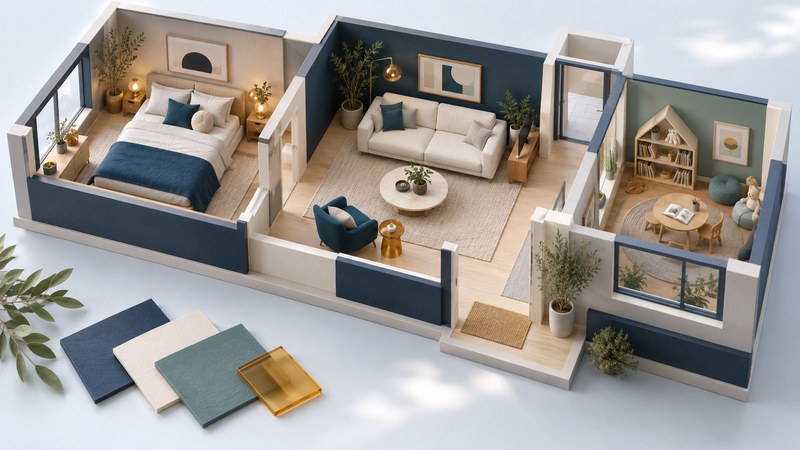
Feng shui connects the arrangement of buildings and objects with traditional ideas about place, balance and fortune. Explore that cultural perspective while making your home easier to use: compare a bedroom layout, review a floor plan, or choose colors with a child.
The tradition remains part of contemporary life as well as architectural history. Hong Kong's government introduction to feng shui describes its presence in the city. In these guides, traditional interpretations are attributed to their sources, practical design suggestions are explained through examples, and health or safety advice has its own evidence.
Choose the question you want to answer
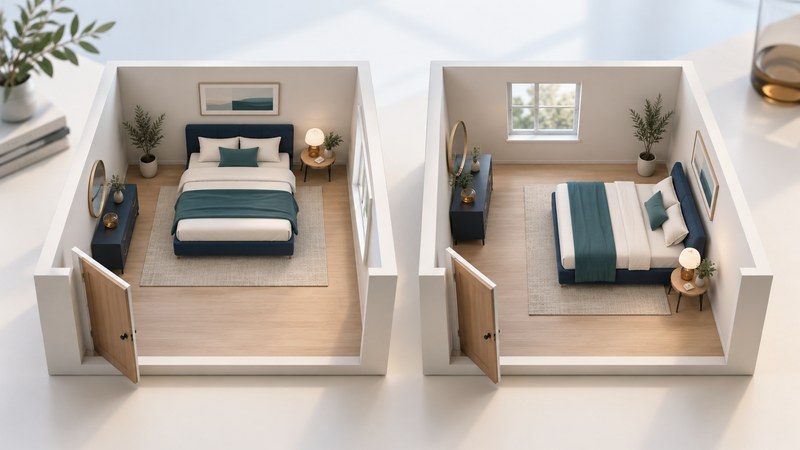
Arrange a bedroom
Compare bed positions, understand the command position, and work with doors, windows and storage. Includes two layout diagrams and a furniture-fit example.
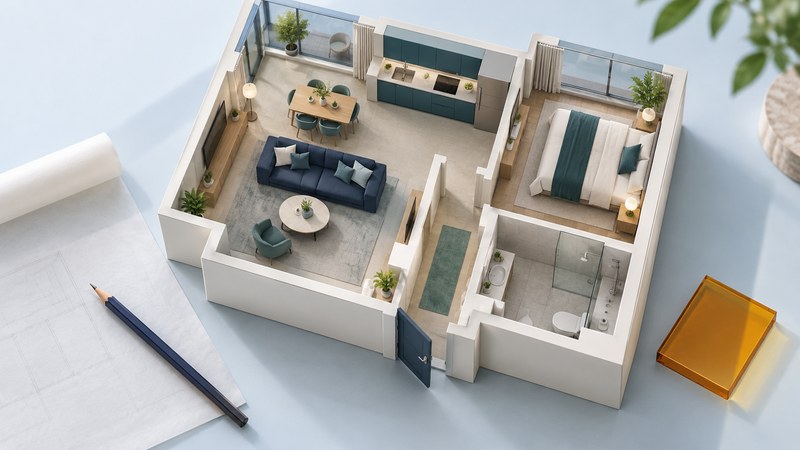
Review a home layout
Trace daily routes through an annotated apartment plan. Learn how compass-based and entrance-based interpretations differ before using a symbolic map.

Choose colors with a child
Explore traditional color associations, adapt three sample palettes, and test choices together in daylight and evening light.
Start with one room and one useful change
- Name the difficulty. Be specific: a drawer blocks a route, the bed receives unwanted light, or two children want different colors.
- Record what is fixed. Sketch the doors, windows and furniture. Note what must stay, what can move and the budget available.
- Compare two modest options. Consider what each improves and what it makes less convenient. Include everyone who uses the space.
- Try a reversible change. Rearrange before replacing, or sample before painting. Keep exits, equipment clearances and access needs in view.
- Review ordinary use. After several days, record what improved and what still needs attention. Keep a successful change for its observed usefulness.
A few terms you will encounter
- Qi, also written chi
- A traditional concept of vital energy used in feng shui interpretations. Here, a route drawn between rooms means physical circulation; it is not a measurement of qi.
- Bagua
- An interpretive map used to relate areas of a space to a symbolic framework. How it is aligned depends on the approach being followed.
- Five elements
- Wood, fire, earth, metal and water: symbolic categories that can be expressed through colors, shapes and materials.
- Command position
- A placement concept emphasizing a view of the entrance from a bed or other key position, outside the doorway's direct line.
The International Feng Shui Guild provides practitioner accounts of schools and their mapping approaches, the five elements, and the command position. These explain how practitioners use the ideas; they are not clinical or engineering evidence.
Use the advice thoughtfully
A personal preference, a traditional interpretation and a demonstrated effect answer different questions. A view of the door may appeal to you; a school may give it symbolic meaning; an assessment of sleep or building safety requires evidence suited to that claim.
Keep that distinction when choosing a source or discussing a room with a consultant. Ask which tradition a recommendation follows, what practical problem it addresses, how much it costs and whether it can be tried reversibly. Be cautious of promises that a particular object or color will guarantee health, wealth or a relationship outcome.
For structural alterations, electrical work or accessibility needs, involve the appropriate qualified professional. For a small decorating project, begin with the household's preferences, measured space and a clear purpose.