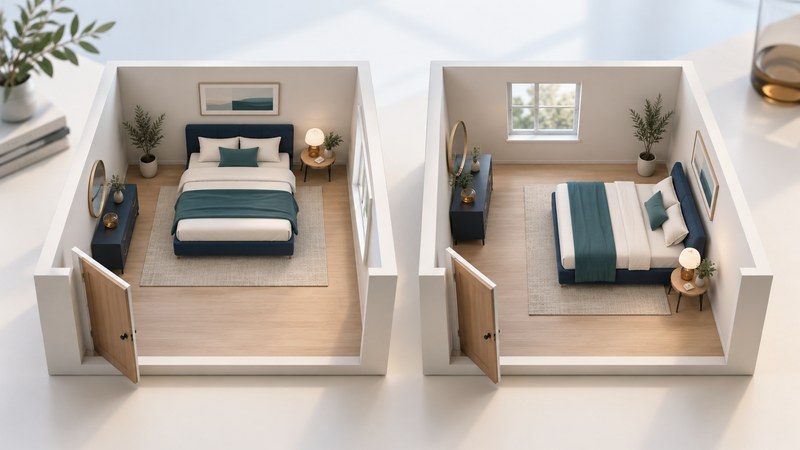
Start with a bed position that lets the room work: a usable route from the door, access for everyone who sleeps there, and space to open storage. Then compare how each arrangement feels. Feng shui offers a traditional way to think about placement; the useful decision comes from fitting those preferences to your actual room.
Understand the command position
In Tori McBrien's explanation for the International Feng Shui Guild, the command position gives a person a view of the room's entrance while keeping the main piece of furniture outside the entrance's direct line. For a bed, she also describes a substantial headboard and a position across from the door. These are practitioner interpretations of feng shui; the symbolism is distinct from evidence about sleep.
You can explore the idea by sitting where your pillow would be and looking toward the entrance. Notice whether the view feels comfortable to you. Treat that preference as one criterion alongside access, lighting and the needs of another occupant. An awkward room can have several reasonable solutions.
- Draw the fixed features. Mark the door and its swing, windows, closet doors, radiators, vents and outlets. Measure the bed frame, including its headboard and projecting corners.
- Try the usable walls on paper. Draw the bed in two positions. Add bedside furniture and show drawers fully open. Include any mobility aid or assistance space a person actually uses.
- Trace the daily routes. Follow the door-to-bed, bed-to-bathroom and bed-to-closet routes. Check them with the furniture dimensions, rather than judging only an empty patch on the drawing.
- Compare the experience. Check the view of the entrance, light at the pillow, access to switches and whether someone must climb across the bed. Keep the arrangement that handles your priorities best.
Maintain the clearances required by heaters and other equipment, and keep exits usable. A symbolic placement preference should yield to those constraints. Heavy furniture may require help to move; plan the rearrangement before starting.
Compare two layouts in the same room
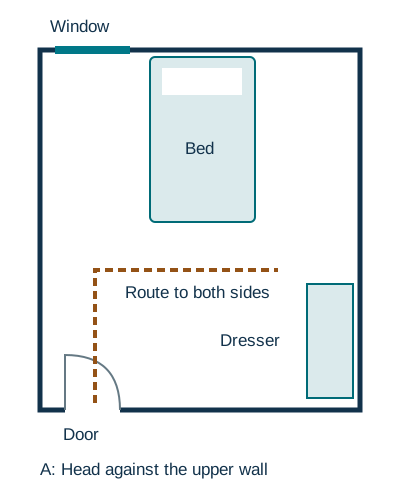
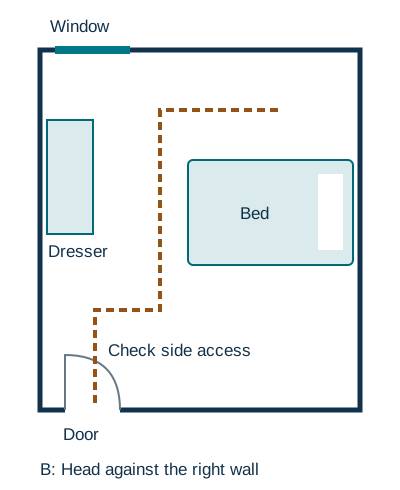
These schematic examples keep the window and door in the same places. They demonstrate the questions to ask, rather than prescribe dimensions or an ideal compass direction. The dashed lines show routes to inspect.
Make a small room easier to use
If only one bed position works, focus on the things you can change. Replace an oversized bedside table with a smaller stable one, relocate seldom-used storage, or move work materials out of the evening sightline. In a shared bed, discuss access from both sides before pushing one side against a wall.
A bedroom that doubles as an office needs an end-of-day routine as much as a furniture arrangement. Put papers away and close the laptop when work finishes. A screen or cabinet can define a work area only if it preserves circulation and light; adding furniture to an already crowded room can make the problem worse.
Mirrors can be assessed by what they actually reflect. Look from the pillow during daylight and after dark: a reflected window, hallway light or moving person may be welcome or distracting. Change the angle or position if the reflection bothers you. Secure mirrors according to their mounting instructions. No particular mirror purchase is required to begin this room review.
Give light, sound and temperature their own check
The National Heart, Lung, and Blood Institute's healthy-sleep guidance recommends a quiet, cool, dark bedroom, allowing a dim night light when needed. It also advises reducing bright artificial light before bed. These recommendations address sleep conditions independently of feng shui symbolism.
Visit the room at the time you normally settle down. Check light through the curtains and door, noise from adjacent rooms, and whether controls are reachable. Choose changes that address a specific observation. Persistent sleep difficulties deserve a discussion with a healthcare professional; moving a bed is a design experiment.
Try one reversible change and review it
Use the room-review worksheet to record the starting problem, two possible arrangements and your chosen trial. For example: “The dresser blocks my route when its drawers are open; move it to the opposite wall and check the route again.”
After several ordinary days, ask whether getting dressed, making the bed and settling down are easier. Record a new inconvenience as carefully as an improvement. If the route improved but glare increased, adjust that specific issue before committing to new furniture. Personal observations help choose an arrangement; they do not establish a general health effect.