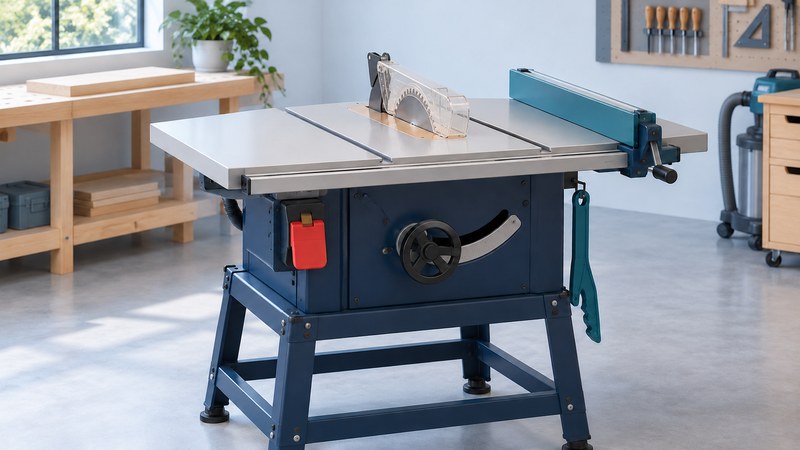
Start with the model plate
Delta table saws span different generations and machine formats. Before buying parts or planning a cut, record the model number, type or revision and serial information from the machine. Match those details to the owner’s manual and parts information. The name Shopmaster or the blade diameter alone leaves important differences unresolved.
Delta’s 36-725 document page and the separate 36-725 T2 instruction manual (PDF) illustrate why the suffix matters. The T2 document is a concrete reference for that saw, not a parts or setup specification for every Delta machine.
For a used saw, make an inventory of its guards, fence, throat plate, controls and supplied accessories before comparing prices. Ask for evidence that missing or damaged components can be replaced with approved parts. Include any needed service in the decision to put the machine into use.
Define the cut and the stock
| Decision | What to record | Why it matters |
|---|---|---|
| Operation | Rip, crosscut or a separately approved specialist cut | The work needs the correct guiding arrangement |
| Material | Type, condition and permitted application | The blade and machine must suit the stock |
| Size | Length, width and thickness before and after cutting | The entire piece needs clearance and support |
| Reference | Which face and edge locate the work | The guide must establish the intended dimension |
| Result | Required size, angle and acceptable finish | A trial piece needs a clear pass/fail check |
Consider how the whole workpiece travels through the station. A panel may fit a quoted rip capacity yet still be difficult to support and control. A shorter crosscut may be better suited to the miter-saw setup already available in the shop. Choose the method after checking the work, the equipment and the operator’s training.
Match guidance and safeguards to the operation
The 36-725 T2 manual requires its blade guard, riving knife and anti-kickback device for through cuts. It also specifies blade compatibility and alignment requirements. Follow the matching manual for an older saw’s own safeguarding system; obtain manufacturer guidance if required parts are missing.
Ripping uses the appropriate rip-fence arrangement. Crosscutting uses the specified miter gauge or approved fixture. Do not trap a crosscut piece between the blade and a rip fence used as a length stop, and never cut freehand. Specialized non-through operations need their own approved setup and training.
CCOHS table-saw guidance emphasizes appropriate blades, maintained guards, work support and kickback precautions. Arrange dust extraction and suitable eye and hearing protection. Keep hands out of the blade path, use the prescribed push aids, and keep your body out of the likely kickback path.
Review the station before a trial cut
- With power isolated, check the machine condition and perform only the alignment and setup work described for the model.
- Confirm the intended blade, guard system, guiding device and work support. Remove loose objects from the table and feed path.
- Plan the hand positions, push aids and complete travel of the work. Check that the outfeed arrangement supports it without steering or trapping it.
- Use a representative, permitted practice piece and the full operating procedure from the manual.
- After the saw has stopped, inspect the cut and measure against the intended result before repeating the setup.
Investigate a change in cutting behavior
Binding, unexpected movement, a guard fault or loss of control calls for stopping the operation. Wait for the blade to stop and isolate power before investigating or clearing material. Keep the cause unresolved until the stock, blade and setup have been checked; forcing the feed can make the problem worse.
Keep the correct manual near the saw and record service or configuration changes. Recheck the complete setup whenever the blade, fence arrangement, stock or operation changes.
Choose your next guide
- Miter Saws — Check crosscut capacity, support and the first test cut.
- Router Tables — Plan work support, guarding and a controlled routing setup.
- DeWalt Thickness Planers — Prepare stock and check thickness and surface quality.
Browse woodworking and shaping or explore all 47 tool guides.