Describe the holes before comparing the tools
A cordless rotary hammer is useful when mobility fits the drilling job and the complete kit can support it. Write down the material, hole diameter and depth, number of holes, working position and access to charging. Obtain hole requirements from the intended fixing or design; a tool’s maximum capacity is only a boundary, not a specification for the connection.
Separate routine drilling from occasional large holes or chiseling. A few waist-height holes with frequent pauses create different demands from a long sequence overhead. Use the rotary-hammer guide to match modes, shank and dust control, then compare cordless options against the same written job.
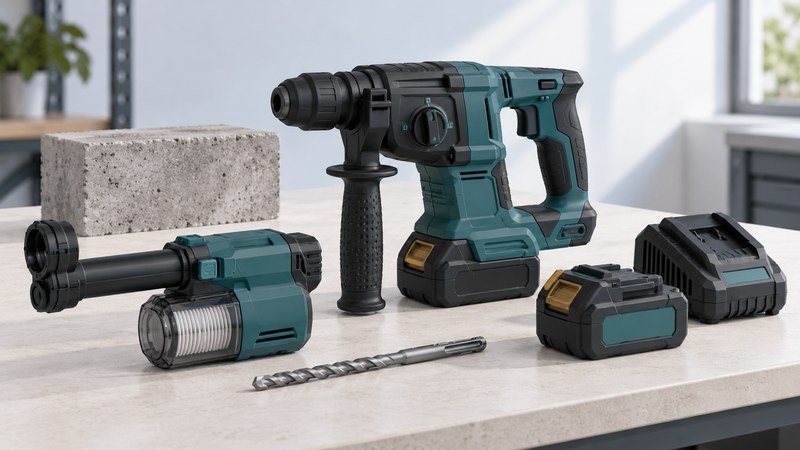
Compare like-for-like working kits
| Item | What to record | Why it changes the choice |
|---|---|---|
| Tool and bit | Exact model, shank, rated capacity and required bit length | Confirms the hole is within the intended application |
| Battery and charger | Approved pack/charger models, packs included and charging location | Defines a usable system and opportunities to recharge |
| Working weight | Tool, fitted battery, bit, handle and attached collector | Shows what the operator actually supports |
| Dust control | Compatible shroud/extractor, filter and usable drilling depth | Affects clearance, mobility and the work plan |
| Purchase or rental package | Case, consumables, extraction, charging and return terms | Makes the total provision comparable |
For a concrete example, Bosch’s U.S. GBH18V-28DCN listing identifies a bare tool with a 6.7-pound tool-only weight, excludes the battery and charger, and lists compatible extraction equipment. Those details explain why a bare-tool price and weight cannot stand in for a ready-to-work kit. Check the current kit suffix and contents before comparing another offer.
Use the tool’s approved list, such as Bosch’s battery/charger compatibility document (PDF), together with current model documentation. Nominal voltage or a connector that fits is not a sufficient compatibility check.
Plan runtime through a representative trial
Ask the supplier for a demonstration or rental trial using the intended material, hole size and dust system. Note the pack identity, starting charge, approximate temperature, holes completed, active drilling time and interruptions. Record cooling and charging pauses separately from layout or moving time. A comparison is useful when these conditions remain similar.
Treat amp-hours as one battery characteristic, not a hole-count promise. Battery condition, load and operating conditions affect the result. Work from approved pack and charger combinations, keep to their temperature limits and follow their charging instructions. Plan where the charger can safely sit before relying on charging during the job.
Check clearance and dust control together
Assess grip and reach with the complete configured tool while it is made safe according to its manual. Include the auxiliary handle and collector in the space envelope. Check that the extractor accommodates the required bit diameter and working length and that its nose can meet the work surface in the intended position. Plan stable access and support before work begins.
For U.S. construction work, OSHA’s silica standard, Table 1 includes handheld and stand-mounted drills. Its specified dust-control method calls for a shroud or cowling, appropriate collection airflow, filtration and filter cleaning, and HEPA-filtered hole cleaning. Select a complete method for the task; a dust cup alone does not establish compliance. Consult the employer’s exposure-control plan and applicable requirements.
Locate hidden services and obtain any required approval for structural drilling before making holes. Follow the tool manual for handles, protective equipment and bit changes. Stop if a jam, damaged attachment or uncontrolled dust makes the planned setup unsuitable.
Buy for recurring work or rent the complete setup
Ownership makes most sense when the same types of holes recur and a supported battery platform fits your other work. For an occasional demanding job, compare the cost and logistics of renting the complete drill, extraction and bit package. Check availability, training, consumable charges and collection/return time with the supplier.
Make the final decision in this order: suitable drilling application, manageable complete setup, verified dust-control method, workable battery/charging plan, then total cost. Keep the job and trial notes so a future purchase starts with evidence from your work.
Choose your next guide
- Rotary Hammers — Compare accessory interfaces, drilling modes and dust control.
- Hammer Drills — Distinguish ordinary drilling, screwdriving and percussion modes.
- Hearing Protectors — Choose protection for the exposure and check the fit.
Browse drilling and holemaking or explore all 47 tool guides.