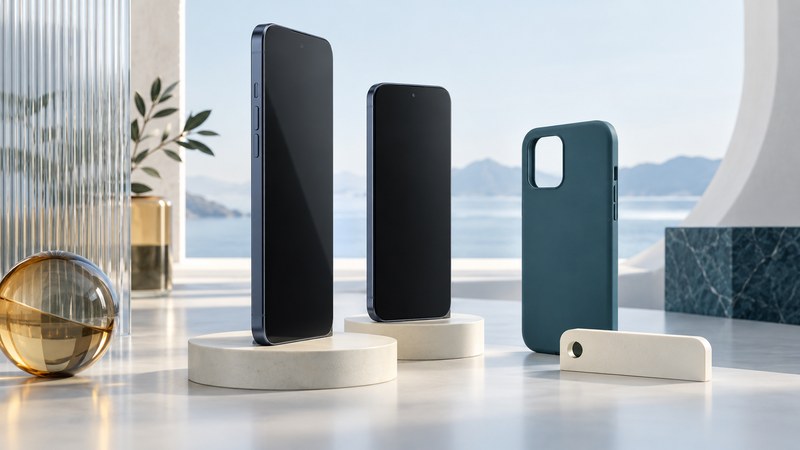
A slim phone can be pleasant to carry, but the best shape for you also depends on width, weight, edge profile, and the tasks you perform. Compare the phone with its intended case and settings. A few minutes of deliberate use can reveal more about handling than a thickness ranking.
Read the whole set of dimensions
Write down height, width, thickness, and weight for the exact model. Check whether the thickness measurement includes protrusions and whether a listed weight excludes accessories. Manufacturers' measurement conventions and regional configurations can differ, so preserve the source with each figure.
The Hop-on Blade announcement study applies these questions to a historical thin-phone claim whose production dimensions remain unverified.
Google’s Pixel specification tables illustrate the separate fields to look for; use the equivalent official page for another brand. A screen diagonal describes the panel, while your hand grips the body and case. Compare those measurements separately.
Try the case you expect to use. A narrow phone with a bulky grip accessory and a wider phone with a thin case may reverse your initial carrying preference. Include a pocket, bag compartment, or mount that matters in daily life.
Repeat the same ordinary tasks
Scroll sideways for all columns. Keyboard users can focus the table and use the arrow keys.
| Task | Keep consistent | Observe |
|---|---|---|
| Read | Same page and comfortable text size. | Readable content and frequency of scrolling. |
| Type | Same short sentence and normal posture. | Corrections, cramped keys, and grip changes. |
| Reach | Open a top control and use back/navigation gestures. | Whether you can maintain a secure hold. |
| Call | Hold the phone in your usual calling position. | Edge pressure, weight, and control access. |
| Carry | Use the intended case and everyday pocket or holder. | Comfort when sitting and ease of retrieval. |
Ask permission before fitting accessories to a shop display. Security tethers can alter the apparent weight and movement, so record that limitation. Use two hands whenever that is more comfortable. The purpose is to choose a workable shape, not to pass an artificial one-handed challenge.
Try accessibility options such as larger text, display scaling, or supported one-handed controls if you expect to use them. Judge the phone in the configuration you will actually keep.
Compare endurance evidence and service life
Battery capacity and phone thickness are only part of endurance. Read the stated test workload: video playback, mixed use, network conditions, display settings, and power-saving mode can produce different results. Compare like with like and check whether the evidence describes the exact model.
Apple’s battery-and-performance explanation distinguishes runtime between charges from battery lifespan and explains how chemical aging reduces capacity and can affect peak performance. This is especially relevant when comparing a new phone with a used one. Inspect available battery-health information and repair options for the actual device.
For a sustained workload such as navigation, camera use, or gaming, look for a documented test resembling that task. A brief store trial can reveal controls and handling; it is weak evidence for all-day runtime or long-duration temperature behavior. Keep those conclusions separate.
Check the manufacturer's stated software-support period, available battery service, cost of a suitable case, and return terms before deciding. A small size advantage may matter less than reliable support during your intended ownership.
Use a fictional comparison to set priorities
Choose two or three must-have tasks and give them priority. Record failures as specifically as successes: “cannot reach this control securely” is more useful than “feels big.” Use the slim-phone comparison sheet to keep dimensions, observations, and unresolved battery/support questions together.
For another shape decision, see dual-screen and foldable phones. For case selection, see the Pixel case guide. A useful choice comes from matching the entire phone to your actual routine.