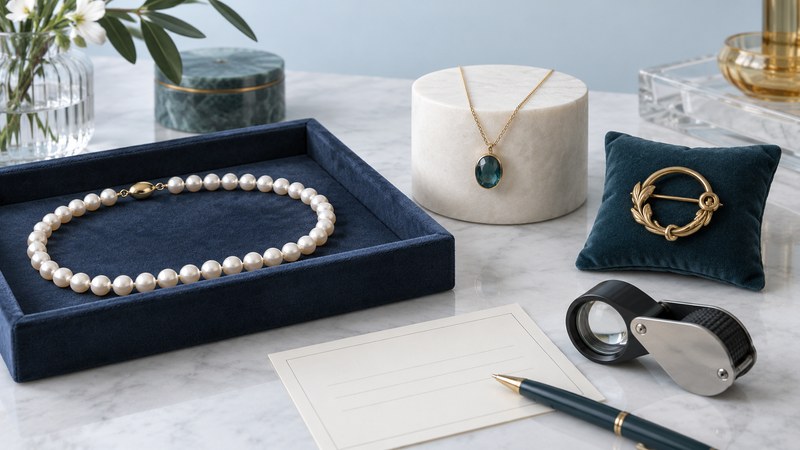
Choose wedding jewelry with a written description of its materials, a comfortable trial with the outfit, and care instructions for that particular piece. Pearls, colored gems and borrowed heirlooms each raise different questions; a clear answer from the seller or owner is more useful than a reassuring product name.
Know what the description tells you
Pearls: natural pearls form in mollusks without the deliberate intervention used to start cultured pearls. Cultured pearls also grow in mollusks; imitation pearls are made from other materials. Ask which kind is offered, its size in millimeters and any treatments or special care. Colored gems: ask for the gem’s identity and whether it is natural, laboratory-created or an imitation. Treatments can affect appearance, durability and care. The FTC’s gemstone and pearl guidance explains these distinctions and recommends getting material details and care requirements in writing.
Use a qualified jeweler or gemological laboratory when an identity matters and the documentation is uncertain. A photograph, a home scratch test or a tooth test is a poor basis for accepting an important material claim. Avoid tests that could damage a borrowed or purchased piece.
Metals: ask for the metal and fineness, plus the base metal and coating when the piece is plated. Gold karat describes gold content: 18K means 18 parts gold out of 24. “Gold tone” describes an appearance and needs a fuller material description. Read the FTC’s precious-metal shopping guidance and keep the receipt’s wording. Ask separately about the posts, backs, clasp and chain; their materials may differ from the main ornament.
Choose the design after those details are clear. Check the length at the neckline, the weight of earrings during a comfortable trial, and whether settings or edges catch the garment. Have a jeweler assess loose fittings or uncertain closures before the event. The wearer’s existing preferences are a useful starting point, especially when a piece will touch skin for several hours.
Compare two written offers
This is an original, fictional comparison of two pearl necklaces. It demonstrates the questions to resolve; it does not identify a product, establish value or offer a current price.
| Question | Offer A | Offer B | Next step |
|---|---|---|---|
| Pearl identity | Freshwater cultured pearls, 7–8 mm | “White pearl necklace” | Ask B to state cultured, natural or imitation and give dimensions. |
| Metal and length | 14K gold clasp; 45 cm including clasp | “Gold finish”; length unspecified | Ask B for base metal, coating, clasp materials and total length. |
| Treatments and care | Seller supplies written treatment disclosure and care instructions | No information supplied | Read A’s details; request B’s before comparing. |
| Trial and return | Written return conditions available | Exchange mentioned verbally | Check deadlines, condition requirements, fees and any exclusions for each. |
Offer A is easier to evaluate because it answers more questions. B could still suit the wearer once its details are supplied. Compare the complete delivered cost, any shortening or repair, the wearer’s comfort and the care required. Ask what a report covers if one is included; retain it with the receipt and item description.
Agree the terms of an heirloom loan
Ask the owner which piece may be borrowed and whether it may be cleaned, restrung or adjusted. Photograph its condition together, record included parts and agree who collects and returns it. Have a jeweler inspect the clasp, settings, chain or string when their condition is uncertain. Obtain the owner’s permission before any work. A family story can remain meaningful even if the piece is displayed briefly or kept safely at home.
Give the piece its own care plan
GIA advises against ultrasonic or steam cleaning for pearls and recommends wiping cultured pearls with a very soft, clean cloth after wear. Pearls can be affected by cosmetics, perfume, chemicals and heat. Keep those exposures in mind while getting ready. See GIA’s pearl care instructions for the material-specific guidance.
For mixed-material jewelry, ask the jeweler for a method suitable for every component, including settings, string and any treatments. An heirloom with uncertain materials or repairs needs an assessment before cleaning. Keep pieces separated in suitable individual storage during transport, and assign one person to handle the agreed return. Save written care instructions with the piece so they remain available after the wedding.
Download the editable jeweler and heirloom questions (TXT). For ring-specific decisions, continue with Diamond Wedding Rings or Platinum Wedding Bands; for a coordinated group, use Bridesmaid Jewelry.