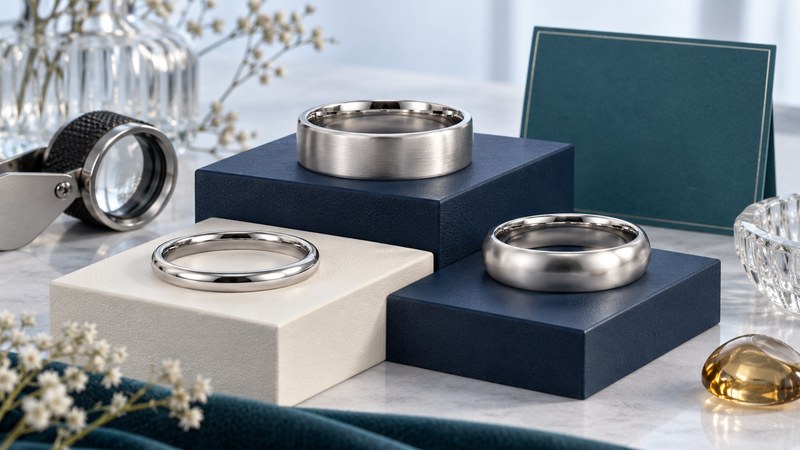
Choose a platinum wedding band by trying the shape and width you will wear, understanding the stated alloy and agreeing the order details in writing. A useful comparison includes fit, finish, future service and the complete price of the exact ring.
Read the alloy description before comparing prices
Ask the seller to state the platinum content and other metals in the alloy on the order. Metal identity, ring dimensions, construction, finish and any stones all matter when deciding whether two quotations describe comparable rings.
For purchases in the United States, the FTC’s jewelry buying guidance explains that an unqualified “platinum” description means at least 95 percent pure platinum. Its example “850 Plat” means 85 percent platinum, with other metals making up the balance. Have the seller explain a marking you do not recognize and confirm the description on the receipt. Rules and descriptions can differ in other markets.
If you know you react to a particular metal, discuss the full alloy with the seller before ordering. The general metal name gives less information than a clear material specification for the ring you are buying.
Try width, profile and neighboring rings together
Start with your everyday use. Try writing, gently closing your hand and handling an ordinary object with the sample on. Notice pressure between fingers, edges that catch and whether the ring turns or feels difficult to remove. Tell the jeweler which sensations concern you and have them assess the fit.
Compare a narrow and a wider sample, then try different inside profiles at the width you prefer. GIA’s ring-sizing guidance distinguishes standard rings, wide bands and bridal sets. Use a fitting sample that represents the ring or combination you intend to wear; ask how the jeweler translates that trial into the ordered size.
Try an engagement ring alongside the band if you plan to wear them together. View the pair from the side as well as above. Ask about contact between the rings, how a shaped band sits on its own and any service implications of the chosen combination. For a ring containing stones, ask the seller to identify them in the order and explain any accompanying reports or service requirements.
| Feature | What to record | Question to resolve |
|---|---|---|
| Alloy and construction | Platinum content, other metals and product reference | Does the order describe this exact ring? |
| Dimensions and fit | Width, size, inside profile and sample tried | How will the final fit be checked? |
| Finish and detail | Polished, brushed or other finish; edges and engraving | What changes with wear and refinishing? |
| Alteration options | Seller’s answer for this design and size change | Can it be resized, and under what terms? |
| Complete order | Price, included work, tax, delivery and payment schedule | Which extras or future services cost more? |
Choose a finish you can enjoy as it changes
Look at samples under ordinary light, and ask to see a worn example if one is available. Decide whether you prefer a bright surface, a softer finish or a contrast between areas. Photographs help record your choice, but the written order should name the finish and identify the sample.
Tiffany’s care guidance describes the fine scratches that form a patina on platinum and notes that polishing removes metal. Discuss maintenance and refinishing with the jeweler who will service your ring. Choose a finish with a realistic understanding of regular wear and the options for preserving its details.
Confirm the details before personalization
Request an itemized quotation and read the seller’s return, exchange, cancellation and alteration terms. Check how engraving or custom work changes those terms before authorizing it. Have the seller confirm the expected completion date and a fitting appointment with time to address a problem before the ceremony.
For engraving, supply the exact characters, capitalization and punctuation. Review the proof together, including orientation and placement. Ask how future sizing or refinishing could affect the inscription. Keep a copy of the approved wording with the order.
A useful comparison question
“These two quotes use different widths and include different services. Please quote the same width and finish, list the alloy, and show the total including engraving and delivery. Please also explain the fit-adjustment policy for this particular design.”
At collection, check the order reference, fit, finish, engraving and any promised documents. Resolve a discrepancy before accepting a last-minute workaround. Photograph the ring and save the receipt and service instructions where you can find them again.
Plan for daily wear and future service
Ask the jeweler for cleaning and storage instructions appropriate to the complete ring, including any stones or decorative finishes. Discuss activities that could damage or catch the ring and how to store it when removed. Before a future resize, obtain an assessment of the specific design, engraving and any existing wear.
A ring is ready to order when you can name the exact specification, describe how it felt on your hand and explain what happens if the fit needs attention. Add its final payment and collection appointment to your wedding planning schedule.