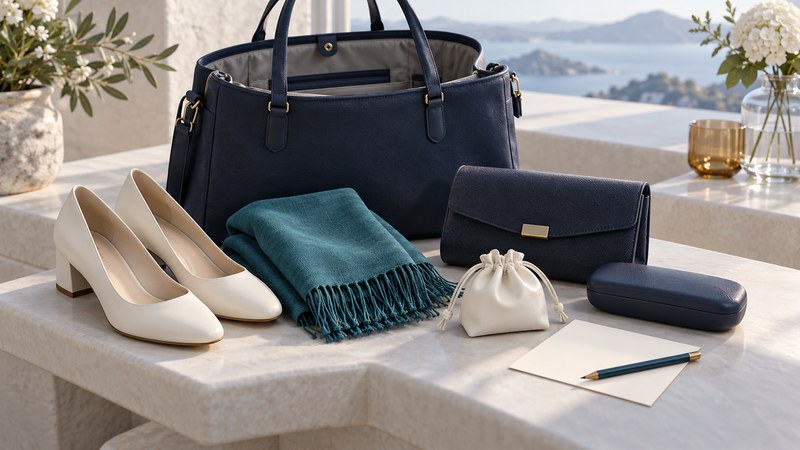
Build a wedding accessory kit around what you will wear, carry and need during the day. Start with your outfit and venue, test the pieces together, then assign a place and an owner to everything that must arrive, change hands or go home.
Choose a job for each piece
Make three short lists: things you already own, things you can borrow with permission, and things still needed. Include everyday essentials such as glasses, hearing-device supplies you normally use, a phone or a familiar personal-care item. Let those needs shape the bag and storage plan.
Then choose the decorative pieces you want. A headpiece, earrings, a tie, cufflinks, a belt or a wrap can each finish an outfit; wearing every possible category is optional. Keep a photograph of the whole outfit beside your list so additions have a clear purpose.
| Piece | Check before the day | Packing decision |
|---|---|---|
| Shoes | Fit, walking surface and outfit hem with each planned pair | Label the ceremony and spare pairs; keep them accessible |
| Wrap or outer layer | Comfort over the finished outfit and ease of movement | Choose who carries it between locations |
| Jewelry and fastenings | Comfort, secure closures and contact with delicate fabric | Give small pieces separate protective compartments |
| Veil or headpiece | Attachment, weight and removal with the actual hairstyle | Include the agreed care and helper notes |
| Bag and essentials | That the real contents fit and can be reached easily | Decide where it stays during the ceremony and photographs |
| Borrowed items | Owner's permission, condition and care instructions | Record the person, place and date for return |
Use a fitting as a complete rehearsal
Bring the shoes and undergarments you intend to wear to alterations appointments. David's Bridal's fitting guidance emphasizes these pieces and recommends bringing the veil, accessories and person helping with the bustle. Confirm what your own alterations professional needs for each appointment.
If you plan to change into a different shoe height, discuss both pairs with the person fitting the outfit. Check the hem with each; a comfortable spare pair needs to work with the clothing too. Ask about the actual venue surface before choosing shoes for the route you will walk.
Wear the assembled outfit long enough to sit, walk, reach, hold a bouquet or bag and use your glasses. Check that necklaces, earrings and closures move comfortably near fabric. Handle small fastenings yourself, or identify a helper if you want assistance. Resolve pinching, pulling or rubbing during the trial.
Use the separate veil fitting guide and hair trial guide for the attachment and removal plan. For stone-set rings, see diamond wedding ring comparisons. Keep those specialist decisions on the same final packing list.
Budget for the finished kit
Choose an overall limit before shopping. Add delivery, any alterations, fastening changes, cleaning and return charges where applicable. Ask for the seller's return conditions before ordering an item intended only for a trial; keep labels and packaging as required.
Invented planning example: shoes $70, wrap $30, bag $25 and delivery $10 total $135. Reusing earrings and borrowing a headpiece add no purchase cost in this example. With a $160 limit, $25 remains for other agreed costs. These figures illustrate the calculation and are not price quotations.
For a wedding party, state which details are essential and which are personal choices before anyone buys. Confirm who pays for a requested matching item. A color or level of formality may give people more workable options than one exact product. Use the wedding-party expectations brief to agree costs and responsibilities.
Pack by moment, then record returns
Group the kit into dressing, ceremony, reception change and going-home items. Use clear labels on the containers and record where each container travels. Keep essentials with a person who can return them when needed; a bag locked in a departing vehicle is difficult to use.
For borrowed jewelry or accessories, note condition with the owner's agreement, the approved cleaning method and a return date. Name one person to collect removed pieces. Count them back into their cases before moving locations, then record the return to the owner afterward.
Download the outfit accessory checklist. Fill it after the final trial, share the relevant parts with your helper, and use its arrival and return checks on the day.