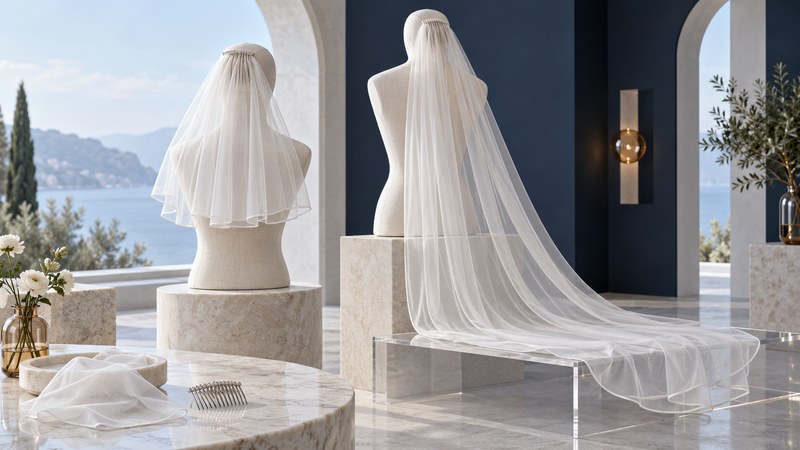
A wedding veil works best when its length, fabric and fastening suit your outfit, hairstyle and movements. Compare a few samples at the attachment point you will actually use, then make a simple plan for wearing, removing and storing your choice.
Choose where the veil should finish
Start with the moments when you want to wear it: ceremony, photographs, reception, or a combination. Picture the route from the dressing room to your seat, including doors, steps, vehicles and outdoor ground. A trailing veil creates one silhouette; a shorter veil leaves less fabric to manage. Either can suit a formal or relaxed celebration.
Measure from the proposed attachment point down to your preferred finishing point, with help and the intended shoes on. Record that length and ask the maker exactly how its product is measured. Names such as fingertip, chapel and cathedral are useful browsing terms; the item's actual dimensions make a reliable comparison. Britten's veil guide, for example, gives measurements for its own lengths and explains measuring from the intended position on the head.
| Feature | Look at the whole outfit | Try this before ordering |
|---|---|---|
| Length | Where the edge meets the dress, trousers or train | Walk, turn and sit; check who will arrange trailing fabric |
| Fullness | How much volume gathers around the head and shoulders | Compare a gathered and a softer, less full sample |
| Layers | Whether a face-covering layer is part of your plan | Practice lifting it with the person who will help |
| Edge and details | How lace, beads or a plain edge sit against the outfit | Check weight and contact with jewelry or fastenings |
| Attachment | Position relative to the hairstyle and other headwear | Have the stylist fit it, then rehearse removal |
Compare real fabric beside the outfit
Request a swatch or sample if the color is difficult to judge online. Hold it against the outfit in daylight and ordinary indoor light, then view both from a few steps away. Record the maker's color name and fabric reference. A shared label such as ivory is only a starting point for matching two different materials.
Look through the veil at the details you want visible: a neckline, embroidery, hair decoration or the back of the outfit. Compare how fabrics hang, how the edging changes the outline and how much weight the attachment must hold. Choose the effect that pleases you; matching every decoration is optional.
For a handmade or customized order, confirm the finished length, width, color, layers, edge, attachment, delivery date and return terms. If using a borrowed veil, photograph its condition and discuss any proposed alteration with the owner before arranging it. A trial with the original piece can reveal that changing the hairstyle is easier than changing the veil.
Test the whole arrangement
Bring the veil and any separate headpiece to the wedding hair trial. Ask the stylist to show where and how each piece attaches, which pins belong to the veil, and which must stay in the hairstyle. Take a rear and side photograph for your own reference.
- Wear it for a while. Notice pressure, pulling or slipping. Tell the stylist what needs adjusting.
- Move naturally. Turn your head, look down, sit and stand. Check how the fabric behaves near earrings, glasses and outfit fastenings.
- Rehearse the ceremony action. If lifting a blusher, agree who lifts it and when. Give that helper a practice turn.
- Practice the change. Remove the veil while preserving the hairstyle, then confirm what happens to any separate headpiece.
- Plan for the venue. Decide where a long veil can be arranged and who can carry it between photograph locations.
Take the veil to an outfit fitting when possible. The wedding dress guide helps organize the broader fitting and alteration decisions.
Write a five-line helper brief
Keep these notes with the garment bag or storage box: attachment position; pins or comb to remove; removal time and place; named helper; storage location afterward. Add a photograph of the finished arrangement and the maker's care instructions.
Ask the maker how this particular fabric, trim and attachment should be transported, handled and stored. Get its advice before using heat, steam, cleaning products or adhesive. Pack the veil so its decorations and comb do not catch other items, and allow time to unpack it at the venue using those instructions.
For an outdoor ceremony, agree a practical change of plan with your helper: adjust when you put it on, use a sheltered photograph location, or remove it if it becomes uncomfortable. Keep the choice with the person wearing it.