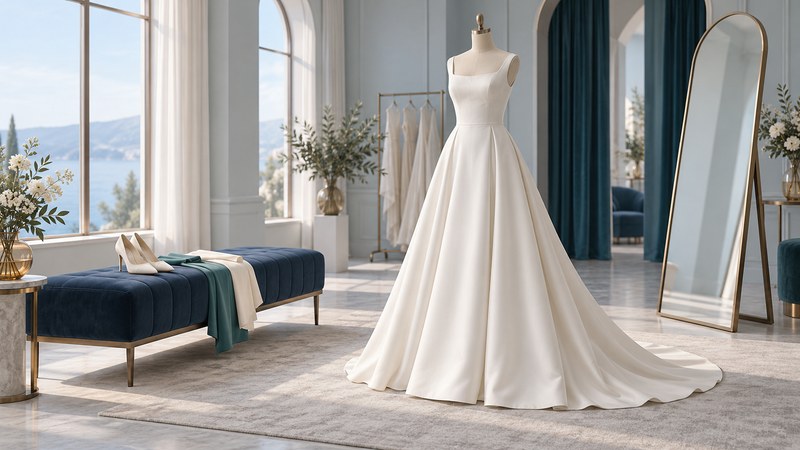
A wedding dress needs to work for the day you will actually have: walking, sitting, eating, greeting people and celebrating. Set a complete budget, try dresses with those activities in mind, and confirm the order and fitting plan before paying. The best choice is one you enjoy wearing and can have ready in time.
Set a complete budget and a workable route
Write a ceiling for the whole outfit, then reserve money for alterations, shoes, undergarments, accessories, taxes and delivery or travel. Ask separately about steaming, storage and collection. A dress price becomes useful only when you know what is included and what still needs a quote. Put the complete amount in your wedding budget.
Choose the buying route that fits the time available. A made-to-order dress, an in-stock gown, a sample, a secondhand dress and a rental each raise different questions. Ask the seller for the availability of the exact style, size and color you are considering. Ask the alterations professional whether the proposed changes can be completed between arrival and collection. Build the schedule from both answers.
Keep three dates separate: the seller’s expected arrival, the first fitting and the final collection. Record whether the arrival date is an estimate or a commitment and what the seller offers if it slips. There is no single lead time that can stand in for the actual dress and the tailor’s workload. If time is short, prioritize a dress you can inspect and a confirmed fitting appointment.
Make the appointment about fit, comfort and choice
Before visiting, ask which sample sizes you can try, whether an appointment or consultation fee applies, how many companions may attend and whether the space meets your access and privacy needs. Share your price range and a few useful preferences: sleeve coverage, freedom to dance, fabric weight, a train, or a particular ceremony requirement. Photographs can start a conversation without fixing the outcome.
Bring people who can listen and help you remember details. Ask them to describe what they notice rather than vote on your body. At each dress, give yourself a moment to decide how you feel before inviting opinions. If a sample needs clips or inserts, ask the consultant to explain how the ordered garment will differ.
- Move: Walk, turn, sit, raise your arms and imitate the embrace or dance movements you expect to make.
- Stay awhile: Notice scratchy seams, weight, warmth, slipping straps and pressure while seated.
- Consider the setting: Discuss steps, outdoor paths, a seated ceremony, travel and restroom arrangements.
- Check the whole view: Look from front, side and back. With permission, take consistent photographs and record the style code and quoted price.
Dress sizes are labels within a seller’s sizing system. Use the relevant measurement chart and discuss the size choice with the seller. Buy for a comfortable fit based on current measurements; make any fit concerns explicit before ordering. Ask an alterations professional about a proposed structural change instead of assuming every dress can be transformed.
Confirm exactly what you are buying
| Order detail | What to record | Why it matters |
|---|---|---|
| Dress identity | Designer or maker, style, color, ordered size and agreed customizations | Gives you something specific to check on arrival |
| Condition | New, sample, secondhand or rental; photographs of any existing marks or damage | Makes cleaning and repair decisions visible |
| Complete cost | Dress, taxes, delivery, alteration estimate and optional services | Keeps the total within your outfit budget |
| Dates | Arrival, inspection, fitting appointments, collection and any rental return | Connects delivery to the work still required |
| Terms | Payment schedule, cancellation, return/exchange eligibility, fees and deadlines | Shows your options if the order or fit needs attention |
Read the policy that applies to your purchase channel and item. As one seller-specific example, David’s Bridal’s return and exchange policy distinguishes eligible merchandise from exclusions and requires eligible returns to be unaltered with tags attached. Its current terms also distinguish returns from exchanges. Save the policy and receipt at purchase, and ask the seller to resolve any ambiguity about your particular order.
For a sample or secondhand dress, inspect closures, lining, hem, seams and embellishments. Ask for photographs of the actual garment if buying remotely. Have a tailor assess any essential repair before committing. For a rental, confirm what changes are permitted, who handles cleaning and how collection and return fit your travel plans.
Give alterations a clear brief
Bring the shoes and undergarments you intend to wear. David’s Bridal’s alterations guidance explains their importance to the hem and fit. If either changes, tell the alterations professional before the next fitting. Confirm which accessories should accompany you and whether the person helping you dress should attend the final appointment.
Example alterations brief
“I need to sit comfortably through dinner, lift my arms for dancing and walk up the venue’s steps. Please assess the hem with these shoes, the shoulder fit and a way to secure the train. Show me which changes you recommend, their cost and when I can check the result.”
Ask for an itemized estimate and approval before additional work. At each fitting, repeat your movement checks and describe any discomfort precisely. Confirm how the train is managed and practice any bustle or fastening with your helper. Take a reference photograph with permission so the wedding-day helper can reproduce the arrangement.
At collection, inspect the completed work and accessories, try the dress on if possible, and obtain the maker’s or tailor’s handling instructions. Ask how to transport, hang, steam or press this particular fabric and construction. Keep the dress protected, choose who carries it to the venue and place essential dressing instructions with it. Coordinate the broader clothing plan through the bridesmaid dress guide when useful.