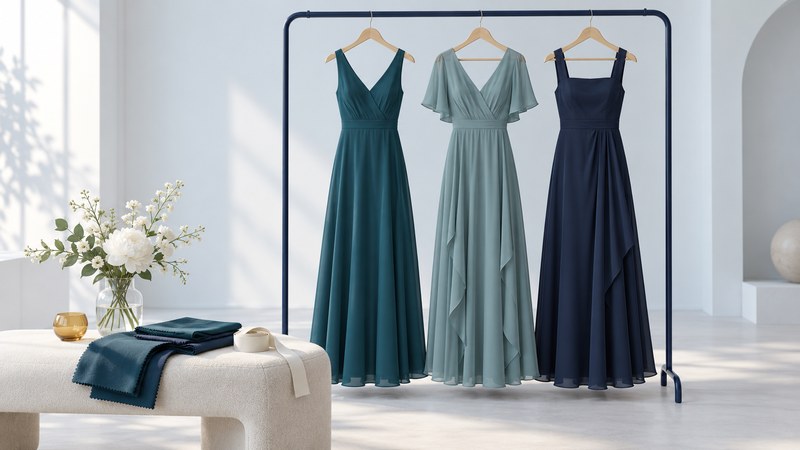
Choose bridesmaid dresses through a clear shared brief: an affordable total, a color direction, room for individual fit and comfort, and an order plan that leaves time to resolve problems. The goal is a group that feels considered and at ease throughout the day.
Agree on the total before choosing a dress
Ask each person privately about a comfortable spending limit and any fit, coverage, mobility or fabric preferences. A private answer gives someone room to be candid without explaining personal finances or body details to the group. Decide who pays for the dress, shipping, taxes, alterations and any required accessories before anyone orders.
Compare complete outfits. A lower-priced dress can become a more expensive choice if it needs substantial alterations or special undergarments. Offer choices that work within the agreed limit, or explain what you will cover if you request something beyond it. Keep the larger wedding costs in the budget and payment plan.
Original sample dress brief
“We are choosing floor-length dresses from the attached teal and navy swatches. Please choose a neckline and sleeve style you feel comfortable wearing. Our example outfit limit is $240 including dress, tax, shipping and alterations; this is a planning amount, not a retailer quote. You can use shoes you already own. Send me any concerns privately before ordering. We'll confirm the seller, fabric, color name, delivery estimate and return terms together.”
Decide which details need to match. One identical dress gives a uniform look but may restrict fit or availability. One fabric and color with several styles can provide continuity with more choice. A coordinated palette allows more variation and needs clear swatches or examples so “blue” does not mean something different to everyone.
Use the exact seller's measurements and a real try-on
Open the size chart for the particular dress and market where you will order. Note whether measurements describe the body or the finished garment, which units are used, and how the seller wants length and heel allowance handled. Use current measurements and ask for help when a measurement is difficult to take reliably.
Azazie's sizing guide emphasizes comparing bust, waist and hip measurements with its chart. Treat that as a retailer-specific starting point: a familiar size label or another brand's chart cannot settle the fit of a different dress. When measurements span sizes, ask the seller and an alterations professional about the actual style before buying.
Keep measurements private between the wearer and whoever needs them for the order. Order for the body the person has, with any anticipated changes discussed by that person and the fitter. Avoid making weight change a condition of wearing the outfit.
Try the movements the day will involve
- Sit in a chair, stand up and take a comfortable full breath.
- Walk, use a step if appropriate, and check the hem with the intended shoes.
- Raise your arms, reach forward and see whether straps or sleeves shift.
- Check lining, coverage and fabric feel in daylight and indoor light.
- Consider practical needs such as a supportive bra, pockets, fastening assistance, nursing access or use of a mobility device.
Ask what can realistically be altered and get a price estimate before committing. Strap length, hem, bodice fit and complex embellishment can involve different work. Custom measurements can change the starting fit, but the finished garment still needs a try-on and may need adjustment.
Make the color decision with physical fabric
Gather swatches for the actual fabrics under consideration. View them together in daylight and in lighting similar to the venue. The same color name across different fabrics or brands can produce a different effect, and a phone photo is only a reference. Record the brand, exact color name, fabric and approved styles in the final brief.
Azazie's color guide recommends physical swatches and attention to dye lots. Ask your chosen seller how it coordinates a group order and what degree of color variation it expects. Ordering together may help coordination, but get the seller's actual policy instead of promising an exact match.
Judge the whole garment as well as the swatch. Lining, layers, stretch and construction affect how a dress feels and moves. For a warm outdoor event, try the complete outfit in comparable conditions where practical; for a cooler venue, agree on a layer the wearer can comfortably add. Choose shoes and hems with the walking surfaces in mind.
If you are mixing styles, assemble a small visual board of the actual approved options. Give each person a chance to flag comfort or availability concerns before the color plan becomes an order deadline. One person can track the agreed choices without collecting everyone's private measurements.
Work backward from a ready-to-wear date
Choose the date each outfit must be ready, then allow time for the seller's quoted production and delivery, inspection, any replacement, fitting appointments and final adjustments. Use the current estimate for the actual dress, size, color and destination. A general “order several months ahead” rule cannot guarantee a particular delivery.
| Record | Why it matters |
|---|---|
| Style, fabric, color and seller | Confirms everyone ordered an approved option. |
| All-in cost and who pays | Includes shipping, taxes, agreed accessories and alteration estimate. |
| Order and expected arrival dates | Makes delivery problems visible while there is time to respond. |
| Return deadline and conditions | Shows when a decision is needed and what must stay intact. |
| Fitting and collection dates | Connects arrival to an outfit ready for the wedding. |
Read the return terms for the item and your country before paying. As one example, Azazie's published bridesmaid-return overview distinguishes eligible standard-size dresses from nonreturnable custom-size orders and requires returnable dresses to remain unworn and unaltered with tags. Confirm the current item policy and charges at purchase; those conditions are not universal across sellers.
Try the delivered dress promptly while preserving its return condition. Check the label, color, construction and fit before removing tags or authorizing alterations. Keep order confirmations and photographs of any problem, and contact the seller within its stated window. Once the outfit is accepted, bring the intended shoes and undergarments to the fitting and check movement again at collection.
Agree on a fallback if a style is unavailable or arrives incorrectly: another approved style, a coordinated color, or an existing outfit the wearer likes. Flexibility is easiest when it is part of the brief from the beginning.