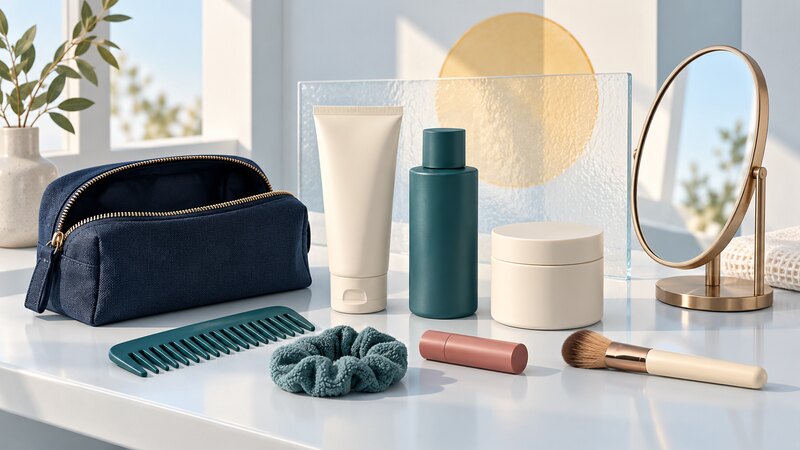
Start with comfortable skin, manageable hair and a routine that fits your morning. Makeup is optional, and your preferences can change. A useful beauty routine gives you a few dependable steps for school, sports or a special event without making every spot or stray hair a project.
This guide is for teens building everyday habits. For acne medicines, eczema or persistent irritation, use an individual plan from a health professional. Keep any prescribed treatment instructions alongside your routine.
Build your routine around three basics
A gentle cleanser, fragrance-free moisturizer and sun protection are a sensible starting kit. The American Academy of Dermatology’s guidance for tweens and teens favors simple care and cautions against piling on anti-aging products. Cosmetic retinol and exfoliating acids can irritate young skin; acne treatment chosen for a particular need belongs in a separate, directed plan.
Morning
Cleanse gently, moisturize as needed for comfort, and apply sunscreen. For dry or sensitive skin, cleansing just in the evening may be enough. Use your fingertips and lukewarm water; pat dry. If you wear makeup, put it on after skin care and sunscreen have settled.
After sweaty activity
Gently wash after sweating and pat with a clean towel. Bring your sunscreen if you will spend time outdoors. Keep a clean hair tie or headband handy if you prefer hair away from your face.
Evening
Remove makeup, cleanse gently and moisturize. Follow your own treatment directions where applicable. Put tomorrow’s basics together so the routine is easy to repeat.
For acne-prone skin, the AAD’s advice on skin-care habits supports washing morning and evening and after sweating, removing makeup before sleep, and choosing products labeled noncomedogenic or “won’t clog pores.” Repeated scrubbing or washing throughout the day can add irritation.
Plan sun protection around your day
Choose broad-spectrum, water-resistant SPF 30 or higher. Apply it to exposed skin about 15 minutes before going outdoors, including ears and neck. Reapply about every two hours outdoors and after swimming or sweating, following the label. Add shade, a hat and protective clothing. The AAD sunscreen application guide explains coverage and reapplication. Budget time for this step before the bus, practice or an outdoor event.
Try one makeup choice at a time
Decide what you want to experiment with: a lip color, a little concealer or a simple eye look. Begin with one option and see whether you like wearing and removing it. A full set of foundation, contour, highlighter and setting products is an optional style choice.
- For a little coverage: try a small amount of concealer where you want it, blend the edges and check in daylight. Match it to the surrounding skin. If you want an all-over base, our guide to depth, undertone and shade matching explains what to compare.
- For color: choose one lip or cheek product you enjoy. Use it only on the areas allowed by its label; a lip product may be unsuitable around the eyes.
- For eyes: use products labeled for that area and apply with clean hands and tools. Take your time while stationary, with enough light to see clearly.
Keep makeup and applicators personal. FDA eye-cosmetic safety guidance advises against sharing, adding water or saliva to dried mascara, and using eye makeup during an eye infection. Discard products used when an infection developed. Follow replacement guidance and stop using anything that causes irritation. Clean tools according to their instructions and let them dry before storing.
Let your hair and scalp set the schedule
Wash according to oil, buildup, activity and hair texture. An oily scalp with straight hair may need more frequent shampooing than dry, curly or coily hair. Apply shampoo mainly to the scalp, then use conditioner: focus on ends for fine or straight hair, and through the lengths for dry or curly hair.
Detangle gently from the ends upward with a wide-tooth comb. Thick curls often detangle best with conditioner still in; straight hair can dry a little before combing. Blot or wrap wet hair instead of rubbing vigorously. Limit heated styling, choose a low or medium setting, and follow a heat-protection product’s directions. These steps follow the AAD’s healthy-hair guidance.
Choose one easy everyday style you can redo yourself. For a busy morning, a familiar part, loose braid or comfortable clip can be more useful than trying a new technique under time pressure.
Buy for a purpose, then introduce changes slowly
Before shopping, list what you already own and the job each item does. Replace a missing basic first. For each extra, ask: What will I use this for? When will I use it? Can I afford to replace it? Include applicators and removal products in the total cost.
Test a new skin-care product before adding it widely. The AAD’s home product-testing method uses a small area on the inner arm or elbow twice daily for seven to ten days, with the normal amount and contact time. Follow product-specific directions, including rinsing instructions. If redness, itching or swelling develops, wash it off and stop using it. Persistent or severe reactions need professional advice. Home testing can reveal a reaction; it cannot guarantee that a product will suit every area of skin.
Add one product at a time and note its name, first-use date and how your skin feels. This makes a reaction easier to trace. A short note is enough; daily appearance ratings can turn an ordinary routine into an unwanted chore.
Make a plan for school or a special event
For prom, photos or a performance
- Well ahead: decide on a look, a spending limit and who will help. Allow time to test new skin products and practice the hairstyle and makeup.
- During a trial: wear the look for a few hours. Check comfort, shade in daylight, how products wear and how easily you can remove them. Take an optional reference photo for repeating the look.
- The day before: clean the tools you will use and gather familiar products. Save last-minute experiments with peels, dyes or strong treatments for another occasion.
- On the day: leave time for corrections, use sun protection for outdoor activities, and pack only the touch-up items you actually used.
If someone else is doing your makeup, explain allergies, sensitivities, budget and the amount of coverage you want. Our makeover planning guide helps you agree on a brief and costs.
Get support when care becomes uncomfortable
Leave pimples alone and use treatment as directed. Picking can prolong a breakout and increase the chance of marks or scars. AAD acne self-care guidance explains why consistent care and time matter. Deep or painful acne, scarring, persistent irritation or breakouts that affect confidence are reasons to ask a clinician for help. Our teen acne and healthy-skin guide can help you prepare that conversation.
You can enjoy beauty without making changing your body a requirement. Keep the steps you find useful, take breaks from content that makes you feel worse about yourself, and talk with a trusted adult if worries about appearance are taking over your day.
Keep exploring
Health and product-safety guidance is drawn from the American Academy of Dermatology and the U.S. Food and Drug Administration, checked October 6, 2026. Follow the label supplied with your own product and your clinician’s instructions.