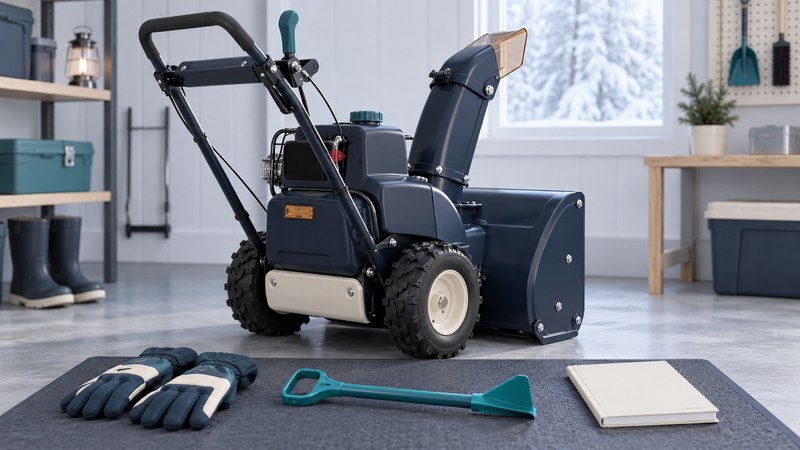
Start with the manual for the exact model and serial-number range. This guide organizes what to check before a storm, during clearing and at the end of the season. Procedures for gasoline, corded and battery machines differ, so record the instructions that apply to your equipment.
Prepare the machine and the route
Find the model plate and save the matching manual. Locate the normal stop control and emergency shutdown instructions, then identify maintenance tasks that need a service technician. The downloadable manual-reference checklist gives you a place to record page numbers, required intervals and service contacts.
Inspect guards, fasteners and visible wear as the manual directs, with the machine stopped and isolated from energy sources as specified. Check cords, batteries or fuel equipment according to the model. A damaged guard, failed stop control, fuel leak or damaged electrical component is a reason to keep the machine out of service.
Before snow hides the ground, remove loose objects and mark edges. Plan a discharge direction and a route clear of children, pets and bystanders. CCOHS snow-blower guidance covers visibility, footwear, debris and safe working distance; apply the exact separation distances in your manual.
Work from a clearing plan
Use the controls and operating position demonstrated by the manufacturer. Match travel speed and the size of each pass to conditions, maintaining stable footing. Change the route when wind sends snow back toward you or toward people. Stop when visibility or traction makes the work difficult to control.
Keep hands, feet and clothing clear of moving parts, retain guards and safety interlocks, and shut down before leaving the operating position. Never direct the discharge toward people or traffic. Keep a corded machine’s cable clear of the clearing path and use only the electrical setup its manual permits.
A powered machine still requires effort in the cold. Build in pauses and arrange help if the job exceeds what you can comfortably manage. Snow left after a pass is a reason to review the surface, settings and manual, not to reach near moving components.
Handle a blockage with a full stop
A blocked chute is a serious hand-injury hazard. The CPSC safety alert directs users to stop the engine and clear obstructions with a tool, never their hands. Stored mechanical energy can remain after power is removed. Keep hands out of the auger and chute even when the machine appears stopped.
Follow the model’s complete shutdown, waiting and power-isolation sequence before using its approved cleanout tool. For example, this Toro operator manual specifies stopping the engine, waiting for moving parts to stop and using the snow-cleanout tool when manual clearing is needed. Other equipment has its own battery-removal or disconnection requirements.
If the blockage persists, damage is visible or you are uncertain how to isolate the machine, leave it off and contact service. Do not bypass a safety device or improvise a repair to keep clearing.
Record care by model and interval
| When | Record from the manual | Your check |
|---|---|---|
| Before the season | Inspection, adjustment and service requirements. | List completed work, unresolved faults and the service date. |
| Before each use | Controls, guards, power supply and pre-start checks. | Confirm the machine and route are ready. |
| At prescribed intervals | Engine service, wear-part checks or other model-specific tasks. | Use the stated calendar or operating-hour interval. |
| Before storage | Cleaning, drying, fuel or battery care and storage conditions. | Write the date and what was actually done. |
Use specified replacement parts and adjustments. Shear fasteners, where fitted, protect a particular assembly; a stronger improvised bolt can defeat that function. Let a qualified service provider handle work beyond the owner procedures.
End-of-season fuel handling differs among engines, and battery storage instructions differ among packs. Copy the exact requirements into your record rather than using a universal drain, run-dry or charging rule. Store the manual and service details where you can find them before the next storm.
Sources checked October 11, 2026. Use current local information and the instructions for your actual equipment when planning an activity.