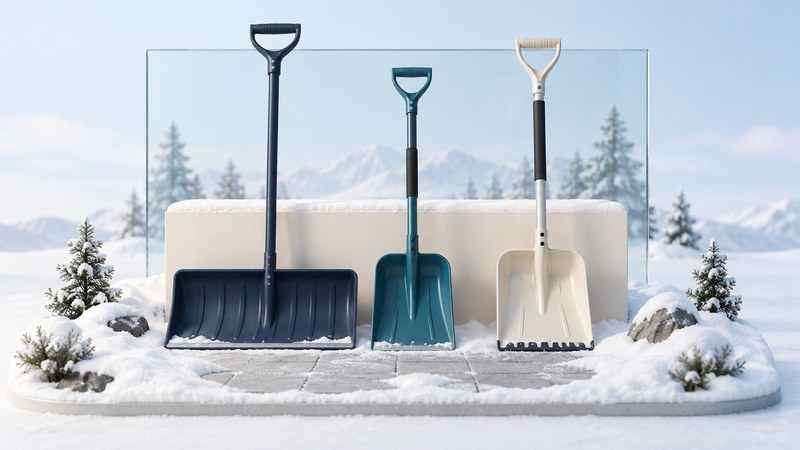
Start with the motion your property requires: pushing snow toward an open edge, lifting small amounts from steps, or doing both. A useful shovel fits that task, the available space and your ability to handle it when loaded. A wider blade can also collect more weight.
Choose the tool for the job
| Tool | Useful task | Check before choosing |
|---|---|---|
| Pusher | Move loose snow along a path toward an available storage edge. | A wide, shallow blade needs room to travel; check gates and narrow walks. |
| Scoop shovel | Move smaller amounts where snow must be lifted, such as steps or confined corners. | Try the empty tool and grip with gloves; keep each load manageable. |
| Combination shovel | Alternate short pushing passes with limited lifting. | Choose the compromise that fits your most frequent task, rather than filling the blade every time. |
A metal wear edge can catch uneven paving or affect a delicate finish. Check the tool and surface manufacturer’s recommendations for decks, coatings and composite materials. An ice scraper serves a different job: forcing a snow shovel through bonded ice can damage the tool or surface.
Check fit before the first storm
With winter gloves on, test the grip, shaft reach and weight of the empty tool. Can you hold it close enough to work without reaching far forward? Does the grip leave room for both the glove and a comfortable hand position? Check the blade-to-shaft joint and any replacement wear strip.
CCOHS guidance on shovel selection treats tool choice as a match between the material, task and user. Bent shafts and extra handles may suit some people, but their shape alone establishes neither comfort nor injury protection. Try the motions you actually need before buying.
Store the tool where it can be reached before opening a snow-blocked gate. Rinse off residue where the maker permits, dry it and inspect loose fasteners, cracks and sharp wear edges. Replace a compromised tool before relying on it.
Plan where the snow will go
Walk the area before snowfall. Identify uneven joints, drainage paths, buried edging and objects that could catch the blade. Choose snow-storage areas that preserve access to doors, utilities and pedestrian routes, and follow local placement rules. A good plan limits moving the same snow twice.
When conditions permit, smaller clearing sessions can be more manageable than one large accumulation. The CCOHS snow-shovelling guide recommends pushing where practical, using smaller loads when lifting, and turning the feet toward the placement area instead of twisting with a loaded shovel. Take breaks and reassess footing and effort.
Make exertion part of the decision
Snow removal combines cold exposure with physical effort. The American Heart Association’s cold-weather guidance advises frequent breaks and consulting a healthcare professional about concerns, especially when this work is a large increase over usual activity. Arrange help when the task exceeds your capacity; a powered machine still requires physical work.
Stop for concerning symptoms. Chest discomfort, unusual shortness of breath or other possible heart-attack signs require urgent attention; call 911 in the United States. Choosing help before the storm is a practical part of preparing a household, especially when access must remain clear.
Sources checked October 11, 2026. Use current local information and the instructions for your actual equipment when planning an activity.