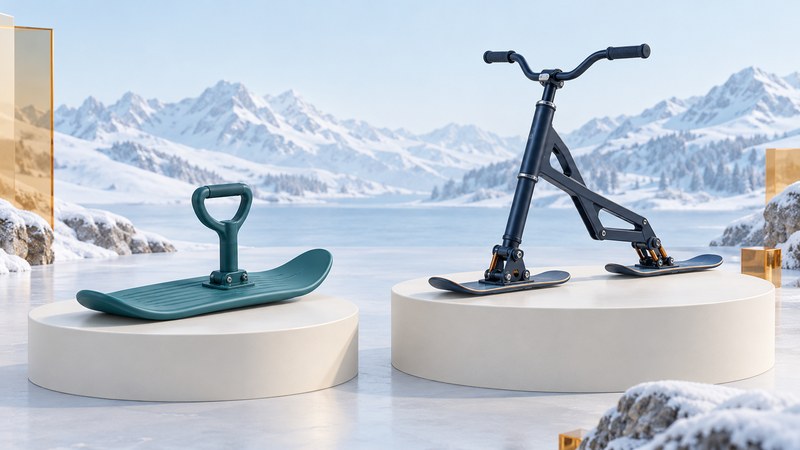
“Snow scooter” can mean a simple sliding toy with a handle or a purpose-built framed device for snow sports. Begin with the exact make and model, its manual and the intended riding area. A handle can provide balance or steering input without providing a mechanical brake.
Identify what you are considering
| Device description | What to establish |
|---|---|
| Molded sliding toy with handle | Age and load limits, intended terrain, handle function and the maker’s stopping instructions. |
| Framed snow scooter with separate sliding boards | Assembly requirements, edge-control skills, retention system and permitted lifts or runs. |
| Snowskate or other board-based device | Exact design, footwear, control method and venue acceptance; check separately from scooter rules. |
Ask for the product manual before buying used equipment. Check for cracks, loose parts and missing fittings against the parts diagram. If you cannot identify the model or obtain instructions, the intended use and limits remain unresolved.
For one specific example, JYKK’s SNOWSCOOT explanation says its equipment has no mechanical brakes: riders use board edges, weight transfer and handle input to control turning and stopping. That is a manufacturer-specific description, not a guarantee about every product sold under a similar name.
Resolve control and retention first
Find the instructions that explain starting, turning, stopping and keeping separated equipment from sliding away. Have a qualified instructor or rental operator demonstrate the actual device. Being able to stand on it is only the beginning of learning control.
Use the SNOWSCOOT manual page for that brand, or the corresponding manufacturer documentation for another device. Follow specified assembly checks and protective-equipment requirements. Confirm any leash or retention arrangement with both the manufacturer and venue; improvised cords can introduce entanglement hazards.
Practice only in a designated area suitable for beginners, with instruction and a clear stopping space. If the control method or required fittings remain unclear, resolve them with the supplier before using a slope.
Check permission and the entire runout
Contact the venue with the exact device name and, if useful, a photograph. Ask whether it is allowed, which areas are open to it, whether lessons are available, and how lifts or conveyors may be used. Approval at one resort or hill does not establish approval at another.
- Start and route: use terrain that the operator and manufacturer consider suitable for your ability and device.
- Runout: inspect where a rider or loose device could continue beyond the intended stopping point. Roads, parking areas, water, trees and fixed objects are reasons to choose another location.
- Conditions: reassess ice, visibility, crowds and changes in the surface before each session.
- Other users: follow the venue’s uphill walking and downhill riding arrangement, keeping the runout clear.
For children using sliding toys, the Canadian Paediatric Society’s winter-safety guidance supports adult supervision, an appropriate helmet and a hill free from traffic and obstacles. Apply the product’s age and rider limits as well; a helmet does not make an unsuitable hill appropriate.
Use a simple go-or-change-plan check
Proceed only when the device, rider limits, control method, protective equipment and venue rules all align. Otherwise choose a different activity or get an instructor’s help. For a first resort visit, a conventional snowboard lesson may offer a clearer supported route; for a walking outing, consider a beginner snowshoe trail.
After use, dry and inspect the device as directed, keep its manual and record damaged or missing parts. A second-hand bargain is useful only when the equipment can be identified, maintained and used in an appropriate place.
Sources checked October 11, 2026. Use current local information and the instructions for your actual equipment when planning an activity.