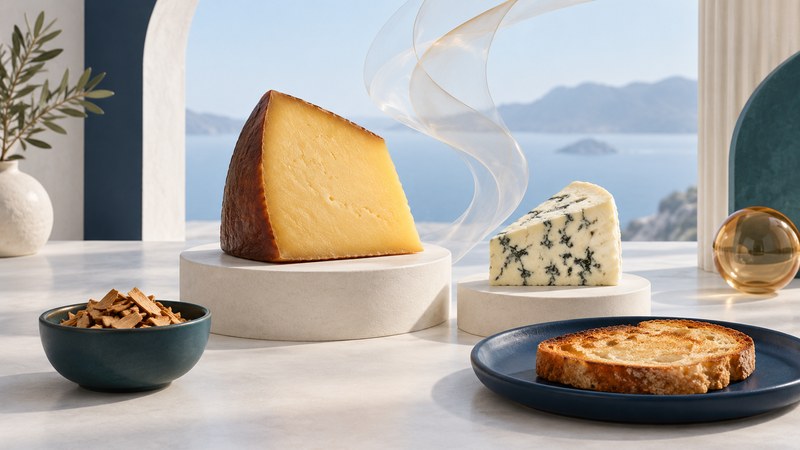
Choose smoked cheese in two steps: find a cheese texture that suits your meal, then judge the smoke character. A firm slicing cheese and a crumbly blue can both taste smoky while doing quite different jobs in a sandwich or sauce.
Read the cheese name and the ingredient list
The producer’s description can explain how the flavor was introduced. Rogue Creamery’s Smokey Blue description identifies a blue cheese cold-smoked over hazelnut shells. Applewood Vintage Wedge ingredients lists cheddar, smoke flavouring and paprika. These are two documented examples of different approaches; the word “smoky” alone gives you less information than the full product description.
Read the actual package in your market because recipes and formats can change. Check the base cheese, milk and other allergens, added seasonings, weight and refrigeration instructions. A golden-brown exterior or orange color cannot tell you the complete production method. Ask the seller for the original label when buying a cut piece.
Match the texture to the job
On a narrow screen, focus the table and use the arrow keys to scroll.
| Your plan | Look for | Useful first check |
|---|---|---|
| Cold sandwich | A firm cheese that cuts into even slices | Taste it with the actual bread and filling |
| Warm toast | A cheese intended for melting | Try one small toast before making a whole tray |
| Salad accent | A cheese that crumbles cleanly | Add a few crumbles before seasoning the salad |
| Tasting plate | Two cheeses with a meaningful contrast | Compare both texture and smoke intensity |
Keep the rest of the dish simple during a first trial. Smoked meat, strong mustard and a smoky sauce can make it difficult to tell what the cheese contributes. Plain bread, a familiar vegetable or a mild potato dish provides an easier starting point.
Try a small comparison
Illustrative two-person tasting: use 15 g of each of two cheeses per person. That is 2 people × 2 cheeses × 15 g = 60 g total. Serve plain bread and water. Taste a small piece alone, then with bread, and record whether the smoke is gentle, persistent or dominant for you. These are personal observations, not a quality ranking.
For a kitchen trial, prepare two similar small pieces of toast with equal weights of cheese: one with the smoked product and one with a familiar unsmoked cheese of comparable type. Follow the cooking method you normally use for that toast. Compare softening, oil release and flavor after cooling enough to taste. Different base cheeses make this a comparison of complete products, rather than a controlled test of smoke alone.
Adjust the dish deliberately
If smoke dominates, reduce its share of the cheese and use a compatible unsmoked cheese for the rest. In a sauce, start from a measured recipe and change a small portion first; extra cheese affects salt, fat and texture as well as flavor. The cheddar guide explains gentle sauce handling, while the blue-cheese guide helps with crumbly accents.
Choose the property you need to preserve when substituting: slicing, melting or crumbling. Replacing smoked cheddar with smoked blue changes more than aroma. Write down the amount that worked so the next meal is repeatable.
Keep the remaining portion useful
Rewrap the cut surface, keep the label and follow its storage instructions. For products requiring refrigeration, FDA refrigerator guidance recommends 40°F (4°C) or below. Smoke flavor and sealed packaging do not establish shelf stability. Buy a small piece for an unfamiliar flavor and give the remainder a named use, such as tomorrow’s sandwich, before buying a larger block.