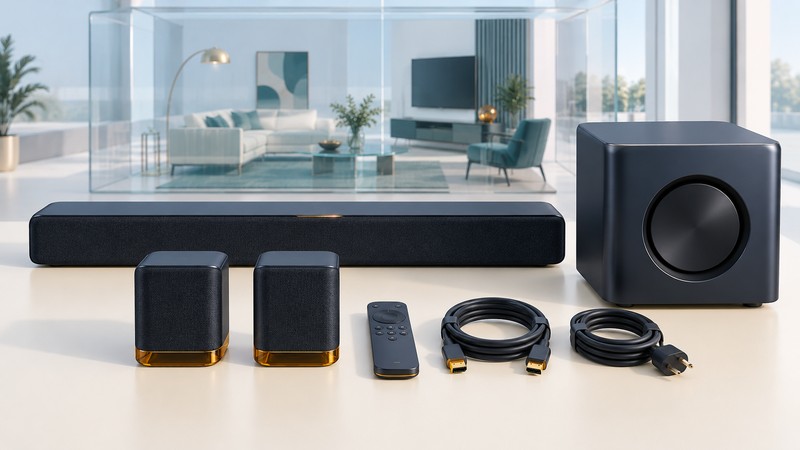
Choose a Samsung soundbar by the package you can install. A system with a separate subwoofer and rear speakers asks more of the room than a single enclosure. The right comparison begins with those physical differences, then checks the TV features and signal path you need.
Compare complete packages
The examples below come from Samsung’s 2026 U.S. home-audio lineup, checked October 12, 2026. Check local stock, the full model suffix, and package contents at purchase. This is a configuration guide, not an audition-based ranking.
| Example | Package approach | What the room needs |
|---|---|---|
| HW-Q990H | 11.1.4-channel system with a soundbar, separate subwoofer, and rear speakers. | Suitable rear positions and power, floor space for the subwoofer, and clear space around the drivers. |
| HW-QS90H | 7.1.2 all-in-one bar with built-in woofers; no separate subwoofer is needed for its base configuration. | A suitable bar position; compare its bass and seat coverage in your room. |
The channel designation describes the system, not the number of separate boxes. A single bar can contain several differently directed drivers. Inventory the physical pieces, then judge whether their intended positions are practical. Retailer bundles may change what comes with a particular offer.
Check Q-Symphony separately
Q-Symphony coordinates compatible Samsung TV and audio devices. Samsung’s U.S. compatibility footnote specifies a compatible 2022-or-later TV for the feature described there and sets additional year and device conditions for expanded groups. It is not a promise that every TV from a qualifying year works with every configuration.
Record the TV model, soundbar model, firmware, and proposed optional devices. Ask for confirmation of that exact combination when a feature matters to the purchase. Check wireless Dolby Atmos eligibility separately as well; support for an HDMI audio format does not establish support for its wireless delivery.
For a television from another brand, assess the documented HDMI or optical connection and supported formats. Keep the decision focused on the functions available through that connection rather than including Samsung-only TV features in the expected value.
Choose the signal route before connecting
With sources plugged into the TV, its ARC/eARC output returns audio to the soundbar. With a source plugged into a soundbar’s HDMI input, the bar forwards video to the TV. Check the specific model’s ports: an audio-return connection is not the same thing as an extra source input.
For gaming, list resolution, refresh rate, HDR, variable refresh rate, and the desired audio format. Verify the whole route against both manuals. A general “4K” label leaves several of those questions unanswered. See the HDMI port-and-cable guide for a method that follows each link.
Start with one source. Confirm picture, sound, volume control, and lip synchronization. Then test a TV app and any remaining player. Use known content and the system’s available input-format information; a streaming service logo alone does not tell you which soundtrack a particular title is delivering.
Give rear speakers usable positions
For a package with rears, consult its placement diagram before buying stands. Identify left and right from the intended listening orientation, allow the specified clearances, and keep upward-facing drivers unobstructed. Include the stand footprint in the walking space around the sofa.
Check power for each cabinet. A wireless connection between components still requires the power arrangements specified for those components. Complete any pairing and room-adjustment procedure in the current manual after placement. Save the initial levels before making changes.
A higher channel count cannot solve an obstructed or unsuitable position. Compare speech and effects from the actual seats at everyday volume, including the seat closest to a rear speaker. Check that dialogue remains intelligible when the bass level is reduced for evening use.
Compare the whole installation
Write one total for the equipment, stands, mounting, cables, and installation. Compare offers using the same model suffix and contents. Before keeping the system, repeat a cold start, input switch, quiet dialogue scene, and familiar music track. Record the settings that work.
Use the connection record to keep the result reproducible. Compare Sony’s packaged and expandable approaches if you want another system layout, and use the Home Theater hub for the larger room plan.