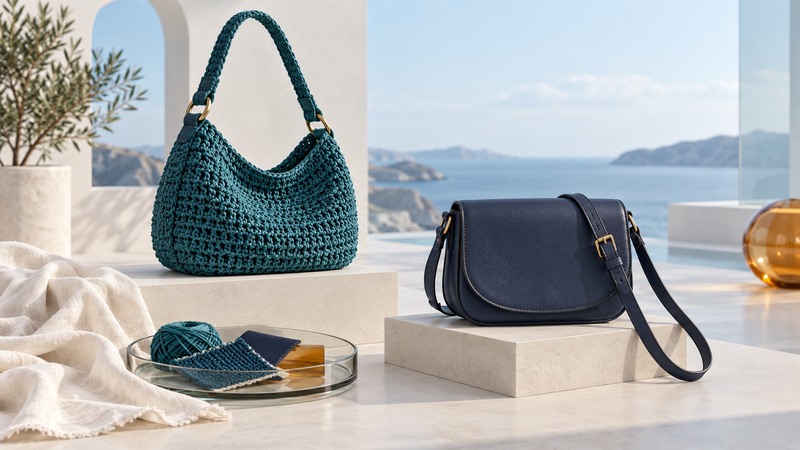
Choosing a Sak handbag becomes easier when you separate three decisions: what the bag is made from, how it carries your normal load, and what care its particular materials need. Compare the exact model and colorway. The same brand name can cover crochet, smooth leather, suede and fabric constructions that behave differently.
Identify the complete construction
Read the product’s material description and examine the lining, straps, edging and base as well as the outer body. “Crochet” describes how the surface is constructed; the yarn’s fiber content is a separate fact. “Leather” likewise leaves questions about finish, trim and care.
On small screens, scroll the table horizontally. Keyboard users can focus the table area and use the arrow keys.
| Construction | What to examine | Try it with your belongings |
|---|---|---|
| Crochet | Stitch consistency, snags, lining and handle attachments. | Check whether small items catch, poke through or distort the loaded shape. |
| Smooth leather | Finish, edge wear, seams and flexible areas. | Check loaded weight and whether the opening stays usable. |
| Suede | Nap, rubbed areas, color transfer and staining. | Consider contact with the clothing you commonly wear. |
| Mixed materials | Each material at the handle, base and trim. | Plan care around the most delicate part of the assembly. |
Treat this as an inspection routine, not a score in which one material always wins. Someone carrying a paperback and glasses may prefer a different structure from someone carrying a tablet and water bottle.
Check usable space and the loaded strap
Put your everyday items on a table first. Include their cases, not only their nominal dimensions. Inspect the opening width, inside pockets and closure: a bag can be large enough on paper while its zipper opening makes one essential item awkward to insert.
With permission in a store, or during a clean return-eligible try-on at home, load the bag and wear it over your usual clothing. Check whether the strap slips, presses on one spot or allows the bag to bump your hip. For a crossbody, try the adjustment range; for a shoulder bag, test whether your coat sleeve fits comfortably underneath.
Use The Sak’s material-specific instructions
The Sak’s product-care page gives different directions for different constructions. Its crochet advice is to wipe with a barely damp cloth and air dry. Its canvas guidance uses water-only spot cleaning and air drying. The leather section recommends a suitable water-based cleaning and moisturizing set, with a discreet patch test and the product’s own instructions.
The same source advises keeping suede away from direct sun and excessive water, oil, perfume and cosmetics; it also warns about possible color transfer. Check the exact item’s label and ask The Sak about unusual finishes or combined materials before applying a treatment. A general leather method should not be transferred to suede or fabric trim.
Empty the bag before routine inspection. Look into corners and pockets and remove loose debris gently. Give a damp bag time to dry naturally in the conditions the maker specifies. Avoid improvising a machine-wash cycle, bleach treatment or heat-drying method when the item’s instructions provide no support for it.
Make secondhand condition part of the comparison
Request photographs of the base, lining, strap attachment points, zipper ends and both sides of any damaged area. For crochet, distinguish a loose yarn end from a broken stitch; ask a repair professional about the latter. For leather, ask whether color or finish has been retouched. A repair may be perfectly useful, but it belongs in the item description.
Record purchase price, shipping and any actual repair quote separately. Compare the resulting bag with another option that meets the same carrying need. A famous campaign, a claimed original price or a fashionable shape does not answer questions about the particular bag’s condition.
For a broader comparison of styles and packing needs, use Choosing a Handbag. Keep the model name, label photographs and relevant care directions together after buying, so future cleaning decisions begin with the correct construction.