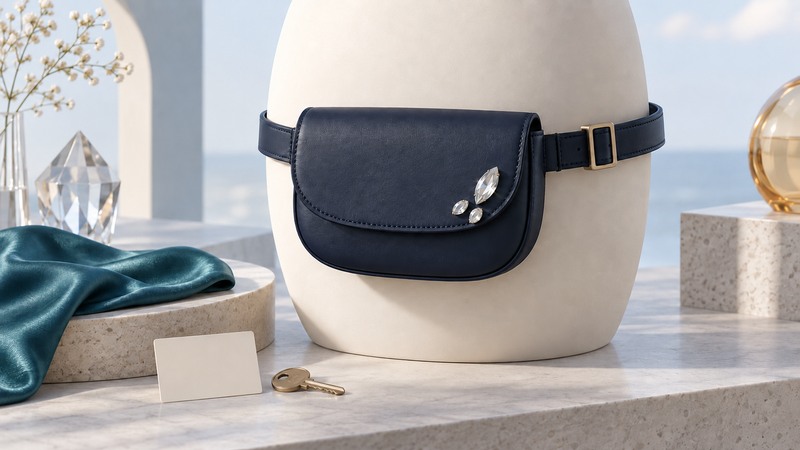
Karibags approached the handbag as a small accessory worn at the waist: part carrying pocket, part outfit detail. That combination is still a useful way to evaluate a vintage listing. A dressy belt bag should hold your essential items, stay comfortable when you sit and move, and retain secure closures and attachments.
What the Karibags record establishes
Brand designer Pamela Winningham’s Karibags portfolio names Kari Alexander as the client and describes work on identity, packaging and a press kit for a small fashion belt bag. This is direct evidence of the brand-design project, rather than evidence that a particular resale item is authentic.
The USPTO’s November 2, 2004 Official Gazette includes the Karibags application, serial 78340342, for a purse-and-belt combination. Search for “karibags” inside the PDF to locate the historical entry. A trademark record helps establish a name and product concept; it provides neither an inventory of designs nor a current retail-availability check.
Use these anchors when researching a piece, then document the bag itself. Similar names used by other sellers or brands are not evidence of continuity. Where no matching catalog or original documentation is available, keep the model identification tentative.
Measure where you will actually wear it
Choose the waist or hip position you prefer, over the clothing you intend to wear. Measure that circumference in centimeters or inches. Ask the seller for the belt’s usable fastening range measured consistently, including which holes or buckle settings remain sound. The total tip-to-tip length may overstate how much circumference it can accommodate.
Check whether the pouch slides along the belt, is stitched in place, or is attached by loops. Each arrangement affects where it sits and what can be adjusted. Verify that any detachable parts advertised with the bag are included. Never assume a replacement belt will fit the original loops without measuring them.
During a permitted try-on, sit down, bend comfortably and take a few steps. Test whether the pouch presses into you, tips outward or catches on a jacket. Your comfortable position matters more than recreating the exact way a bag was photographed.
Pack only the essentials you intend to carry
List your phone in its case, cards or small wallet, keys and any other necessities. Compare their dimensions with the usable opening and internal space. Decorative structure and lining can leave less room than the outer dimensions suggest.
If purchasing online, ask for the opening width and a photograph with a ruler rather than asking whether “a phone” fits. Phone dimensions and cases vary. Treat exterior pockets separately: confirm that their closure and depth suit what you intend to put there.
Inspect the whole attachment system
Request photographs of the back, belt holes, buckle, pouch loops, lining and the closed fastening. Look for stretched holes, split edges, loose stitching and worn metal. Those areas support the load and may matter more to everyday use than a small cosmetic mark on the front.
For embellished examples, inspect missing stones, visible adhesive, damaged settings and snagging edges. For textile panels, ask about fraying, pulls and stains. For leather-like surfaces, confirm the label or material evidence and inspect peeling or cracking. Appearance alone may leave the material uncertain.
Keep cleaning conservative until the materials and finish are established. A treatment suitable for one leather panel may affect fabric, adhesive or embellishments beside it. Ask a repair or conservation professional about fragile mixed-material pieces before using liquid cleaners or heat. Store the empty bag with the belt unstrained and delicate surfaces protected from rubbing.
Make two separate decisions: whether you value the piece as a design object, and whether it can carry your daily load. Document repairs and unidentified components. A clearly described vintage accessory is more useful than an unsupported promise of celebrity provenance or rarity.