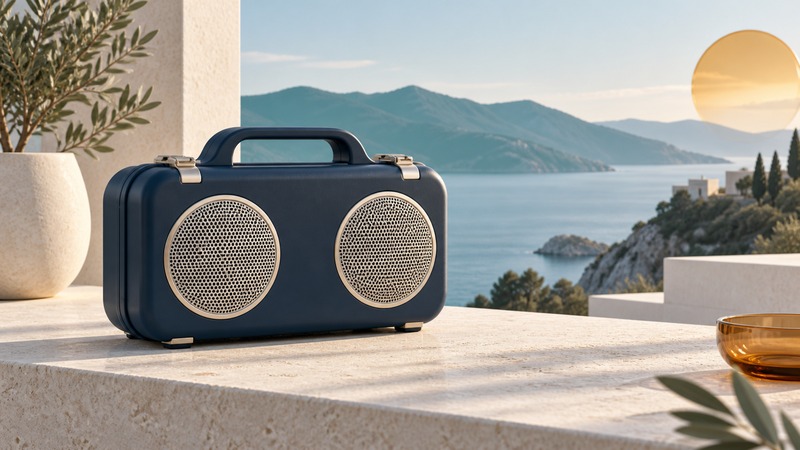
A rugged speaker earns its place outdoors when its documented protection, usable battery life, and carrying arrangement fit the outing. Start with the conditions you expect and the exact hardware revision. A durable case and a familiar model name still leave important questions about seals, charging, and support.
Describe the outing before comparing specifications
List where the speaker will sit, how far it must be carried, the expected weather, and how long it must play. A speaker for a patio dinner has different requirements from one carried along a muddy trail. Include whether you also want to charge a phone or connect several speakers.
DemerBox illustrates a case-based design with protected internal storage and a removable port plug. Those physical features can be useful, but each has an operating condition. Compare the complete ready-to-use arrangement, including required closures and accessories.
On a small screen, scroll the table sideways to read all columns.
| Need | Evidence to seek | Practical decision |
|---|---|---|
| Rain or splashes | Exact protection rating and closure instructions | Use only in the documented configuration |
| Sand, dirt or salt exposure | Cleaning and seal-care instructions | Choose a maintenance routine you can follow |
| Long listening session | Battery test conditions and charging method | Allow a reserve based on your actual use |
| Carry with other equipment | Weight, handle and packed dimensions | Try the complete load before a long outing |
| Several speakers | Supported linking family and hardware generations | Test the exact units together |
| Long-term ownership | Current parts, repair, warranty and return terms | Verify support for the exact item before purchase |
Read protection claims with their conditions
The IEC 60529 listing identifies the IP Code as a classification of enclosure protection. Use an exact model’s rating and instructions rather than treating the word rugged as a test result. Read the conditions for water exposure, required covers, and any separately stated impact or corrosion claims.
DemerBox’s port-plug instructions distinguish storing the plug inside from installing it in the external opening after closing the lid and latches. The stored plug does not seal that opening. Read the illustrated procedure for your unit and inspect the required closure before exposure.
Do not perform an improvised immersion or drop test to check a marketing claim. Keep the speaker within documented conditions, and resolve a damaged seal or missing closure before relying on protection. The rating of a case or enclosure alone does not establish the behavior of an altered assembly.
Match charging instructions to the hardware generation
Model revisions can change the charging system. DemerBox’s older charging instructions specify a dedicated 12.6-volt charger. Its DB2 product listing reviewed in September 2026 describes newer USB-C units and explicitly separates their chargers from the older design. Identify your unit’s connector and documentation before connecting power; resolve contradictory instructions with the manufacturer.
Charging also changes the physical configuration. If a cable passes through an opening that otherwise takes a sealing plug, assess protection for that charging arrangement using the exact instructions. Plan a dry, suitable charging location and follow the unit’s environmental limits. A water-protection claim for closed playback does not establish protection while cables are attached.
The same current product listing distinguishes multi-speaker compatibility for USB-C units and includes final-production sale restrictions. Verify the exact item’s current warranty, return, and repair terms at purchase rather than relying on older general support text.
Measure the use you actually care about
Manufacturer playback figures depend on test conditions. DemerBox’s battery-capacity guidance discusses model, ambient temperature, and charging another device as factors affecting duration. Treat an advertised number as context for planning, then record your own normal listening session.
- Charge as instructed and record the hardware revision, starting indication, ambient conditions, and approximate listening level.
- Use a representative playlist at a comfortable level in the intended type of location.
- Record elapsed playing time and any interruptions. Note whether the speaker also powered another device.
- Finish with enough reserve for your plan; repeat a comparable session if the result will guide a long outing.
- Inspect and clean the speaker using its manufacturer’s procedure before storage.
For DemerBox care, the cleaning instructions explain closure and drying precautions. Follow the applicable procedure instead of transferring one speaker brand’s washing advice to another.
Keep a record and continue
Download the rugged speaker planning checklist (plain text). Use the blank result fields to record your own equipment and observations.
Researched and updated September 13, 2026. Manufacturer claims are identified as such; no water, impact, battery, or acoustic testing was performed for this guide.