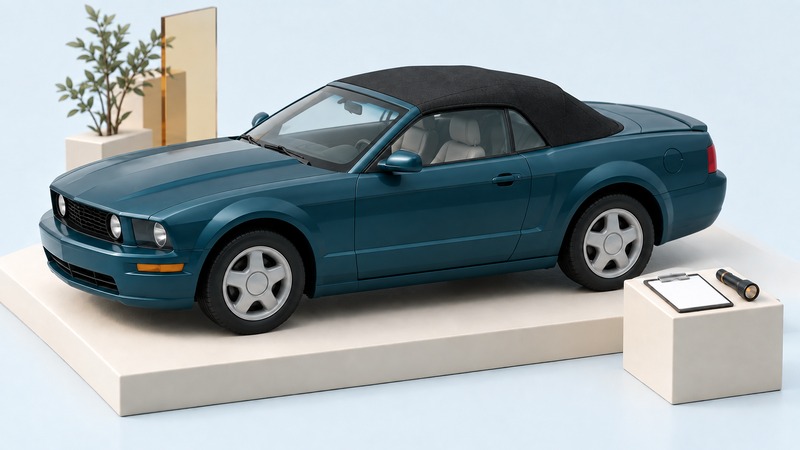
A good viewing of a 2005 Mustang convertible should answer two questions: does the roof and cabin work as intended, and what does the service history establish about the rest of the car? Arrange a dry, daylight inspection with enough time to see the roof both raised and lowered. Use the findings to commission an independent inspection before agreeing on the purchase.
Verify the car before checking the roof
Match the VIN on the car to the title, registration and invoices. Record whether you are considering the V6 or GT, the transmission and any changes to wheels, suspension, exhaust or electronics. A badge or aftermarket body part is not sufficient evidence of the original specification. Ask for the owner’s manual, both keys and receipts for roof or collision repairs.
Ford’s 2005 Mustang Owner’s Guide (PDF) is the relevant operating reference; its convertible-top instructions begin in the Driver Controls section. Later Mustangs can have different latches, trim and procedures. Keep the exact model-year manual with your viewing record.
Observe a complete roof demonstration
Have the owner demonstrate the roof with the car stationary, following the manual. Ford specifies a clear stowage compartment and a dry top, and describes separate left and right windshield-header latches. Stay clear of moving parts and keep hands and loose objects outside the mechanism. If it binds, moves unevenly or fails to complete its travel, stop and arrange diagnosis.
With the roof raised, look across the fabric in good light. Note damaged stitching, abrasion, patched areas, separation around the rear window and the condition of the seals. Watch the windows meet the roof and each other after closing. Record what you see and whether it occurs on one side or both. These observations give a roof specialist a useful starting point without pretending to identify an internal hydraulic or electrical fault.
If a protective boot is included, ask the owner to identify it and demonstrate its secure attachment according to Ford’s instructions. Check that promised accessories are physically present. An accessory mentioned in an advertisement belongs in the purchase agreement if it matters to the deal.
Look for evidence of water entry
On a narrow screen, scroll the table horizontally. Keyboard users can focus its region and use the arrow keys.
| Area | What to observe | Next step for a concern |
|---|---|---|
| Header and side seals | Uneven contact, damage or a window that sits differently on one side | Request alignment and seal inspection. |
| Rear window and roof fabric | Separation, repair patches or damaged stitching | Get a roof specialist’s written assessment. |
| Footwells and rear cabin | Dampness, water marks, musty odor or unusually fresh coverings | Ask about leaks and inspect affected areas with permission. |
| Trunk and accessible storage recesses | Moisture, staining or corrosion visible without dismantling | Have the source and extent investigated before pricing a repair. |
A dry carpet on one sunny day leaves a question open if there are stains or an odor. Ask when the roof last experienced rain, whether drains or seals have been repaired and what was done to dry the interior. A workshop can conduct an appropriate controlled leak check with permission. Avoid improvised pressure-washer tests or pulling apart trim at a seller’s premises.
Drive it with the top raised as well as lowered
A raised-roof drive helps reveal wind noise, rattles and window-seal issues that open-air driving can mask. Use a familiar, lawful route with a mix of ordinary surfaces. Check seating, visibility, climate control, lights and other everyday functions while parked; during the drive, concentrate on steering, braking, power delivery and unusual sounds. Record the speed, road surface and temperature when a symptom occurs.
Ask the inspector to assess the underside, structure, prior repairs, tires, brakes, suspension, leaks and the exact engine and transmission. Treat modifications as changes that require documentation and assessment. The FTC’s used-car guidance recommends an independent inspection even when a history report or certification is available.
Close the gaps before negotiating
Run the VIN through NHTSA’s recall search and ask Ford to confirm applicable campaigns and completion records. The VIN tool’s limits include many recalls over 15 years old, so add the manufacturer check for a 2005 car. Keep the date and result with your file.
Compare the asking price with the car’s documented condition plus written estimates for identified work. Separate immediate repairs, scheduled maintenance and cosmetic preferences. Move forward when the records, inspection and roof demonstration support the ownership experience you want.
Save a working record
Download the 2005 Mustang Convertible working record (plain text). Open it in a text editor, save a private copy and fill in the relevant prompts. Record unknowns explicitly and attach the evidence that supports each conclusion. The file includes instructions, source links and this article’s address.