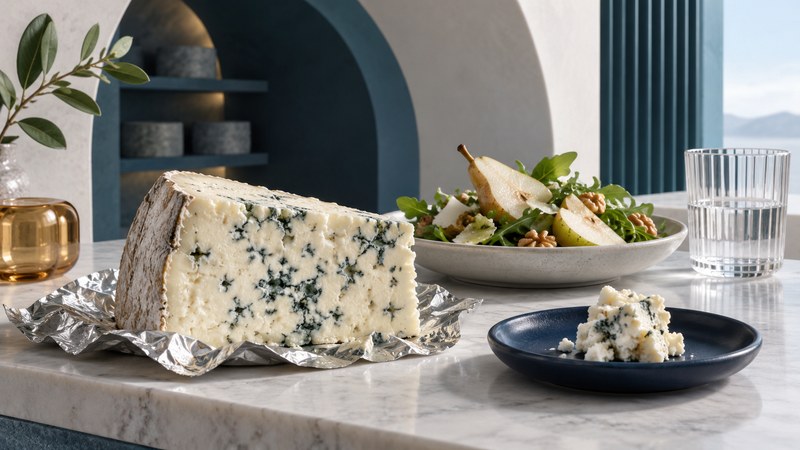
Buy Maytag Blue by name and producer, then give the wedge a few specific jobs. A little reserved for tasting, some for a salad and a measured amount for another dish is easier to use well than an open-ended plan to “add blue cheese.”
An Iowa cheese with a documented beginning
Maytag Dairy Farms’ cheese-care guide dates the first production to 1941, describing work by Frederick L. Maytag II with Iowa State University microbiologists. The maker identifies local Iowa Holstein milk, cave aging and individual foil wrapping as parts of its production story. That history ties the name to a particular producer, which is useful when shopping among many American blue cheeses.
The same guide describes a moist cheese that also crumbles, with a tangy finish. Treat those as the maker’s description and taste the actual wedge for your own balance of salt, acidity and blue flavor. A general blue-cheese description can introduce the family; it cannot identify every producer’s product.
Keep the product information with the piece
Check the producer name, full label, weight, milk treatment, storage instructions and package date. When buying from a larger wheel, ask for the original information and the counter’s opened-storage advice. Choose an amount matched to the meals you are planning. A whole wheel is useful only when you have the people or storage plan to use it.
Ask about dietary requirements before serving someone else. For people at increased risk of Listeria, consult CDC’s safer food choices and select a suitable food; the presence of cheesemaking mold or an attractive wrapper does not settle that question.
Plan a small wedge before opening it
On a narrow screen, focus the table and use the arrow keys to scroll.
| Allocation | Amount | How to use the information |
|---|---|---|
| Two-person tasting | 30 g total: 15 g each | Try with plain bread before adding sweet accompaniments |
| Two salads | 40 g total: 20 g each | Scatter crumbles and taste before adding salt |
| A further dish | 50 g held in reserve | Choose a recipe whose quantity fits the reserve |
| Total | 120 g | Keep unused allocations refrigerated |
The amounts are a shopping exercise, not a recipe or nutritional prescription. Change them to suit the wedge you buy and what else you serve. If the cheese is stronger than expected, use smaller additions and plan another meal for the remainder.
Taste, then add accompaniments
For the first bite, use plain bread or a neutral cracker. Add pear or apple to the next bite to decide whether you like the contrast. A separate bowl of optional nuts lets people choose their own combination, while ingredient and allergen checks remain necessary for the whole meal.
For a salad, crumble the cheese over individual portions so each person can start with a little. For a dressing or cooked dish, use a complete measured recipe and taste before adding further salt. A small amount can function as a finishing accent. Maytag’s own guide suggests salads and burgers; adapt the quantity to the complete dish.
Compare alternatives by their role. A creamy Gorgonzola dolce and a crumbly wedge may distribute differently in a dressing. Use the blue-cheese tasting framework when choosing a substitute, and try a small portion before changing an entire recipe.
Follow the maker’s care instructions
Maytag advises immediate refrigeration on arrival and retaining its foil inside a bag to help protect moisture and texture. Follow the instructions on the actual purchase, especially for an already-cut piece. Keep track of opening and of any time spent on a serving plate.
For a reserve intended for later use, consult the maker’s freezing instructions and thaw under refrigeration. Prefer a smaller fresh portion when texture matters most. FDA serving and time limits gives the general limit for perishables without temperature control: two hours, or one hour above 90°F. Set out what you need and keep the remainder cold.