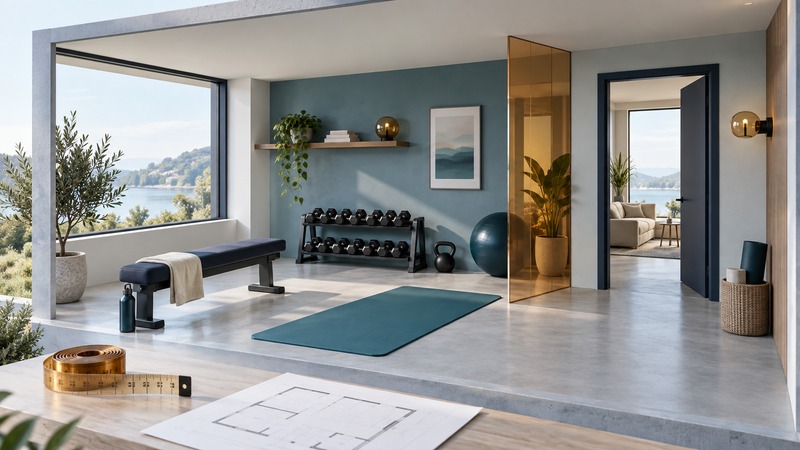
Start a home gym with the activities you want to repeat and the room you can actually use. An effective plan accounts for movement space, access, setup time and upkeep as well as the equipment’s footprint.
Check older Bowflex Ultimate 2 equipment
When assessing used equipment, photograph the exact model and serial label, search the CPSC recall database and check the manufacturer’s current instructions. Old repair-kit offers can outlive their availability. A seller’s assurance that an item “works” is a separate question from recall status.
Buy for a short list of activities
Write the exercises or activities you plan to do before shopping. For example: two introductory strength sessions and indoor walking when weather prevents an outdoor walk. Decide which parts genuinely need equipment and which can use an open floor area or another accessible setting.
| Approach | What to evaluate | Likely planning constraint |
|---|---|---|
| Open floor and small equipment | Mat, suitable bands or a few weights matched to taught exercises | Safe storage, band setup and repeated clearing of the area |
| Bench and free weights | Useful loads, bench compatibility and storage | Lifting and returning weights as well as exercising |
| Multi-gym or cardio machine | Exact manual, supported movements, adjustment and service | Delivery, installation, moving parts and operating clearance |
The 2026 ACSM summary reports benefits from home-based resistance training and several equipment types. That supports choosing a practical arrangement; it does not guarantee that any particular machine fits your body, room or goals.
Measure the operating space
- Draw the room, doors, windows, radiators, outlets and fixed furniture. Record units consistently.
- Measure the delivery route, including turns and stairs, and compare the packed and assembled dimensions.
- Obtain the exact model’s manual. Record its required clearances, installation conditions and limits.
- Mark the equipment footprint and its full operating area. Include moving handles, benches, pedals and your body in the positions used.
- Keep the required circulation and exit routes clear. Confirm storage positions and whether the room still works between sessions.
Folded dimensions describe storage. They do not establish the space needed during use. For floor loading, anchoring or electrical questions, obtain model requirements and advice from the appropriate qualified professional. Avoid inferring structural suitability from room area alone.
Compare the complete cost
List purchase price, tax, delivery, assembly, necessary accessories, service, consumable parts and any subscription required for the functions you want. Record what continues to work when a subscription ends. Check the terms for returning a machine after assembly and who pays collection costs.
For a used machine, establish whether the correct manual, original components and service support are available. Record the evidence behind each answer. Resolve unknown safety or compatibility items before purchase; do not treat an unknown as a pass because the price is attractive.
Try a small setup before expanding
Arrange the proposed area and walk through getting equipment out, completing familiar movements and putting it away. If moving furniture becomes the main obstacle, solve that before adding more equipment. Review what you actually use after several weeks.
Download the equipment-planning checklist. Use the adjustable-dumbbell guide for load and handling decisions and the cardio-equipment guide for a machine trial. Start with a repeatable training plan so each purchase has a clear purpose.
Explore the fitness library
Browse fitness guides for planning, equipment, food and movement. Source links appear alongside the guidance they support.