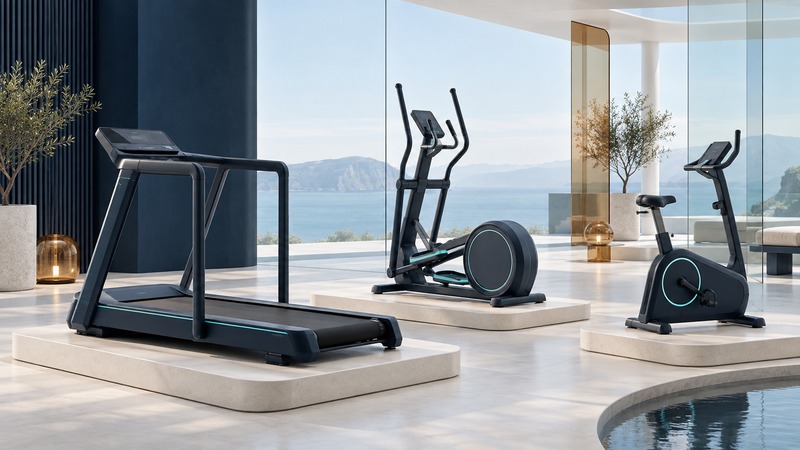
The most useful cardio machine is one you can adjust, enter, operate and use comfortably enough to return to. Compare the movement and complete ownership requirements before choosing a screen, program library or headline specification.
Decide which activity you want to repeat
A treadmill provides a moving belt for walking or running. An elliptical guides the feet through a repeating path. A stationary bike supports seated pedaling, with upright and recumbent designs offering different positions. The exact geometry and adjustment range matter more than a broad promise about comfort.
Start with an activity you enjoy or want to learn. Consider whether you need instruction or an individualized recommendation because of symptoms, balance difficulty or a health condition. The CDC guidance on adapting activity is a useful starting point for that discussion.
| Machine | Try in person | Check in the manual |
|---|---|---|
| Treadmill | Walking space, controls, normal stride and supported entry/exit procedure | User limits, speed range, emergency stop, electrical requirements and clearance |
| Elliptical | Step-on height, stride path, handle reach and comfortable motion | Pedal movement, overhead clearance and adjustment options |
| Upright bike | Seat and handlebar range, pedal reach and ease of getting on | Adjustment locks, pedal system and supported fit range |
| Recumbent bike | Seat access, back support and comfortable leg reach | Seat travel, locking mechanism and floor space |
This table organizes a trial; it does not assign a machine to a medical diagnosis. Ask the seller to demonstrate setup and operation for the exact model before you try it.
Run the same practical trial on each candidate
- Identify: record model, variant and manual version. Check recall status through the CPSC database and manufacturer.
- Adjust: establish a suitable position using the manual and staff help. Record settings so another household member can reproduce their own fit.
- Operate: locate start, stop and the essential controls. Confirm that you can read and reach them during comfortable movement.
- Continue: use a familiar, manageable effort long enough to judge the movement. Record any awkward reach, pressure, noise or difficulty.
- Exit and repeat: follow the stopping and dismounting instructions, then compare the next machine using the same questions.
Test each intended user separately. A shared household purchase must accommodate the actual people and their settings. Ask how adjustments and user profiles work without assuming that the showroom’s default setting suits everyone.
Judge effort separately from the display
The CDC’s talk test describes moderate effort as breathing harder while still able to talk, with singing difficult; vigorous activity permits only a few words before pausing for breath. Effort is relative to the individual.
Record duration and how the activity felt alongside speed or resistance. Levels such as “5” are specific to a machine’s scale; compare the same machine and settings when tracking your own sessions. Treat an estimated calorie display according to the manufacturer’s stated method and limitations, rather than as a direct measurement of body-fat change.
A machine purchase can support the adult aerobic activity target, but the weekly plan should also include muscle-strengthening work. The fitness-principles guide connects these parts.
Check the room, software and costs
Use assembled and operating dimensions, not the folded footprint alone. Confirm installation, electrical supply, floor suitability, delivery route and access for service. Compare noise under realistic use where possible. The home-gym planning guide provides a room checklist.
Ask the seller to demonstrate the features available without a paid subscription. List account, internet and device requirements for anything you value. Verify what the return policy covers after delivery and assembly, and how local service and replacement parts are obtained.
Write down the strongest candidate, its unresolved questions and what would change your choice. Use the equipment-planning checklist to compare evidence before buying.
Explore the fitness library
Browse fitness guides for planning, equipment, food and movement. Source links appear alongside the guidance they support.