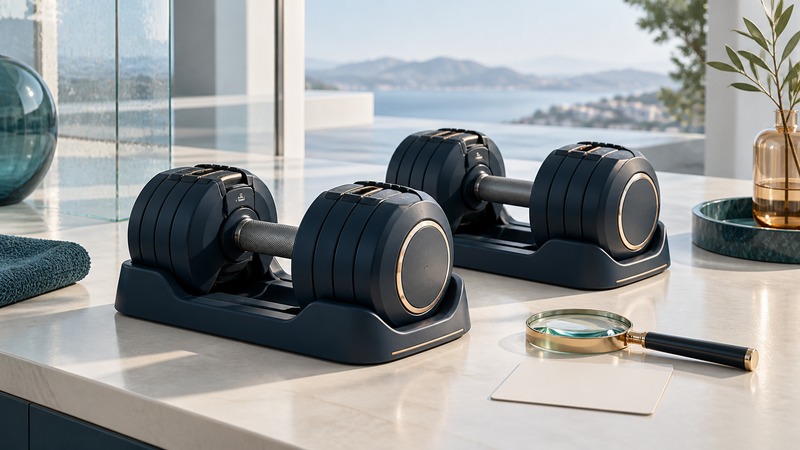
Start an adjustable-dumbbell decision with the exact model, its recall status and the weights you can actually use. A large maximum load is useful only when the lighter settings, adjustment system and handling also suit your exercises.
Check legacy BowFlex dumbbells first
Photograph the label on each base and collect purchase records. Use the manufacturer’s current claim instructions; remedy options depend on the purchase circumstances. Keep confirmation and return records. Follow the supplied return directions instead of improvising a repair or shipping loose components. Outside the United States, use the manufacturer’s guidance for your country.
Compare the design against your routine
Adjustable weights consolidate several loads into one handle or pair. The tradeoff is a mechanism that needs correct engagement and a suitable place to make changes. These are decision criteria, not a ranking of brands.
| Design | Useful feature to evaluate | Hands-on check |
|---|---|---|
| Dial or rotating-handle selector | Changes made while docked in a base | Follow the manual to change several settings; check clearance for returning both ends to the cradle. |
| Selector pin system | Selection among nested weight sections | Check pin placement, visibility and access around the hand at the intended settings. |
| Plate-loaded handle | Choice of compatible plates and increments | Allow time and space for changing plates and securing the specified collars. |
| Fixed dumbbells | Immediate access to each available load | Compare storage for the specific pairs you use. |
Use the exact product manual to establish permitted orientations, inspection, storage and handling. Drop tolerance and accessory compatibility are model-specific. A demonstration of one product cannot establish those limits for another.
Read the entire weight sequence
Write down the available loads per dumbbell, in one unit. Check the minimum, every intermediate setting and the maximum. Confirm whether a listing’s weight refers to one unit or the pair. A strong lower-body exercise and a smaller shoulder movement can require very different loads.
If the next setting is too demanding, use a lighter suitable option and review the exercise plan. Attaching improvised extra weights can interfere with the mechanism. The resistance-training guide explains how to record repetitions and effort before changing load.
Make the purchase decision reviewable
- Identify: record the exact model, seller, country and recall check date. A missing or unreadable label is an unresolved question.
- Try: on eligible equipment, use the manufacturer’s demonstration to assess grip, handle length, thigh contact, adjustment and docking at relevant weights.
- Fit: measure the bases, proposed stand and the space needed to approach, lift and return the equipment.
- Cost: add the pair, compatible stand, delivery, tax and any required accessories. Check return shipping, warranty exclusions and replacement-part availability.
- Decide: choose the option that meets your must-have loads and handling needs. Resolve safety or compatibility questions with the manufacturer.
For a room-level plan, continue with planning a home gym. Equipment choice works best when it follows an exercise plan you can sustain.
Explore the fitness library
Browse fitness guides for planning, equipment, food and movement. Source links appear alongside the guidance they support.