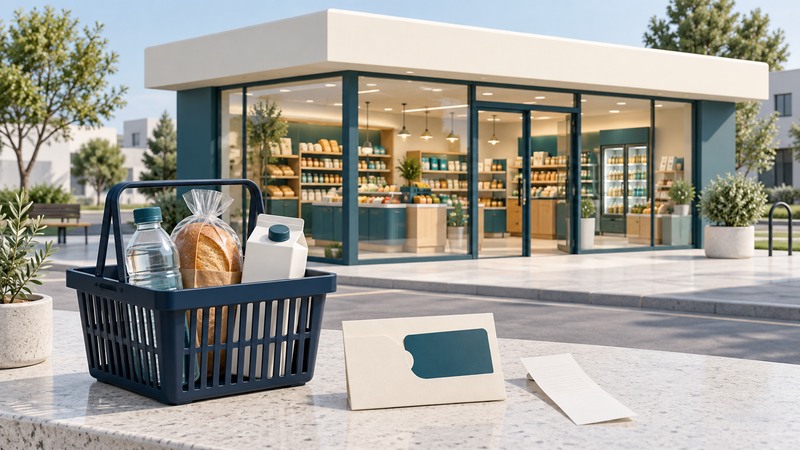
A convenience store can solve an immediate problem: a missing staple, a travel essential or a small gift on the way to a gathering. Decide what you need, how much is useful and the most you will spend before browsing. The value of the stop includes the trip it saves as well as the price on the shelf.
Make the stop specific
Write a short list with a quantity and a reasonable substitute for each item. “A small sealed snack the recipient likes” leaves room for the actual selection. “Any last-minute gift” makes it easy to buy several unrelated things.
Check the individual store's opening hours and services through its official listing, and call if the trip depends on one item. Brand-wide advertising can describe products that a particular location does not carry. A checkout counter being open also does not establish that every service is operating.
For an urgent replacement, verify the size, connector, battery type or other essential specification before paying. A nearby item that cannot perform the task adds cost without resolving the problem. If a compatible item is unavailable, decide whether postponing the task is better than buying an uncertain substitute.
Compare useful quantity and full cost
Use the same unit when comparing equivalent products: price per ounce, liter, sheet or item, as appropriate. Unit price answers a quantity question. The smaller package can still be a sensible purchase when you only need a little or have limited storage.
Include tax, deposits and any service charge shown at checkout when judging the total. For a multi-buy promotion, check the required quantity and whether a membership is needed. Compare the actual purchase with the amount you planned to spend.
Consider a second trip explicitly: how far away is the alternative, will it be open, and does the expected saving justify the time and transport involved? Use your own circumstances; a universal price premium cannot describe every store or shopping trip.
Build a small gift around the recipient
| Possibility | What makes it useful | Check before buying |
|---|---|---|
| A familiar packaged treat | The recipient already enjoys it and can use the quantity. | Ingredients, stated dietary needs, package condition and storage instructions. |
| A gift card for a known favorite | The recipient can readily use the store or service. | Country/account eligibility, fees, redemption options and intact packaging. |
| A useful small essential | It solves a need you actually know about. | Exact compatibility, condition and return terms. |
| A simple card with a future plan | It communicates thought and a specific invitation. | A realistic activity and a way to agree on the date. |
Let one appropriate item carry the gift. Adding random products to make a basket look fuller can reduce usefulness while raising the cost. If you are uncertain about allergies, preferences or account access, choose an alternative you can confirm instead of guessing.
Check a gift card before and after payment
Buy through a source you trust and inspect the physical card and packaging for exposed PINs, replaced stickers or other signs of tampering. Show a suspicious card to the cashier or manager and choose a different source if necessary. The FTC's gift-card inspection advice explains how stolen numbers can let a scammer drain money after a card is loaded.
At checkout, confirm the amount loaded and keep the activation receipt with a private record of the card. If the receipt indicates an activation problem, resolve it before treating the gift as ready. Read how the recipient can check a balance through the issuer's official site or number.
Never share a gift-card number or PIN with someone who demands it to pay a bill, fee or emergency request. The FTC's scam guidance explains these demands and provides issuer reporting contacts. If a card fails or money is missing, contact the issuer promptly with the card and receipt, and ask whether funds can be recovered.
Check the receipt and close the loop
Before leaving, compare the receipt with the items, quantity and advertised terms you used. Ask about any discrepancy while the staff can see the purchase. Keep the packaging and receipt if a compatibility or quality question needs resolving later.
After an urgent trip, note anything that would have prevented it: a spare charging cable, a replenishment reminder or a small supply of greeting cards. Repeated urgent purchases often reveal a simple household planning opportunity. The next planned shop can cover that need in a quantity you will actually use.