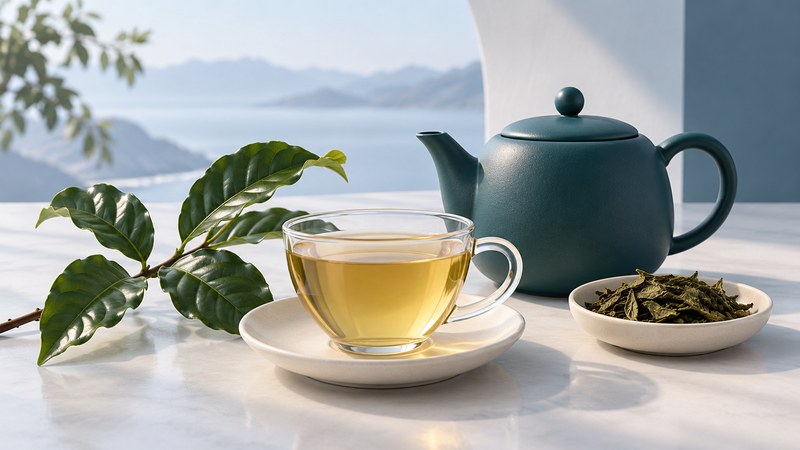
Coffee-leaf tea is an infusion made from prepared leaves of the coffee plant. It offers another way to use the crop, with a flavor and preparation distinct from roasted coffee. Start with a product sold for drinking, read its ingredients and brewing directions, and check the caffeine information for the serving you actually make.
Identify what is in the package
The word “coffee” can refer to several plant parts in drinks. Roasted coffee is prepared from seeds; coffee-leaf tea uses leaves; cascara beverages use material from the coffee fruit. Green and black tea ordinarily come from Camellia sinensis. Check the ingredient list, especially in flavored blends where other teas or botanicals may be present.
The European Food Safety Authority’s 2020 assessment concerned an infusion from Coffea arabica and/or Coffea canephora leaves and found no safety objections for the notified traditional food on the available composition and history-of-use evidence. That assessment has a defined preparation and food-use scope. Buy traceable beverage ingredients; ornamental plants and garden prunings have a different, potentially unknown treatment history.
Compare caffeine at the serving level
Coffee-leaf tea can contain caffeine. A category-wide promise such as “gentle energy” gives you little information about a particular cup. Ask for milligrams per prepared serving, the serving volume, leaf quantity and brewing method used for that figure. If the seller provides no amount, record it as unknown.
As a product-specific example, Wize’s FAQ describes about 18 mg for its brewed coffee-leaf tea using its stated serving. Its marketing material has used other approximate figures, so check the current package and preparation. A value for one brand or a canned drink should stay attached to that product.
The FDA’s caffeine guidance emphasizes variation in sensitivity and counting all sources. Ask a healthcare professional about individual limits during pregnancy or breastfeeding, with relevant conditions or medicines, or for children. For observing your own routine, use the caffeine and sleep guide.
Make the first cup a useful comparison
- Read the complete label. Check ingredients, storage, amount of leaf or number of bags, water volume, temperature and steeping time. Ask the seller if directions are missing.
- Follow those directions for a baseline. Use a measured volume and a timer. Write down the product and preparation so you can repeat it.
- Taste before adding extras. Note aroma, body, bitterness, drying sensation and the flavors you notice as it cools. These are your observations, not a promised flavor profile for all coffee leaves.
- Change one preference within the supplied directions. Compare another permitted steep time or leaf amount. Keep the other variables steady.
- Account for the whole drink. Sweeteners, milk and other additions change what you consume. For bottled versions, check added sugar, serving size and storage instructions.
Keep dry tea according to its package and prepare it with clean drinkware. Follow the maker’s instructions for any chilled preparation or storage; a hot infusion recipe supplies no universal refrigerated shelf life.
Read health and livelihood claims with the right evidence
Claims about antioxidants or a named plant compound describe a chemical property. To assess a promised health outcome, look for a human study of the actual drink, its dose, comparison group and measured outcome. The EFSA food-safety assessment answers a safety question about a specified food; it does not establish treatment benefits. Use the healthy-coffee evidence guide to distinguish ingredient findings from finished-product results.
For sourcing claims, ask who supplies the leaves, when and how they are harvested, who does the processing, and how workers are paid. A secondary crop can provide another product to sell; whether it improves livelihoods depends on labor, costs, harvest practices and buyers. Treat year-round employment as a claim to document at the producer level.
Food-use permissions also have a jurisdiction and scope. In the EU, the Commission’s Union list of novel foods is the current starting point; it links the 2020 authorization and 2023 change in conditions of use for coffee-leaf infusion. Sellers and importers should check the applicable entry and their own market’s requirements. An authorization for one use or region should stay within that scope.