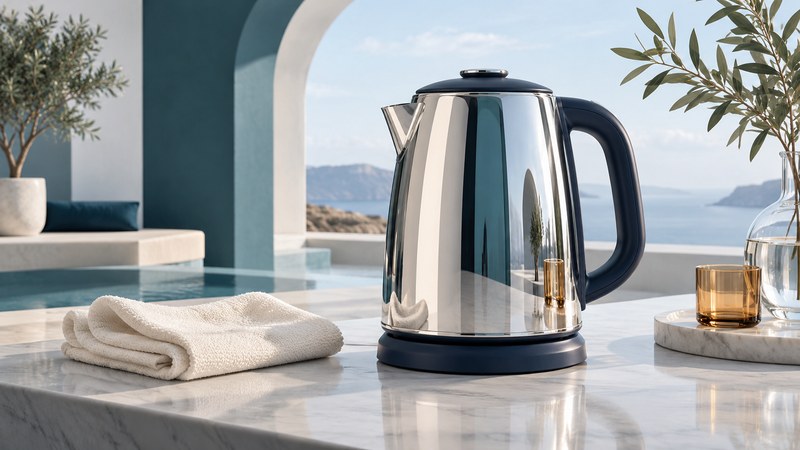
A chrome-looking kettle can be an attractive part of a kitchen, but the finish is only one part of its specification. Establish the body material, water-contact surfaces, heating arrangement, and care instructions separately.
Start with the exact model. A photograph shows shine and shape; it cannot identify every layer, interior fitting, seal, or coating. Use the manufacturer’s wording rather than translating “silver,” “chrome,” or “polished” into an assumed construction.
Read finish and material as separate fields
The KRUPS BW730D50 product page describes a stainless steel kettle with a brushed-and-chrome appearance. This is a useful example of material and styling language appearing together. It does not establish the construction of an older AquaStyle 854 or another silver-colored kettle.
| Part or claim | Ask for this detail | Useful evidence |
|---|---|---|
| Exterior finish | Polished base metal, plating, coating, or another finish? | Exact-model specification or written manufacturer response. |
| Water-contact interior | Body lining, heating surface, lid underside, filter, and seals? | Component descriptions, not just an exterior color name. |
| Heating arrangement | Electric base or approved stovetop use? | Matching operating instructions and electrical or cooktop ratings. |
| Care method | Which cloth, cleaner, and descaler are permitted? | Separate exterior, interior, and removable-part instructions. |
If you are trying to avoid a particular material, ask about all relevant water-contact components. A stainless heating plate alone leaves the rest of the water path unspecified. A broad brand disclosure also needs an exact-model interpretation before it answers that question.
Separate wiping, descaling, and filter cleaning
Find those three tasks in the manual. Exterior wiping handles fingerprints and splashes; descaling addresses deposits inside the water vessel; filter cleaning deals with the removable screen when fitted. Use the method for the part you are cleaning.
The KRUPS model page linked above gives separate body-cleaning and descaling guidance, and prohibits immersing the kettle or electrical base. Follow the complete instructions for your own model, including cooling and disconnection. Avoid borrowing a metal-polish or automotive-chrome treatment for a food appliance.
- Identify the surface. Confirm the model and finish before selecting a product.
- Read the method completely. Note the permitted cleaner, dilution, contact time, rinsing, and which parts may get wet.
- Use the specified soft cleaning material. Stop if the surface begins lifting, flaking, or changing unexpectedly.
- Ask about unresolved damage. Send clear photographs and the cleaner used to the manufacturer.
A mineral deposit and deteriorating finish are different problems. Treat an uncertain patch as an identification question, especially if it is inside the vessel. Scrubbing harder can obscure the evidence you need to describe it.
Find instructions for an older chrome kettle
For a KRUPS AquaStyle or another older model, copy every letter and number on the identification plate, including any suffix. Photograph the plate and the separate base while everything is cool and unplugged. Search the KRUPS instructions directory by that reference, then compare the manual’s illustration and controls with your appliance.
When a manual search returns a different model, keep searching or contact support through the manufacturer’s site. A modern stainless model’s filter, lid, power rating, or cleaning recipe may differ. Ask specifically about the exterior finish and water-contact materials if those are the reason for your inquiry.
Choose around daily use
For stovetop models, confirm cooktop compatibility explicitly. The stainless steel kettle guide explains why body appearance and induction compatibility require separate checks.