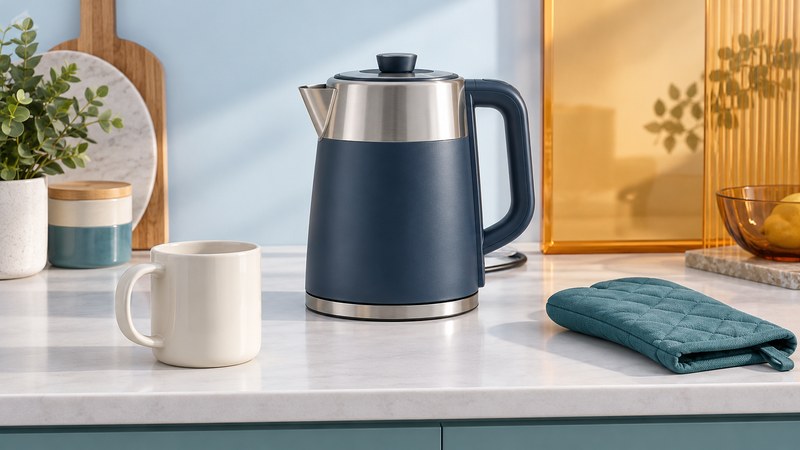
Kettle safety starts before switching on the heat: identify the appliance, read its fill limits, check its condition, and make room for a controlled pour. An automatic switch, whistle, or heat-resistant handle is one feature within that routine.
Use the instructions for your exact kettle and country of use. Electric and stovetop models have different heating arrangements, and advice for one brand's lid, handle, or whistle may not apply to another.
Before heating: three checks
- Identify: with the kettle cool and disconnected, record the model from its label or base. Find its manual and confirm the permitted heat source, fill range, and assembly.
- Inspect: look for damage to the vessel, lid, handle, cord, plug, and base. A loose handle or unreliable lid changes the pouring task; arrange support before using it again.
- Place: give the kettle a stable position with a clear path to the cup. Route an electric cord so it cannot be pulled from the edge or touch a hot surface.
The OXO adjustable-temperature kettle manual calls for a dry, level location away from the counter edge, clearance around the appliance, and discontinuing use with a damaged cord, cracked kettle, or loose handle. These checks are useful prompts for reviewing your own model's safeguards.
Read the fill range before every batch
Find the markings on the kettle itself and the matching instructions. Fill an electric kettle off its base, and keep its electrical connection dry. Stay within the permitted range and secure the lid before heating. Overfilling can expel hot water; underfilling can trigger protection or allow the kettle to overheat.
For example, the Hamilton Beach guide 840295501 specifies a MIN-to-MAX range and says its lid must close for automatic shutoff to work. These are operating conditions, not optional setup details.
If the marks have become unreadable, locate the official guidance or ask the manufacturer. Estimating a fill level from the kettle's outside shape leaves too much uncertainty. Choose a smaller suitable kettle if meeting a large minimum fill makes the loaded vessel difficult to handle.
Plan the pour while everything is cool
Place the receiving cup on a stable surface before heating. Clear the route between kettle and cup, and keep other people away from the pouring area. During use, handle the kettle at the designated grip and keep your face and free hand away from the spout and lid.
For stovetop kettles, switch off the heat and follow the model's directions for the pause before opening the whistle and pouring. The Chantal stainless steel kettle instructions require oven mitts for the handle and whistle, specify a 15-second pause after boiling, and warn that the whistle may sometimes remain silent. That timing is Chantal's instruction, not a universal kettle rule.
Pour slowly into the prepared cup. If you cannot comfortably control the filled kettle, change the equipment or permitted batch size rather than improvising a grip around a hot body.
When a routine becomes a stop-use problem
| Observation | Immediate direction | Information to save |
|---|---|---|
| Visible cracking, leakage, loose handle, or damaged cord | Stop using the appliance and contact its manufacturer. | Model, photos taken when cool, and the location of the damage. |
| Unexpected continuous boiling or failed shutoff | Stop heating using the normal control if safe; arrange support before reuse. | Selected mode, water amount, and what happened. |
| Stovetop kettle has boiled dry | Turn off the heat and allow it to cool in place before assessment. | Model and signs of base or handle damage after cooling. |
| Uncertain recall match | Compare the exact model and identifying marks with the official notice. | Serial, date code, purchase details, and the recall link. |
The Chantal Classic instructions specifically describe base damage after dry heating and prohibit reuse when its aluminum has melted or its copper disc has separated. Follow the corresponding instructions for your own model; a kettle cooling down does not by itself establish that it is fit to use.
For electric appliances, avoid opening the housing or bypassing a control. The Cuisinart CPK-17 series manual reserves internal servicing for authorized personnel.
Check recalls by identity, not appearance
For a kettle used in the United States, search the CPSC recall database using the brand and kettle model. Open a possible match and compare model numbers, date or serial ranges, photographs, and any other identifying details. Read the prescribed remedy directly from the notice.
A similar-looking product may belong to a different model run. If the identifying label is missing or the match remains unclear, send the manufacturer photographs and the information you have. Outside the United States, use the relevant national product-safety authority as well.
Keep a simple record: model, manual link, recall-check date, and any support response. Repeat the check when acquiring a used kettle or when a manufacturer issues a relevant safety notice.
Continue exploring
- Electric Tea Kettles: Capacity, Temperature, and Everyday Use
- Automatic Kettles: Shutoff, Temperature Control, and Keep-Warm
- Whistling Tea Kettles: Choosing, Heating, and Pouring
- Explore the tea kettle guides
Manufacturer documents describe the models named in them. Match your own model and market before applying operating or care instructions.