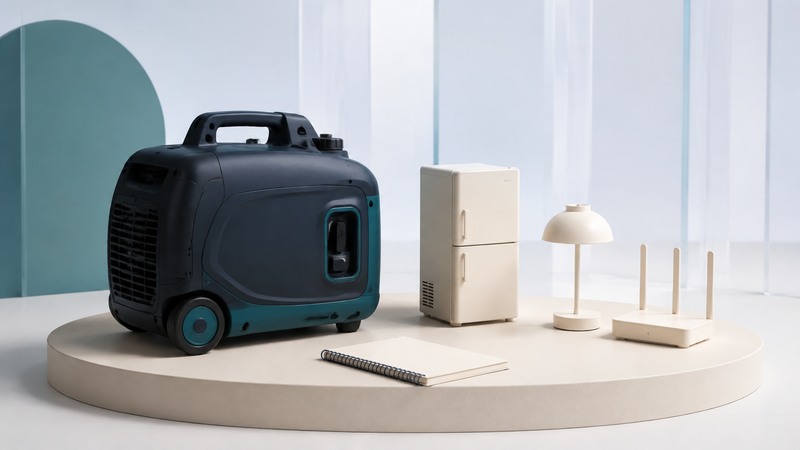
Choose a backup generator after deciding what must run, how it will connect and whether the site supports safe operation. A list of essential loads and a qualified installer’s review give you a stronger starting point than the largest advertised wattage.
This guide supports household planning in the United States. Electrical installation, transfer equipment, grounding and fuel-system work must follow the exact equipment instructions and applicable local requirements. Keep a separate plan for critical medical equipment and for leaving the home when backup arrangements are insufficient.
Define the service you need
List refrigeration, a well or sump pump, heating-system controls and blower, necessary lighting, communications and other essentials. Identify which loads are hardwired, which require 240 V, and which can be left off. Central heating can require electricity even when its main fuel is gas or oil.
Also define who can move, start, monitor and refuel a portable unit. A plan that depends on someone lifting heavy equipment or handling fuel during an emergency may be unsuitable for that household. An installed standby system can automate parts of the process, but still needs maintenance, suitable fuel service and a site assessment.
On a narrow screen, scroll the table sideways. Keyboard users can focus the table region and use the arrow keys.
| Option | Useful role | Planning requirement |
|---|---|---|
| UPS or small battery system | Short interruptions for selected electronics | Verified load, runtime and recharge method. |
| Portable generator | Selected essential loads for longer interruptions | Safe outdoor location, fuel handling, manual operation and approved connections. |
| Installed standby generator | Automatic backup for agreed circuits or managed loads | Professional siting, fuel supply, transfer equipment, permits and service plan. |
Use UPS sizing for a desk or router. For a household-wide plan, the generator and transfer arrangement form one system.
Separate running power from starting demand
Record each load’s voltage, running watts, startup requirement and source of information. Motors and compressors can briefly require substantially more power when starting. Record startup demand separately from daily energy consumption in kWh. Obtain equipment documentation or a qualified measurement.
Check continuous output and short-duration capability separately, including any reduction for the selected fuel, altitude or temperature. Have the installer confirm whether proposed load sequencing is reliable when thermostats or pumps start automatically. Honda’s selection guide discusses application, output quality, runtime and generator features.
Have the connection designed as part of the purchase
Never feed a home circuit by plugging a generator into an ordinary wall outlet. Have a qualified electrician specify an approved transfer arrangement that isolates utility supply and suits the generator, panel, grounding/bonding configuration and intended loads. Obtain utility and permit requirements before installation.
For supported cord-connected appliances, follow the generator manual for receptacles, outdoor-rated cords, grounding and load limits. Have any hardwired appliance connection assessed by an electrician. Honda’s home-connection guidance explains the role of transfer equipment. This planning page is not a wiring procedure.
Confirm a safe operating location first
For portable generators, CPSC’s 2026 guidance calls for outdoor use at least 20 feet from the home, with exhaust pointed away from nearby buildings. Never operate one in a garage, shed, basement or other enclosed space. Include neighboring buildings, windows and vents in the site review.
Keep the generator dry and follow its approved weather-protection instructions; an improvised enclosure can trap exhaust or heat. Permanent standby units have their own listed installation requirements and need professional siting. If the property cannot support safe placement, choose another backup approach.
Use working CO alarms with battery backup on every level and outside sleeping areas. Shut the generator down and let it cool before refueling. Store fuel only in approved containers and locations under applicable rules. The Honda safety guide covers exhaust, electrical, fire and fuel hazards; consult the exact model manual as well.
Compare fuel, runtime and service over the whole outage
Read advertised runtime together with its test load and tank size. A runtime measured at a light load may be far longer than the result with your selected appliances. Ask about fuel availability during a regional outage, safe storage quantities and service intervals during extended operation.
For natural-gas or propane standby systems, include the required supply pressure, available delivery capacity and installation cost in the contractor’s scope. Ask who responds to a failed start, how exercising and maintenance are recorded, and what remote alerts actually report.
Before commissioning is complete, have the installer demonstrate the intended transfer and restoration behavior under an agreed load. Keep the manual, maintenance record, emergency contacts and a clearly understood shutdown procedure accessible. Use the downloadable brief for that discussion, and connect it to the household outage plan.
Essential-load and generator planning brief
Essential-load and generator planning brief — plain-text download. Save a copy and fill it in with your own information. The file includes instructions, assumptions and references so it can be used independently.