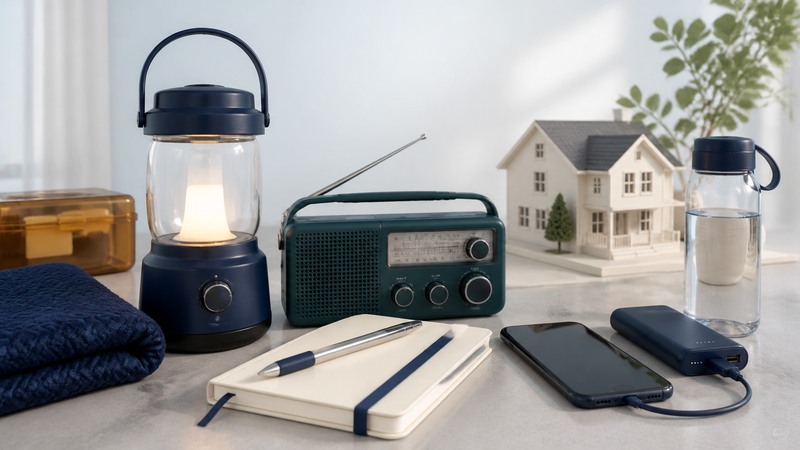
During a power outage, first protect people, then preserve communication and essential supplies. Check for immediate hazards, report the outage through your utility’s official channel and begin the household plan you prepared in advance.
This U.S. household guide supports preparation and ordinary outage decisions. Follow local emergency instructions. If there is a fire, a medical emergency or suspected carbon monoxide exposure, move to safety and call 911.
Start with the first few minutes
- Use a flashlight or battery lantern. Check on children, older adults and anyone whose health or mobility depends on power.
- Stay away from fallen wires, damaged electrical equipment and floodwater that may be energized. Report hazards to the utility or emergency services from a safe place.
- Note when power stopped. Keep refrigerator and freezer doors closed.
- Check the utility’s official outage map or reporting number. Save phone power and use local emergency alerts for instructions.
- Unplug or switch off suitable nonessential appliances and electronics to reduce problems when power returns; leave a light on to indicate restoration if safe.
If the home has unusual bright/dim lights, burning smells, sparks or partial service, report those symptoms promptly rather than repeatedly resetting equipment. If reaching an electrical panel requires entering water, stay clear. Ready.gov’s outage guidance covers preparation, response and recovery.
Plan around the person who has the least margin
Before an outage, ask the medical-device supplier and clinician which backup source is approved, how long it can support the prescribed settings, and when to move to another location. Include charging time, accessible transport and a contact who can help. A utility medical-needs registration can inform the utility; confirm what it actually provides and keep a backup plan independent of a restoration estimate.
For refrigerated medicine, record the exact product’s storage instructions and a pharmacist’s contact number. Safe time outside refrigeration varies by medicine and conditions. Ask a pharmacist about the actual temperature history and replacement; food-storage limits do not establish medicine safety. The FDA guidance on medicines after disasters explains why product condition and storage need individual assessment.
Choose an accessible alternative location before the home becomes dangerously hot or cold, a critical device’s battery becomes low, or transport becomes difficult. Include pets, caregivers and essential supplies in that plan. Follow local cooling-center, shelter or evacuation information; a single indoor temperature threshold cannot cover every household’s health needs.
Track time and temperature for food
Keep appliance thermometers in the refrigerator and freezer. Record the outage start and keep the doors closed. These reference periods assume appropriate starting temperatures and closed doors.
On a narrow screen, scroll the table sideways. Keyboard users can focus the table region and use the arrow keys.
| Situation | Planning reference | Next action |
|---|---|---|
| Refrigerator without power | About 4 hours with doors closed | Move perishables to a suitable cold source in time, or discard them after 4 hours without power. |
| Full freezer / half-full freezer | About 48 hours / 24 hours with doors closed | Assess the remaining ice crystals and temperature before using or refreezing food. |
| Thawed frozen food | Food still has ice crystals or is at 40°F (4°C) or below | Use the food-specific chart; some items have exceptions and quality may decline. |
Use the FoodSafety.gov item-by-item charts for the final decision. Never taste food to determine safety. A refrigerator becoming cold again after restoration does not establish that food remained safe throughout the outage.
Keep combustion outside
Use portable generators outdoors, at least 20 feet from homes and buildings, with exhaust directed away from windows, doors and vents. Never operate one in a house, garage, basement or shed, even with doors open. Never use a charcoal grill or gas oven to heat the home. CPSC’s 2026 hurricane-season guidance addresses these hazards.
Install battery-powered CO alarms or alarms with battery backup on every level and outside sleeping areas. If an alarm sounds or CO poisoning is suspected, get everyone outside to fresh air and call 911. The CPSC carbon monoxide center describes symptoms and protective actions. An automatic generator CO shutoff supplements safe placement; it does not make indoor operation safe.
Keep a usable household record
Store utility and emergency contacts, medication and device instructions, an out-of-area contact and the address of your alternative location together. Keep water, suitable ready-to-eat food, lighting, charging equipment and supplies for household members’ particular needs. Check batteries and expiry dates before forecast severe weather.
A fictional household with a refrigerator, home internet and a person using powered equipment has three different deadlines: food temperature, network battery runtime and the clinician-approved device plan. Record each separately. The shortest critical deadline should drive the decision to relocate, even when a utility estimate sounds reassuring.
Use the downloadable household plan to record contacts and those deadlines. For short interruptions at a desk, see UPS selection. For planned household backup, see generator loads and installation planning.
Restore ordinary use deliberately
Confirm that the utility considers service restored. Keep away from equipment exposed to flooding or physical damage until qualified personnel assess it. Reconnect ordinary loads progressively, following equipment instructions, and recheck refrigerator temperatures and food decisions.
Recharge backup supplies, replace used items and note what failed in the plan. Report continuing partial service or repeated interruptions. Understanding outage causes helps distinguish restoration reports from the later investigation into why an event occurred.
Household outage contacts and decision plan
Household outage contacts and decision plan — plain-text download. Save a copy and fill it in with your own information. The file includes instructions, assumptions and references so it can be used independently.