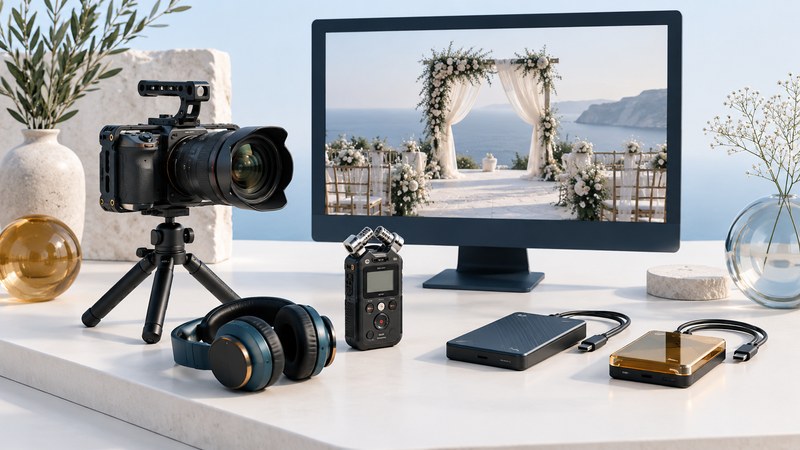
Choose a wedding videographer by looking at complete work and defining the films you want to receive. Coverage hours, recorded sound, editing and delivery are separate decisions; a clear brief connects them before the day begins.
Watch beyond the highlights
Ask to see a full example of each film type in the package you are considering, with the couple’s permission. Listen to vows and speeches as well as music. Notice how the film handles transitions, quiet moments and changes of room or lighting. Ask which parts reflect the booked package and which were additions.
Describe what you want to remember in concrete terms: complete vows, a parent’s toast, guests talking, the energy of dancing or the way the setting looked. Decide which moments need continuous coverage and where a short impression is enough. This helps the filmmaker suggest a realistic combination of coverage and edits.
Confirm who will film and edit the wedding, how many people attend, their working hours and what happens if a team member becomes unavailable. Ask how the crew coordinates space and timing with your photographer, venue and planner.
Name each finished film
| Deliverable | What to specify | How you will use it |
|---|---|---|
| Highlight film | Approximate duration, editing approach, music and included moments | A condensed account to watch and share |
| Ceremony film | Start/end points, continuous or edited coverage and usable spoken audio | Revisit the ceremony in detail |
| Speeches film | Which speeches, how they are joined and any omitted material | Keep the complete contributions you value |
| Short vertical edit | Length, framing, captions and permitted sharing channels | Share a version composed for a phone screen |
The names above are examples, not standardized package definitions. Record the agreed files and any extra charge for each. If raw footage is offered, ask what it contains, how much material to expect and whether separate audio or specialist software is needed. Unedited recordings and finished films have different uses.
For each finished file, confirm resolution, file format, playback compatibility and whether captions are included or can be added. Ask about delivery milestones, revision rounds, the time allowed to request changes and what a revision covers. A correction to a name, a music change and a complete re-edit may be treated differently.
Resolve music and sharing permissions
The U.S. Copyright Office distinguishes a musical composition from its sound recording. Have the filmmaker explain how the music used in your films is cleared and which sharing uses the delivered version permits. Give them your preferred mood and song ideas early, then approve an option they can use for the intended delivery and sharing.
Agree separately on whether the filmmaker may use images or audio from your wedding in a portfolio, advertisements or social posts. Record guest or family privacy requests and explain any spaces or moments that should remain unrecorded. Ask who needs to know those limits on the day.
Connect the schedule to sound and crew positions
Give the filmmaker the current timeline, addresses, ceremony rules and key contacts. Mark simultaneous events, travel between venues and the moments that matter most. If two important events overlap, ask how the proposed crew will handle them and which coverage takes priority.
Vows, readings and speeches need an audio plan. Ask who will arrange microphones, obtain venue access and coordinate with the officiant and sound provider. Have the filmmaker describe their backup approach and how they check recordings. The people wearing or speaking into microphones should know what to expect.
A useful coverage instruction
“We want the complete ceremony, including the reading before the vows. The officiant is the contact for microphone permission. Our planner will tell the film crew before the doors open. Family photographs follow outside, while guests move to the reception room.” This invented brief identifies a deliverable, access owner, cue and transition the crew can plan around.
At the final review, name the person who tells the crew about delays. Confirm coverage end time, overtime authorization and any planned activities after the crew leaves. Put agreed changes into the shared schedule.
Receive, check and keep the files
When delivery arrives, download every agreed file before any hosting link expires. Check that each opens, plays through and contains the expected sound, captions and moments. Report issues within the agreed review window. Ask the filmmaker how long they retain project files and what a later replacement or edit would involve.
The Library of Congress’ personal video archiving guidance recommends descriptive names, organized files and copies in separate places. Keep the highest-quality delivered originals, maintain more than one independent copy, and periodically check that the files remain readable. An online viewing link can be convenient, while your own copies give you control over continued access.
Download the wedding film deliverables brief to record the coverage, sound, permissions and delivery decisions in one place.