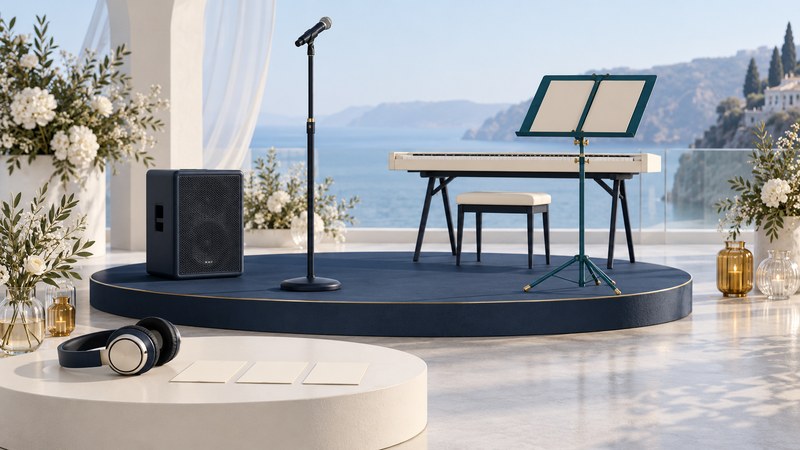
A wedding music plan connects the sound you want to the person who makes it happen. Choose a DJ, live musicians or a managed playback arrangement, then agree on microphones, locations, cues, breaks and backups. Give one person authority to coordinate changes so everyone works from the same plan.
Choose the performance and the person running it
Start with the parts of the day that need sound: guest arrival, ceremony, room changes, drinks, dinner, announcements and dancing. Decide where live performance matters to you, where recorded music suits the moment and who should speak to the guests. Share the event’s atmosphere, languages and traditions with prospective performers.
| Option | What to assess | What to confirm |
|---|---|---|
| DJ | Music selection, transitions, response to the room and announcement style | Named performer, coverage locations, microphones, setup time and request policy |
| Band or live musicians | Actual ensemble, repertoire, arrangements and performance style | Personnel, set lengths, breaks, special-song preparation and music between sets |
| Managed playback | Your ability to prepare the program and provide a dependable operator | Permitted playback source, tested equipment, cue control, announcements and a backup plan |
Listen to representative performances by the people you would hire. Ask how they handle a delayed entrance, an unfamiliar name and a request that conflicts with your preferences. A band’s recording or a DJ’s short highlight clip can start the conversation; ask about the actual event arrangement as well.
Compare complete quotes: performance hours, ceremony coverage, additional sound systems, microphones, extra personnel, travel, setup, overtime and any requested preparation. Record when the final selections are due and which changes may cost extra. For mixed formats, assign who supplies the sound during every changeover.
Check locations and permitted use before booking
Give the venue and supplier the same description of the event. Confirm access and setup times, performance areas, power arrangements, weather alternatives, sound restrictions and the time amplified music must end. Ask the venue to identify its required approvals and documentation. Have the audio provider specify equipment and manage cable routing in coordination with the venue.
Two spaces may need separate systems or time for a move. Walk the route between the ceremony and reception with the supplier: what stays in place, what moves, who moves it and what guests hear during that work. Keep equipment needs attached to a location rather than assuming one speaker covers the whole event.
Check the terms for the actual playback source. Spotify’s published policy limits its service to personal, non-commercial use and prohibits public playback from a business. A consumer subscription alone therefore does not establish permission for every wedding arrangement. Ask your venue and provider to confirm the appropriate source and any applicable permissions for your event and jurisdiction before relying on it. Permission to play music at an event also needs separate consideration from using it in a wedding film.
Write cues that a person can follow
A cue sheet should name the moment, location, exact recording or live arrangement, starting point, trigger, cue caller, operator and ending action. Times help people prepare; a visible or spoken trigger tells them when the moment is actually ready. List the approved version of a recording precisely so a live version, long introduction or different edit cannot be substituted accidentally.
Example ceremony cue
Moment: processional at the garden entrance. Selection: the couple’s approved instrumental recording, exact version confirmed with the operator. Ready check: officiant and processional group in position. Caller: coordinator at the entrance. Trigger: coordinator gives the agreed hand signal. Operator: ceremony audio lead starts from 0:00. Ending: fade after the last person reaches the front, on the coordinator’s signal. If delayed: continue the agreed prelude until the ready check is complete.
Rehearse entrances against the actual music where practical. Agree how a live musician should extend a passage or finish if the walk takes longer than expected. Let the officiant approve ceremony cues, and keep the order consistent with the wedding program.
For the reception, keep a short must-play list, a do-not-play list and guidance for the rest of the evening. Specify whether guests may request music and who can override a restriction. Include pronunciation notes and the exact people being introduced. Coordinate speeches, meals and dances with the reception schedule.
Give speech its own sound check
List everyone who needs to be heard: officiant, readers, couple, speakers and any host or interpreter. Ask the audio lead to choose the microphones, test them in their real positions and explain how people should use them. Have someone listen from guest seating, including the back and sides, rather than judging only from beside the speaker.
Shure’s audio systems guide explains how amplified sound entering a microphone can create feedback. Placement and system setup matter. Leave those adjustments to the audio lead; have speakers practice with the agreed microphone and avoid moving it or the loudspeakers without checking.
Confirm who mutes unused microphones, hands them between speakers and provides the videographer’s agreed audio connection. Test any connection in advance with both suppliers present. Arrange a quieter place for conversation and ask the venue about available hearing-access arrangements if guests need them.
Rehearse the handoff and the fallback
Give the final cue sheet a version date and circulate it to the coordinator, officiant, music lead and other affected suppliers. Walk through performer breaks, meals and room changes. Agree who can delay a cue and how they will tell the operator.
Ask the supplier to describe its response to an unavailable performer, failed microphone, interrupted playback or weather change. For managed playback, name an operator who can stay at the controls, verify the permitted source and test the complete device-to-speaker connection. Rehearse the fallback with the actual equipment. Write down who announces a pause and which moments can continue without amplification.
Download the music cue sheet for an editable brief, repeatable cue record and final-check list. The goal is a handoff clear enough that the couple can enjoy the day while the designated people manage its sound.